

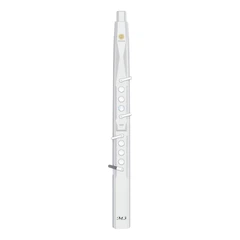

Both electronic wind instruments and traditional woodwind instruments have a place in the music industry, but they have significant differences in design, function and performance methods. Here is an article exploring the differences between the two instruments.
Electronic Wind Instruments and Traditional Woodwinds: A Musical Revolution
Musicians are always looking for tools to expand their expressive power, and electronic wind instruments (EWIs) are the product of this exploration. They are fundamentally different from traditional woodwind instruments such as flutes, clarinets and saxophones.
Design and construction
Traditional Woodwind Instruments:
Made from natural materials such as wood, bamboo or metal.
Sound is produced by physical vibration, such as air flow through a tube or reed.
Requires regular maintenance, such as cleaning, adjustments and occasional repairs.
Electronic Wind Blowing Instruments:
Constructed of electronic components and sensors, it is usually lighter and more portable.
The sound produced by electronic synthesizer can simulate the timbre of many traditional musical instruments.
Maintenance is simple, mainly involving battery replacement and software updates.
Sound production
Traditional Woodwind Instruments:
Sound production relies on physical vibrations, and each instrument has its own unique resonance characteristics.
The timbre is limited by the design and material of the instrument itself.
Electronic Wind Blowing Instruments:
Sound can be generated through built-in or external synthesizers to simulate multiple instrument timbres and even non-traditional instrument sounds.
The variety and tunability of timbre is one of its great advantages, and the player can create a unique sound by adjusting the parameters.
Playing techniques
Traditional Woodwind Instruments:
Playing techniques include breath control, fingering and mouth changes.
The learning curve can be steep and take a long time of practice to master.
Electronic Wind Blowing Instruments:
In addition to traditional breathing and fingering control, adjustments to electronic parameters may also be included.
The learning curve may be flat because electronic wind instruments are often designed to be more intuitive and easy to use.
Application scenarios
Traditional Woodwind Instruments:
Occupies a central position in classical, jazz and world music.
Usually used in orchestras, chamber ensembles, or solos.
Electronic Wind Blowing Instruments:
Increasingly popular in modern music production, electronic music and experimental music.
Suitable for live performance and studio use, especially in the need of a variety of timbre and real-time adjustments.
Maintenance and costs
Traditional Woodwind Instruments:
Maintenance costs can be high and require regular professional maintenance.
The physical properties of musical instruments make them sensitive to temperature and humidity changes.
Electronic Wind Blowing Instruments:
Maintenance costs are relatively low, mainly involving battery replacement and software updates.
Not affected by environmental conditions, more durable.
conclusion
Electronic wind instruments and traditional woodwind instruments have their own unique charm and application scenarios. Traditional woodwind instruments occupy an irreplaceable position in the history of music with their unique timbre and rich expressiveness, while electronic wind instruments provide musicians with new tools of expression with their innovative technology, diversity and portability. With the development of technology, electronic wind instruments are gradually becoming a new field for musicians to explore the possibilities of music. Whether in a traditional symphony orchestra or in modern music production, both instruments will continue to inspire the creativity of musicians and enrich our listening experience.
Brand Name: SUNRISE MELODY
Model: XR3000
Timbre: 60 types
Five octaves metal roller
Bluetooth connection
4 fingering modes available to select
