
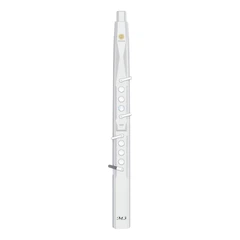


Electronic wind instruments, such as Akai Professional's EWI 5000, are advanced music technology products that offer a new way of expressing music by simulating the way traditional wind instruments are played. The internal structure of these instruments is carefully designed and contains a number of key components that allow the player to control the production and change of sound through changes in breathing, fingering, and mouth movements.
Working Principle of Electronic Wind Blowing
1. Sensor systems: Electronic wind instruments are often equipped with high-precision breath sensors that detect the player's breath pressure and flow. For example, the EWI 5000's mouth is equipped with air pressure level sensors and bite sensors, which allow the player to control the dynamic changes in volume and tone by controlling the force of the breath.
2. Sound Synthesis: Electronic wind instruments are equipped with sound synthesizers that can produce a variety of timbre, from traditional woodwind and brass sounds to modern synthetic timbre. These instruments often have a variety of preset tones built in and can be synced with external devices via USB or wireless connection to expand the sound library.
3. Wireless connectivity: New generation electronic wind instruments, such as the EWI 5000, offer 2.4GHz low-latency wireless connectivity, allowing the player to move freely on the stage or in the studio without cables.
4. User Interface: Many electronic wind instruments have OLED display screens that allow players to view presets and preferences. In addition, there are multiple dedicated precision knobs that allow players to instantly adjust instrument or effect parameters such as filters, reverb, chorus, LFO, breath volume, bite volume, semitone tuning and fine tuning.
5. MIDI Control Function: In addition to the built-in sound generator, the electronic wind instrument can also be used as a MIDI controller to communicate with an external sound module or synthesizer through a MIDI channel, expanding the possibilities of playing.
6. Power source management: In order to ensure portability and long playing, electronic wind instruments are usually equipped with rechargeable lithium batteries and support charging via USB.
7. Maintenance and Updates: Electronic wind instruments are designed with ease of maintenance in mind. Players can update the instrument's software with simple operations to keep its performance optimized.
The internal structure and design of electronic wind instruments enable them not only to provide the authentic playing experience of traditional wind instruments, but also to expand the boundaries of musical expression through modern technology. Whether performing on stage or writing in the studio, these instruments offer players unparalleled freedom of musical expression.
Brand Name: SUNRISE MELODY
Model: XR3000
Timbre: 60 types
Five octaves metal roller
Bluetooth connection
4 fingering modes available to select


