
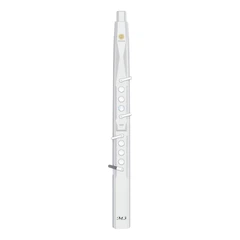


Title: The Articulation of Sound in Electronic Saxophones: The Role of the Mouthpiece
Introduction
The mouthpiece of an electronic saxophone is a critical component that combines acoustic and electronic technology to produce sound. Unlike its acoustic counterpart, which relies solely on the vibration of air within the instrument to create sound, the electronic saxophone uses a mouthpiece that interacts with digital technology to replicate and enhance the saxophone's unique tone. This article delves into the intricacies of how the mouthpiece of an electronic saxophone produces sound, highlighting the fusion of acoustic and electronic elements.
The Acoustic Foundation
At the core of the electronic saxophone's mouthpiece lies an acoustic foundation. The mouthpiece is designed to mimic that of a traditional saxophone, complete with a reed and a chamber. When a player blows into the mouthpiece, air passes over the reed, causing it to vibrate against the mouthpiece's tip opening, similar to an acoustic saxophone. This vibration is the initial step in sound production, as it sets the air within the instrument into motion .
The Electronic Enhancement
The electronic component comes into play with the integration of sensors and digital sound generation. The mouthpiece often features a sensitive breath sensor that detects the player's embouchure and the force of their breath. This sensor sends signals to the electronic component of the saxophone, which then processes these inputs to generate sound. For instance, the Roland Aerophone AE-10 uses a mouthpiece-mounted breath sensor that responds like an acoustic horn, allowing for expressive techniques like vibrato and pitch .
The Yamaha YDS-150 digital saxophone takes this a step further with its Integrated Bell Acoustic System, which combines acoustic resonance technology with digital processing to deliver an authentic, gorgeous sound that feels and responds as if playing an acoustic instrument . This system enhances the physical feedback from the instrument, stimulating the player's senses and providing a natural sense of expressive musicianship.
The Fusion in Practice
The fusion of acoustic and electronic technology in the mouthpiece of an electronic saxophone offers several advantages. It allows for a wide range of tonal colors and dynamics that can be controlled with the precision of a traditional saxophone. The player can access a variety of sounds, from the classic saxophone tones to other wind instruments, strings, and even synthetic sounds, all through the same mouthpiece .
Moreover, the electronic enhancements provide additional control over the sound production. The mouthpiece's design, including the tip opening, facing, baffle, and chamber, influences the tone's characteristics, such as brightness, resonance, and playability . Electronic saxophones can also offer silent practice options, as the sound is generated electronically and can be directed through headphones, allowing players to practice without disturbing others.
Conclusion
The mouthpiece of an electronic saxophone is a marvel of modern technology, seamlessly integrating acoustic principles with electronic innovation. It captures the essence of traditional saxophone playing while unlocking a world of new possibilities in sound production and performance. As technology continues to evolve, the mouthpiece will remain a critical link between the player's creativity and the digital soundscape, ensuring that the electronic saxophone remains a versatile and expressive instrument for years to come.
Brand Name: SUNRISE MELODY
Model: XR3000
Timbre: 60 types
Five octaves metal roller
Bluetooth connection
4 fingering modes available to select


