
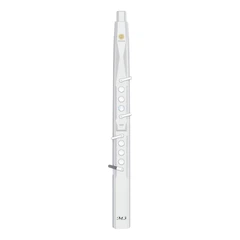


FAQ
Q: What should I do if it feels hard to blow the EWI?
A: Blowing resistance is usually related to settings and playing habits:
1. Check settings: First check and slightly raise the "Breath Pressure" or "Breath Sensitivity" value.
2. Improve your habit: Avoid over-blowing. If you still have leftover air after a phrase, slightly open the corner of your mouth to release it, then take a fresh breath-it will feel easier.
3. Strengthen your breath: Practice long tones regularly to improve breath stability and efficiency.
Q: What should I do if the EWI is out of tune?
A: Out-of-tune issues may be caused by the following. Please check in order:
1. Calibration: Perform the calibration procedure for your model according to the user manual. Do not touch the metal keys during calibration.
2. Check the keys: See whether any chromatic key is accidentally pressed or stuck.
3. Restart the instrument: Power off and restart. Do not touch the pitch-bend wheel during startup.
4. Confirm fingering: Check whether the current fingering setting is correct.
If the problem persists, please contact after-sales service.
Q: What should I do if the EWI won't turn on?
A: If the instrument won't power on, try:
1. Charge it: Connect the charger-the battery may be completely drained.
2. Check the battery: If it uses a removable battery, try re-seating it.
3. Contact support: If the above doesn't work, contact official customer service. Also, avoid using a fast charger.
Q: How do I set the response sensitivity if the keys feel slow?
A: If the keys feel sluggish, find the "Note Speed" or similar option in the function menu and raise its value appropriately.
Q: How do I adjust the breath sensitivity?
A: Adjusting breath sensitivity (also called "Breath Pressure") is key to an easy playing experience:
1. Enter settings: Find "Breath Sensitivity" or "Breath Pressure" in the function menu.
2. Adjust the value: Generally, the higher the value, the more sensitive it is and the easier it is to play. Adjust gradually based on how it feels.
3. Pair with practice: While adjusting, practice steady and refined breath control to avoid over-blowing once sensitivity is raised.
Q: Which vibrato type is better for beginners?
A: For beginners, automatic vibrato is strongly recommended. It is simple to operate and consistent in effect-just play normally, and the instrument automatically adds vibrato to long tones. It helps beginners quickly develop musicality while focusing on other basic techniques.
Q: What do the two glissando strips do?
A: If your EWI has touch strips on both sides, usually only one side is active. The active side depends on your hand-position setting:
When "Left Hand on Top" is set, the right strip is active.
When "Right Hand on Top" is set, the left strip is active.
Q: What should I do if the screen shows a garbled/flickering display?
A: Try the following:
1. Restart the instrument: Power off and restart.
2. Check the battery: Connect the charger-low battery may cause display abnormalities.
3. Factory reset: If the issue persists, try restoring factory settings (note: this will erase your personal settings).
4. Contact support: If none of the above works, contact customer service for professional inspection.
Q: What does Breath Pressure do?
A: "Breath Pressure" is the same as breath sensitivity. The higher the value, the less breath is needed to trigger sound, making playing easier. Note, however, that most EWIs have an "auto-trigger" threshold-if Breath Pressure is set above that threshold, the instrument will sound on its own without blowing. Set Breath Pressure below the auto-trigger threshold (for example, if the threshold is 60, set it to 56) to balance ease and control.
Q: What are the reverb types?
A: Reverb is an audio effect that simulates sound reflection in different spaces (such as a room or hall), making the dry sound richer and more spatial rather than flat. For an EWI, try reverb types like "Hall" or "Stage"-they effectively add clarity and expressiveness to the sound.
Q: What is Vibrato Sensitivity?
A: "Vibrato Sensitivity" specifically refers to the trigger sensitivity of bite vibrato. The higher the value, the lighter the bite on the mouthpiece needed to quickly trigger vibrato.
Q: What is Vibrato Depth?
A: "Vibrato Depth" refers to the range of pitch fluctuation during vibrato. The higher the value, the more obvious the vibrato's rise and fall, and the stronger the emotional expression.
Q: What is Vibrato Rate?
A: "Vibrato Rate" refers to the speed of vibrato fluctuation. If the vibrato sounds too fast or too rushed, lower this value to make the vibrato smoother and gentler.
Q: What is Pitch Bend Interval?
A: "Pitch Bend Interval" defines the interval in semitones between the original pitch and the pitch produced when the pitch-bend wheel is fully pressed. The default is usually a major second, which suits most songs. Some pieces require a minor third bend; adjust it in settings for more nuanced musical expression.
Q: What is Pitch Bend Sensitivity?
A: "Pitch Bend Sensitivity" refers to how sensitive the pitch-bend wheel is to your thumb. The higher the value, the more noticeable the bend from even a light press.
Q: What does "Third Interval Bend" mean?
A: "Third Interval Bend" is a pitch-bend interval setting, usually set to a minor third. When the bend wheel is fully pressed, the pitch drops by a minor third. This is convenient for pieces that require specific interval slides.
Q: What is Glissando Rate?
A: "Glissando Rate" controls the speed of sliding from one note to another. The higher the value, the slower and more noticeable the slide. Adjust based on tempo: fast pieces (e.g., "Horse Racing") use a lower value (20–25); slow pieces (e.g., "Mongolian") use a higher value (45–55).
Q: What do Equal Time and Equal Speed mean?
A: These are two glissando modes on the EWI. Generally, Equal Speed mode is recommended-it keeps the slide smooth and natural.
Q: How do I turn off the glissando?
A: The method varies by model:
If there is a "Glissando Switch" option, simply turn it off.
If not, set "Glissando Rate" or "Glissando Time" to the minimum value (usually 0 or 1) to avoid accidental slides producing unwanted sounds.
Q: What is Note Speed?
A: "Note Speed" determines the response sensitivity of the note keys. The higher the value, the faster the keys respond, allowing very fast playing without missing notes in quick passages.
Q: What is Octave Speed?
A: "Octave Speed" determines the response speed of octave switching. The higher the value, the faster the pitch responds when you move the octave wheel.
Q: What is Flutter-tongue Rate?
A: "Flutter-tongue Rate" controls the speed and frequency of ornamentation (such as flutter-tongue or tremolo fingering) when the technique key is triggered. The higher the value, the faster and denser the ornament sounds.
Q: What are cents?
A: A cent is a unit for measuring tiny pitch differences. One semitone equals 100 cents. If you feel your pitch is slightly off from the accompaniment but the key setting is correct, fine-tune "Cents" to calibrate.
Q: What is MIDI?
A: MIDI is a digital music interface protocol. The EWI's MIDI feature lets it connect to computers, synthesizers, and other devices to send and receive music signals. Most modern EWIs support MIDI over a Type-C cable.
Q: Is it better to hold the mouthpiece in the mouth or bite it?
A: Either works-it depends on personal habit. Biting helps hold the mouthpiece in place, though some people may produce more saliva; holding in the mouth also works, but watch that the mouthpiece doesn't slide. Either way, don't bite too deep, as it can affect tonguing technique.
Q: What should I do if there is noise when connecting to a speaker?
A: Noise when connecting a speaker may be caused by:
The speaker volume being too high.
The audio cable being loose or poor quality.
Incorrect audio parameter settings.
Please check one by one.
Q: What should I do if I can't hold the instrument steady when pitch-bending?
A: If the instrument feels unstable while bending:
1. Use the right force: When your thumb presses the bend wheel, try a "rotating" motion rather than a straight press, so the thumb doesn't leave the body.
2. Adjust the angle: Hold the EWI a bit more horizontally.
3. Extra support: Gently bite the mouthpiece to add a stable pivot point.
Q: What does the filter do?
A: The filter adjusts the frequency response of the tone to shape its character. Usually, lower the value to boost low frequencies for a fuller sound; raise it to boost high frequencies for a brighter sound. Adjust based on the needs of each tone.
Q: What is Tone Layering?
A: The tone-layering feature lets you blend multiple tones (such as Suona and Erhu) together at the same time. Some high-end EWIs support layering up to 5 tones, greatly expanding playability and letting you create unique sounds.
Q: How do I use the metronome on the EWI?
A: The metronome is a great tool for practicing rhythm. To use it, find "Metronome" in the function menu, select the desired beat (e.g., 2/4, 3/4, 4/4) and tempo. Remember to turn it off after practice.
Q: What should I do if the EWI only plays one note?
A: If every key plays the same pitch, it's likely that saliva has blocked the sensor. Power off, hold the EWI mouthpiece-down, gently shake out the internal moisture, then restart. If that doesn't help, try the calibration function.
Q: How do I clean the mouthpiece?
A: Maintain oral hygiene and avoid practicing right after meals. Wipe the mouthpiece with a warm damp cloth before and after playing. After playing, you can invert the EWI and gently shake out saliva. When not in use, put on the mouthpiece dust cap.
Q: Why does the EWI sound on its own?
A: This is the auto-trigger phenomenon, designed by the manufacturer to test battery life. When Breath Pressure (breath sensitivity) is set above a certain threshold, the instrument triggers sound without blowing. Set Breath Pressure below the auto-trigger threshold in settings to fix it.
Q: What does the glissando strip do?
A: The core functions of the glissando strip are:
1. Create smooth transitions between notes, making the music more connected.
2. Simulate slides of specific instruments (like strings) or the human voice, enhancing musical style and emotion. To use it, hold the strip between two or more notes while playing normally.
Q: The long side key keeps getting pressed by accident.
A: On most EWIs, the long side key can be re-assigned or turned off. Go to function settings and set that key to "No Function" or to a feature you rarely use, to avoid accidental presses.
Q: Does the EWI turn off automatically?
A: Yes. To save power, most EWIs have an auto-power-off feature. They usually shut down automatically after about 30 minutes of no operation.
Q: Why is there no sound when I blow?
A: Check in this order:
1. Is the power switch on?
2. Is the volume turned up to an audible level?
3. Is a speaker or headphones connected? (If so, make sure they are working.)
4. Try powering off and restarting.
Q: Why is the pitch off, and how do I adjust it?
A: The EWI's own intonation is fixed. If it feels off, check:
1. Is the transposition setting matched to the song's key?
2. Is the fingering setting correct?
3. Try the calibration function.
If all are correct, the issue may be with your hearing or the accompaniment.
Q: How do I produce vibrato?
A: Two main methods:
1. Breath vibrato (diaphragm vibrato): Produced by abdominal control of breath fluctuation-more natural.
2. Bite vibrato: Triggered by biting the mouthpiece-more emotionally intense.
Q: What should I do in an emergency if keys stop working?
A: Check steps:
1. Try a factory reset.
2. Run the calibration function.
3. Check whether the fingering mapping is correct.
4. See whether any metal keys are stuck.
If none works, contact after-sales.
Q: Why does the EWI feel stuffy/hard to breathe through?
A: Possible causes:
1. Breath Pressure set too low, or the airway blocked.
2. Incorrect embouchure, too tense.
3. Wrong breathing method-try diaphragmatic breathing.
Q: I don't use the long side keys right now-can I turn them off? I often accidentally trigger weird sounds.
A: Yes. The long side keys (technique keys/chromatic keys) can usually be disabled in the main menu or via voice settings, to avoid accidental triggering.
Q: Why are there weird sounds when switching octaves?
A: The root cause is that octave switching is out of sync with the note keys-the octave wheel has moved but the note key hasn't been pressed yet, or has already been released. Practice synchronizing both.
Q: What volume should I set on the EWI?
A: There is no fixed value-use whatever sounds comfortable. Keep it low (20–30) to avoid disturbing others, or higher (50–70) for a powerful sound. When connecting a speaker, balance the EWI volume and the speaker volume together.
Q: What are high, middle, and low frequencies?
A: These are the three basic frequency ranges of sound:
High frequencies: Determine brightness and penetration.
Middle frequencies: Determine warmth and body.
Low frequencies: Determine fullness and power.
Q: Why won't the instrument turn on due to a fault?
A: Common causes:
1. Battery fully drained: Try charging.
2. Internal water intrusion: May cause short circuits or burn components.
3. Hardware failure: Needs professional repair.
Q: What should I do if the EWI accidentally gets wet?
A: Emergency steps:
1. Power off immediately! Unplug all cables.
2. Drain water: Let water flow out from the mouthpiece and ports, and wipe the surface dry with a cloth.
3. Deep dry: Put it in a sealed bag with desiccant and leave it for 24–48 hours.
Power on only after it is fully dry. If it still doesn't work, send it for repair.
Q: How do I clean and maintain the EWI?
A: Regularly wipe the mouthpiece and surfaces with a soft cloth. Avoid damp or high-temperature environments. After each session, shake out saliva and put on the mouthpiece cap.
Q: Is fingering the most important thing for beginners?
A: Fingering matters, but rhythm matters more. If your rhythm is poor, fingering practice becomes blind and passive. Beginners should start by training a steady sense of rhythm.
Q: Can I start playing the EWI without any music background?
A: Yes. The EWI is designed to be relatively easy to learn. Of course, learning some basic music theory along the way will make your learning smoother and more efficient.
Q: What should I do if the EWI won't turn on?
A: First, try charging. Also, build the habit of turning it off right after practice, because standby mode also drains the battery.
Q: How long should I practice each day?
A: Beginners should aim for at least 1 hour of effective practice per day, reasonably divided among rhythm, breath, and finger-dexterity basics.
Q: How do I master sight-reading rhythm?
A: The golden rule: When you get a new piece, sing it first, then play it. You must be able to sing the melody and rhythm completely and fluently before playing it on the instrument. Stick with this, and both sight-reading and rhythm will improve together.
Q: Can I learn the EWI without music theory?
A: Yes, you can. It will just take a bit longer than for someone who knows theory, because you'll need to start from the basics of reading notation and rhythm. But once you master the scale and basic rhythm, you can start playing.
Q: Do songs always need ornaments to sound good?
A: No. The melody itself is the root of a good song. Ornaments are the "icing on the cake," but solid breath control is the foundation that makes music moving. Breath matters far more than ornaments.
Q: How do I practice effectively?
A: The secret is slow practice. Slow down and focus on the accuracy and clarity of every note and rhythm. The solid foundation built by slow practice determines how far and how steadily you can progress.
Q: What should I do when I first get the EWI?
A: The first step is not to rush into blowing it, but to systematically get to know your instrument: learn the names and functions of each key and the basic menu operations. Sharpen the axe first, then chop the wood.
Q: What should I do if I produce too much saliva?
A: Improvement tips:
Adjust embouchure: Pull the corners of your mouth slightly back, wrap about half the mouthpiece with your lips, and lightly bite one-third with your teeth to reduce gaps where saliva collects.
Watch your posture: Keep your upper body at about a 45-degree angle, head upright, and avoid looking down.
Q: What should I do if I can't memorize the sheet music while playing?
A: Strengthen the score-singing step. Singing the score not only trains rhythm and intonation but, through repeated practice, engraves the melody deeply into your memory, forming natural recall.
Q: Why doesn't my playing sound as good as others'?
A: Main reasons:
1. Weak fundamentals: Breath control is key-teachers sound good because of deep breath skills.
2. Accidental parameter changes: You may have touched other function keys while playing, changing the tone or effects.
Q: Should I play exactly as written on the score?
A: The melody pitches and basic rhythm must follow the score. But ornaments and certain techniques (like pitch bend and glissando) can be interpreted and added based on your own understanding and style, making the performance uniquely yours.
Q: Does more practice mean better playing?
A: Not necessarily. The key is the difference between effective and ineffective practice. If a beginner spends two hours a day blindly tackling difficult pieces, that's ineffective practice. Effective practice means daily focused, systematic training of basics like rhythm, breath, and finger dexterity.
Q: How do I adjust parameters?
A: If you've accidentally messed up the parameters and don't know how to restore them, the simplest method is to perform a "Factory Reset" to return to the initial state.
Q: How do I know I bought a genuine product?
A: When buying, beware of suspiciously low prices and compare across channels. We strongly recommend buying through official brand channels or authorized dealers to ensure authenticity and after-sales support.
Q: How do I connect the EWI via Bluetooth?
A: Steps:
1. Make sure the EWI's Bluetooth is on (it's usually on by default, or can be enabled in the menu/on the body).
2. Turn on Bluetooth on your phone/tablet and search for devices.
3. Find your EWI model name in the list and tap to pair.
4. Once connected, a Bluetooth icon appears on the EWI screen. Note: The EWI's Bluetooth can only connect to audio-output devices like phones and tablets-not to speakers or Bluetooth headphones.
Q: What is the basic playing posture?
A: Whether standing or sitting, keep your body upright and shoulders relaxed. Hold the instrument naturally with both hands, fingers curved and resting lightly on the keys, avoiding stiffness or excessive force.
Q: What should I do if the touch keys stop working?
A: Check: Press all keys one by one to see if any are stuck or lack spring. If the problem persists, please contact after-sales service.
Q: How do I play a song with feeling?
A: Key points:
1. Choose the right tone: For example, for "Mongolian," an EWI tone or Morin Khuur (horse-head fiddle) tone fits the grassland style perfectly.
2. Use proper breath: Match the song's emotion with appropriate breath dynamics to set the mood.
Q: How do I clean dirt off the EWI body?
A: Wipe gently with a soft dry or slightly damp cloth with a little water. Never use chemical cleaners.
Q: What does 1=C mean?
A: This is a key signature-it means the piece is in the key of C.
Q: How long does it usually take to charge the EWI?
A: You can charge whenever you're not playing. It's fully charged when the charging indicator turns from red to green (or according to the manual).
Q: How do I instantly change key?
A: Steps:
1. Preset: Save the needed keys to storage in advance (long-press the save button for about 3 seconds until it confirms saving).
2. Switch: While playing, press the upper orange side button to quickly cycle through the saved keys in order.
Q: How do I instantly change tone?
A: Steps:
1. Preset: Save the needed tones to storage in advance (long-press the save button for about 3 seconds until it confirms saving).
2. Switch: While playing, press the lower orange side button to quickly cycle through the saved tones in order.
Q: Which tones suit grassland-style songs?
A: Recommended: Morin Khuur (horse-head fiddle) tone for an authentic feel, or an EWI/synth tone for a modern touch-add some tremolo to enhance the grassland vibe.
Q: What is Note Speed?
A: "Note Speed" affects the response sensitivity of the note keys.
Q: How do I adjust Note Speed?
A: Adjust based on the piece's tempo: Raise it for fast pieces (e.g., "Horse Racing"); lower it or use the default for slow pieces (e.g., "Mongolian").
Q: What is Octave Speed?
A: "Octave Speed" determines the response sensitivity of octave switching. The smaller the value, the higher the sensitivity.
Q: What should I set Glissando Rate to?
A: Set based on the song's tempo:
Fast songs (e.g., "Horse Racing"): 20–30
Slow, lyrical songs (e.g., "Mongolian"): 40–50
Q: What is a filter?
A: The filter shapes the tone by boosting or cutting specific frequencies.
Lower the value: More low frequencies pass through, making the sound deeper and fuller.
Raise the value: More high frequencies pass through, making the sound brighter and sharper.
Q: What is reverb?
A: Reverb simulates sound reflection in a space, adding spaciousness and dimension so the dry sound isn't thin. It helps convey musical emotion.
Q: How much reverb do we usually need for playing?
A: It depends:
Indoors with no external gear: Around 30 is enough.
Outdoors connected to a speaker: Since the speaker already has reverb, lower or turn off the EWI's own reverb to avoid over-layering that makes the sound muddy.
Q: What are high, middle, and low frequencies?
A: These are the three core frequency ranges of sound:
High frequencies: Determine brightness and detail.
Middle frequencies: Determine warmth and body.
Low frequencies: Determine fullness and power.
Q: Can I turn off the glissando strip?
A: We don't recommend turning it off completely at first. Although it can be disabled, a better approach is to practice lifting your thumb fingertips to avoid accidental touches. This keeps the door open for learning glissando techniques later and builds good holding habits.
Q: What should I do if there is noise/static?
A: It may be electromagnetic interference. Try moving the EWI away from routers, phones, and other electronics, or use higher-quality power/audio cables.
Q: How do I deal with a blocked mouthpiece?
A: Wipe the mouthpiece with a damp cloth or alcohol-soaked cotton swab. If it's removable, take it off, rinse with water, and dry completely before reattaching.
Q: What should I do if the EWI won't turn on?
A: Try charging. If that doesn't work, contact after-sales.
Q: What should I do if there's no sound when connected to a speaker?
A: Check chain: Is the audio cable plugged into the right jack and firmly? -> Is the wireless transceiver inserted correctly at both ends and powered on? -> Is the speaker's main volume and mic volume turned up?
Q: What should I do if the sound stutters/cuts?
A: Possible causes: Breath Pressure set too low, or a slight blockage in the airway. Try raising Breath Pressure, cleaning the airway, and finally running calibration.
Q: What should I do if the keys have no response at all?
A: Try: Run calibration -> power off and restart. Sometimes it's caused by static or very dry hands; wash your hands and apply hand cream to add moisture, then try again.
Q: What should I do if the EWI goes out of tune?
A: Check: Is the fingering setting correct? -> Is the key/transpose setting correct? -> Check whether physical contact between keys is causing a short circuit.
Q: What should I do if I can't reach the high notes?
A: The amount of breath needed for any pitch on the EWI is basically the same-there's no need to blow harder for high notes. Check whether your fingering and octave settings are correct.
Q: What should I do if it feels harder and harder to blow?
A: It may be an internal blockage (such as saliva) restricting airflow. Drain the internal moisture and check the airway.
Q: What should I do if the EWI shuts down automatically?
A: Check whether the battery is drained. If it shuts down unexpectedly while playing, charge it and check whether a damaged mouthpiece has let water in and burned the mainboard.
Q: What should I do if the indicator light doesn't come on?
A: Check the power connection, the battery condition, and whether the indicator itself is broken. Contact the manufacturer if needed.
Q: What should I do if the EWI won't charge?
A: Check whether the charging cable or adapter is damaged. Avoid using fast chargers. If the battery is swollen, it must be replaced-contact after-sales.
Q: How do I activate a deeply drained battery?
A: Try charging with the original charger; this usually reactivates it.
Q: What should I do if battery life is short?
A: You can turn off non-essential features like Bluetooth, ambient lights, and accompaniment to save power. Using it with a connected speaker also reduces the EWI's own power draw. Contact after-sales about getting a spare battery.
Q: What should I do if the battery leaks or swells?
A: Stop using it immediately! Carefully clean up the leaked fluid and replace the battery. Contact after-sales for handling.
Q: What should I do if the battery compartment cover won't open?
A: Gently pry it open with a suitable screwdriver or tool. Do not use brute force, or the cover may be damaged.
Q: What happens if the battery is inserted backwards?
A: It may burn out the circuit board, causing permanent damage. Always confirm the positive/negative markings before installing.
Q: What should I do if the battery gets very hot?
A: Power off immediately and place the device somewhere safe to observe. If nothing unusual, open the battery compartment and replace the battery. If the problem persists, contact manufacturer support.
Q: How long does a battery last before replacement?
A: After about 2–3 years, battery performance will noticeably degrade. When battery life becomes too short, consider contacting the manufacturer for a replacement.
Q: What is the ideal operating temperature for the EWI?
A: Recommended for use between 0°C and 40°C. Outside this range, battery performance and device stability may be affected.
Q: What happens if used in high-temperature environments?
A: It may affect battery life and device stability. Long-term use in high temperatures is not recommended.
Q: What should I watch out for in low-temperature environments?
A: Battery performance drops significantly-shorter runtime and longer charging time. Keep the device warm.
Q: What should I do if the power cable is damaged?
A: Replace it with a cable of the same specification from a reliable source for safety. Contact your dealer or the manufacturer to purchase one.
Q: How long does a fully charged battery last?
A: Usually 4 to 8 hours, depending on the model, volume, feature usage, and ambient temperature.
Q: What should I do if the Bluetooth connection is unstable?
A: Move away from Wi-Fi routers, microwaves, and other sources of interference. Keep the connected devices within 2 meters.
Q: What should I do if the wireless transceiver has latency?
A: For latency-sensitive scenarios (like live performance), prefer a wired audio cable. Or try updating the transceiver's firmware.
Q: What should I do if audio cuts out?
A: Check signal stability and avoid interference from other wireless devices.
Q: What should I do if Bluetooth pairing fails?
A: Restart both the EWI and your phone, clear old Bluetooth pairing records on the phone, then search and pair again. Note: The EWI's Bluetooth can only connect to audio-output devices like phones and tablets-not to speakers or Bluetooth headphones.
Q: What should I do if the connection to my phone keeps dropping?
A: Check that your phone's Bluetooth is working properly, update your phone's system, and check for a complex network environment.
Q: What should I do if the audio cable has a loose connection?
A: Make sure the plug is firmly inserted, or replace it with a higher-quality audio cable.
Q: What should I do if the USB port is loose?
A: Check whether the port is physically damaged-it may need professional repair. Plug and unplug cables carefully in daily use.
Q: What should I do if the wireless signal is interfered with?
A: Move away from Wi-Fi routers, microwaves, and cordless phones. Or avoid running multiple 2.4G devices at high load at the same time.
Q: What should I do if multiple devices conflict while playing?
A: Clear Bluetooth pairing records of other unnecessary devices so the EWI only connects to the target device. Use the matched transceiver.
Q: What should I do if there's noise when connected to a speaker?
A: Check: audio cable quality (try replacing it) -> the speaker itself -> EWI settings (is volume or Breath Pressure too high?).
Q: What should I do if there's no sound from the headphone jack?
A: Check: Are the headphones working? -> Is the EWI volume turned up? -> Is the plug fully inserted? Try multiple headphones; if none work, it may be a port issue-contact after-sales.
Q: What should I do if screen mirroring to a TV via the APP won't play?
A: Check the TV's screen-cast settings (e.g., whether AirPlay, Miracast, etc. are enabled), confirm the connection method the APP supports, and make sure the phone and TV are on the same Wi-Fi network.
Q: What should I do if the tone is distorted?
A: Check: Your playing technique (are you over-blowing?) -> whether the tone and key selection are appropriate -> try adjusting reverb, filter, and other parameters.
Q: How do I improve poor sound quality?
A: (Similar to "tone distorted.") Check your playing technique and tone selection, and adjust reverb, EQ, and other effect parameters.
Q: What should I do if the playing sound is harsh or too sharp?
A: Try: Lower the volume or Breath Pressure -> raise the "Low Frequency" or "Filter 1" value (e.g., to 5) to add body -> some tones can be played an octave lower -> choose a softer tone -> improve breath to make it more even.
Q: What should I do if the reverb effect is too subtle?
A: Increase the reverb parameter value to strengthen the effect. If connected to a speaker, you can also adjust the speaker's own reverb.
Q: What should I do if the vibrato sounds unnatural?
A: Choose the right vibrato type (auto/bite/breath vibrato). Adjust vibrato sensitivity and rate to suitable values (usually fine-tune from the default). Listen to professional performances to learn when and how to apply vibrato.