

There are several reasons for the delay when connecting electric wind instruments to MIDI and Bluetooth:
Data transmission and processing speed:
MIDI data transmission rate: The MIDI protocol has a certain data transmission rate limit. When transmitting a large amount of performance data from the electric wind instrument to the connected device, such as note-on/off, pitch bend, and control change messages, it may take some time for the data to be fully transmitted and processed. If the data volume is large and the transmission rate is not high enough, a delay will be noticeable.
Bluetooth transmission limitations: Bluetooth technology, although convenient for wireless connection, has relatively lower data transmission rates compared to some wired connections. The process of encoding, transmitting, and decoding Bluetooth signals also takes time, which can lead to a certain degree of delay. In addition, the stability of the Bluetooth connection may be affected by factors such as interference from other wireless devices, resulting in fluctuations in transmission speed and further increasing the delay.
Device processing capabilities:
Electric wind instrument's processing power: The internal processor of the electric wind instrument needs to process the player's performance input, convert it into MIDI data, and then send it out. If the processing power of the electric wind instrument is not strong enough, there may be a delay in this process. For example, when the player plays a series of rapid notes, the instrument may not be able to process and transmit the data in real time, resulting in a delay in the output signal.
Connected device's processing speed: The device connected to the electric wind instrument, such as a computer, mobile phone, or other MIDI-compatible devices, also needs to process the received MIDI data. If the processing speed of these devices is slow or they are running other resource-intensive tasks at the same time, it will affect the speed of data processing and cause a delay in the response to the electric wind instrument's input.
Signal conversion and buffering:
MIDI signal conversion: When connecting the electric wind instrument to different devices, there may be a need for signal conversion. For example, converting the MIDI signal from the electric wind instrument to a format that can be recognized by the connected device or vice versa. This process of signal conversion takes time and may introduce a delay.
Buffering mechanism: To ensure the stability of data transmission, both the electric wind instrument and the connected device may have buffering mechanisms. Data is temporarily stored in the buffer before being transmitted or processed. However, if the buffer size is not properly configured or there are issues with the buffer management algorithm, it can lead to additional delays.
Distance and interference:
Distance between devices: In the case of Bluetooth connection, the distance between the electric wind instrument and the connected device can affect the signal quality and transmission speed. The farther the distance, the weaker the signal strength, and the longer it takes for the data to be transmitted, resulting in a more obvious delay.
Wireless interference: In the surrounding environment, there may be other wireless signals, such as Wi-Fi, mobile phone signals, or other Bluetooth devices, which can interfere with the Bluetooth connection between the electric wind instrument and the connected device. This interference can cause data transmission errors and delays, affecting the performance of the connection.
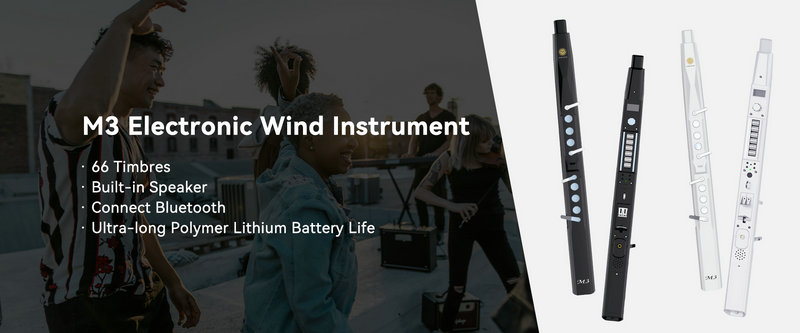
SUNRISE MELODY M3 Electronic Wind Instrument - The best-selling Electronic Wind Instrument
. 66 Timbres
. Built-in Speaker
. Connect Bluetooth
. Ultra-long Polymer Lithium Battery Life