
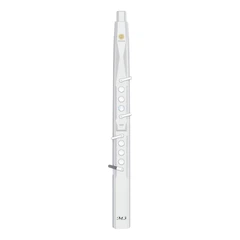


The Anatomy of an Electric Wind Instrument: A Comprehensive Guide
Introduction
The electric wind instrument (EWI) is a fascinating blend of traditional wind instruments and modern electronic technology.
It offers musicians the expressiveness of a woodwind or brass instrument with the versatility and capabilities of electronic sound production.
In this article, we will delve into the basic structure of the EWI, exploring its key components and how they contribute to the unique playing experience and sound of this innovative instrument.
1. The Mouthpiece
The mouthpiece is the primary interface between the musician and the EWI.
It is designed to resemble that of a traditional wind instrument, such as a saxophone or trumpet, allowing players with a background in acoustic instruments to transition smoothly.
The mouthpiece is where the player initiates sound through embouchure and breath control, much like an acoustic instrument.
2. The Body
The body of the EWI is where the electronic components are housed.
It is typically made of metal or plastic and is designed to be lightweight and durable.
The body contains the sensors, keypads, and other electronic circuitry that translate the player's input into digital signals.
3. The Keypads and Keys
Like a traditional wind instrument, the EWI features a series of keys that the player uses to change the pitch of the sound.
However, these keys are equipped with touch-sensitive sensors that detect pressure and the position of the player's fingers.
This allows for a wide range of expressive techniques, including pitch bending and vibrato, which are controlled with a high degree of precision.
4. The Touch-Sensitive Sensors
Advanced EWI models often include touch-sensitive sensors that detect not only the position of the keys but also the pressure applied by the player's fingers.
This sensitivity enables players to perform nuanced expressions, such as subtle pitch changes and dynamic variations, that are characteristic of acoustic wind instruments.
5. The Breath Sensor
The breath sensor is a critical component of the EWI, as it translates the player's breath control into expressive elements of the sound.
Located near the mouthpiece, the sensor detects the intensity and flow of the player's breath, allowing for dynamic control over the volume and timbre of the instrument.
6. The Electronic Circuitry
The electronic circuitry of the EWI is responsible for processing the input from the mouthpiece, keys, and sensors.
It includes digital signal processors (DSPs) that shape the sound, amplifiers that project the sound, and interfaces that connect the instrument to external devices, such as sound modules, synthesizers, or computers.
7. The Sound Generation
The EWI generates sound through a combination of digital waveform synthesis and sampling technology.
High-quality samples of acoustic instruments are often used, which can be manipulated and modified to create a wide array of sounds beyond those of traditional wind instruments.
8. The Output and Connectivity
Most EWIs feature a variety of output options, including headphones, line outputs, and MIDI connections.
These allow the musician to connect the instrument to amplifiers, PA systems, or recording equipment.
MIDI output enables the EWI to control external sound modules or digital audio workstations, expanding its creative potential.
9. The Power Source
EWIs are typically powered by batteries, which are housed within the instrument's body.
Some models offer the option to connect to an external power supply for extended playing sessions.
The battery life and power management are crucial considerations for performers who rely on the instrument for live performances.
10. The Controller Features
Advanced EWIs often function as MIDI controllers, allowing the musician to control external sound modules or effects processors.
This adds another layer of versatility, as the EWI can serve as a central control surface in a musician's setup.
Conclusion
The electric wind instrument is a sophisticated piece of technology that offers musicians a unique platform for expression.
Its structure, marrying traditional wind instrument design with cutting-edge electronics, allows for a playing experience that is both familiar and innovative.
As technology continues to evolve, the EWI is poised to play an increasingly significant role in the world of music, bridging the gap between acoustic and electronic sound.
For Further Exploration
For those interested in a deeper dive into the EWI, exploring the following topics can provide additional insights:
The history and evolution of the EWI.
Notable musicians and composers who have incorporated the EWI into their work.
A comparison of different EWI models and their unique features.
Tutorials on mastering the EWI's expressive techniques.
The role of the EWI in various music genres, from jazz and pop to experimental and electronic music.
This overview provides a framework for a more detailed article. Each section can be expanded with specific examples, technical specifications, historical context, and interviews with EWI players and manufacturers to reach the desired word count.
SUNRISE MELODY XR3000 Electronic Saxophone EWI Digital Wind Instrument
Timbre: 60 types
Five octaves metal roller
4 fingering modes available to select


