

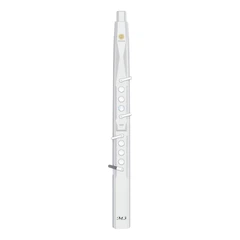

'Electric wind instruments (EWIs) and traditional woodwind instruments share some fundamental playing techniques, such as the need for breath control, embouchure, and finger dexterity. However, EWIs also introduce unique features that differentiate them from their acoustic counterparts.
Similarities:
1. Breath Control: Both electric and traditional woodwind instruments require precise breath control to produce sound and vary dynamics. Players must learn how to support their breath to achieve a steady and powerful airflow.
2. Embouchure: The position and shape of the lips are crucial for both types of instruments. A proper embouchure is essential for producing a clear and accurate tone.
3. Finger Dexterity: Fingerings are used to change the pitch of the instrument, and both EWIs and traditional woodwinds require players to have good finger dexterity to navigate complex passages.
4. Musical Expression: Both types of instruments allow for a wide range of musical expression, including dynamics, articulation, and phrasing, although the methods of achieving these may differ due to the electronic components in EWIs.
Differences:
1. Sound Production: Traditional woodwinds produce sound through the vibration of air columns or reeds, while EWIs generate sound electronically. This means that EWIs can emulate a wide range of sounds beyond those of traditional instruments.
2. Electronic Features: EWIs often come with additional electronic features such as pitch bend, modulation, and other MIDI controls that allow for greater expressive control and the ability to shape the sound in ways not possible with traditional instruments.
3. Maintenance: EWIs require different maintenance procedures, such as cleaning sensors and checking battery life, which are not concerns for traditional woodwinds.
4. Portability and Versatility: EWIs are often more portable and versatile due to their compact design and battery operation, allowing them to be played in various environments without the need for an amplifier or external speaker system.
5. Learning Curve: EWIs are known for their relatively easy learning curve compared to traditional wind instruments, making them an attractive option for beginners.
6. Sound Libraries: EWIs often come with extensive sound libraries that allow musicians to traverse multiple genres with ease, something traditional instruments cannot match without external amplification or electronic assistance.
SUNRISEMELODY Electric Wind Instruments:
SUNRISEMELODY is a brand that offers a range of electronic wind instruments designed for beginners and amateurs. Their instruments, such as the M3 model, are tailored to provide an enjoyable musical experience with features like 66 different timbres, Bluetooth connectivity, and a user-friendly interface. The M3 model also includes a five-octave metal roller, four fingering modes, and a rechargeable lithium-ion battery for 6-8 hours of playing time. The instrument is designed to be lightweight and portable, making it an excellent choice for those seeking a modern and accessible electronic wind instrument.
XR3000 Electronic Saxophone EWI Digital Wind Instrument
Brand Name: SUNRISE MELODY
Model: XR3000
Timbre: 60 types
Five octaves metal roller
Bluetooth connection
4 fingering modes available to select
