
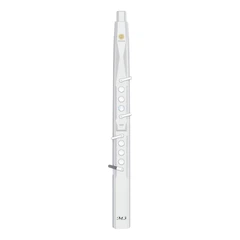


When practicing EWI improvisation, there are several common mistakes that you should avoid:
I. Lack of Foundation
Insufficient Instrument Mastery
Fingering Errors: One of the most basic mistakes is not having a solid grasp of the EWI's fingering system. This can lead to incorrect notes and a lack of fluidity in playing. For example, if you're not familiar with the fingering for chromatic scales, you might stumble during an improvisation when trying to play a series of closely - spaced notes. It's essential to practice scales, arpeggios, and other technical exercises regularly to build finger dexterity and muscle memory.
Poor Breath Control: Just like with traditional wind instruments, improper breath control can undermine your improvisation. Without the ability to control volume, tone, and sustain through your breath, your playing may sound inconsistent. For instance, if you don't have good control over crescendos and decrescendos, your melodies may lack the dynamic range necessary to be engaging. You need to practice long tones and different breath pressures to ensure a consistent and expressive sound.
Weak Music Theory Knowledge
Scales and Modes: A lack of understanding of different scales and modes can limit your melodic options. If you only know a few basic scales, such as the major scale, you'll struggle to create interesting melodies over more complex chord progressions. For example, in a jazz context, not knowing the Dorian or Mixolydian modes can prevent you from playing melodies that fit well with the typical ii - V - I chord progressions.
Chords and Harmony: Ignoring chord progressions and harmony concepts is a significant mistake. If you don't understand how chords interact and the notes that work well against them, your improvisations may sound dissonant or out of place. For instance, if you're playing over a minor chord and you use notes that are more appropriate for a major chord, the resulting sound can be jarring.
II. Listening and Imitation
Limited Genre Exposure
Narrow Musical Diet: If you only listen to one genre of music, your improvisational ideas will be limited. For example, if you only focus on pop music and ignore jazz or world music, you'll miss out on the rich rhythmic and melodic concepts from those genres. Jazz, with its complex harmonies and syncopated rhythms, and world music, with its diverse tonal systems and ornamentation, can offer a wealth of inspiration for your EWI improvisation.
Failure to Analyze Recordings: Simply listening to music without analyzing it is a missed opportunity. You need to study the solos of great musicians, transcribe them, and identify patterns and motifs. If you don't, you won't learn the techniques and creative ideas that can enhance your own improvisations. For example, you might miss out on how a particular musician uses space and silence to build tension in a solo.
III. Improvisation Process
Starting Too Complex
Overambitious Chord Progressions: Jumping into complex chord progressions without first mastering simpler ones is a mistake. If you try to improvise over advanced jazz or fusion progressions before you're comfortable with basic I - IV - V progressions, you'll likely get lost. You need to build your skills gradually, starting with straightforward chord changes and melodies and then adding complexity as you improve.
Over - Ornamentation: Adding too much ornamentation, such as trills, turns, and grace notes, too early in your improvisation practice can make your playing sound cluttered. You should first focus on creating a clear and coherent melodic line and then add ornamentation sparingly to enhance it. For example, if you over - use trills, it can become a distracting habit rather than an effective musical device.
Lack of Rhythmic Variety
Monotony: Playing with the same rhythmic pattern throughout an improvisation can make it dull. If you rely too much on quarter - notes or a simple repeated rhythm, your playing won't have the energy and interest that comes from rhythmic diversity. You need to experiment with different note values, such as eighth - notes, sixteenth - notes, and triplets, and use syncopation to create a more engaging rhythmic profile.
Ignoring the Rhythm Section: When improvising with a backing track or other musicians, not paying attention to the rhythm section is a mistake. The drums, bass, and other rhythm instruments provide the foundation for your improvisation. If you don't lock in with the rhythm, your playing can seem out of sync and disrupt the overall musical flow.
IV. Practice and Feedback
Isolation from Backing Tracks and Musicians
No Backing Track Practice: Failing to practice with backing tracks can limit your ability to play in a musical context. Backing tracks provide a harmonic and rhythmic framework that mimics a real - life performance situation. Without using them, you may struggle to develop the skill of fitting your improvisations into a pre - determined musical structure.
Avoiding Collaboration: Not jamming with other musicians can prevent you from learning how to interact and communicate in a musical setting. In a group improvisation, you need to listen and respond to other players, and this skill can only be developed through hands - on experience. For example, you might not learn how to take a cue from another musician to change the tempo or mood of the music.
Lack of Self - Evaluation
Not Recording: If you don't record your improvisations, you won't have a way to objectively assess your progress. Recording allows you to hear your playing from an outside perspective and identify areas for improvement. Without it, you might continue to make the same mistakes without realizing it.
Ignoring Areas for Improvement: After recording, it's important to listen critically and set goals for improvement. If you simply listen to your recordings without analyzing them or setting goals, you won't be able to make meaningful progress in your EWI improvisation skills.
SUNRISE MELODY M1 Electronic Wind Instrument
. Revisit the passion and dreams of youth
. M1 electric clarinet wind instrument -- The good news for beginners
. Rich and diverse timbres
. Powerful functions and easy operation
. Perfect after-sales service


