

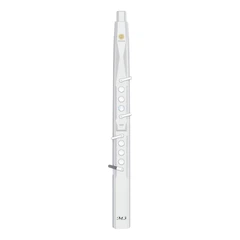

Improvisation is one of the most exciting and challenging aspects of playing the Electronic Wind Instrument (EWI). It allows you to express your creativity, connect with other musicians, and bring a unique energy to your performances. Here are some comprehensive steps and strategies to help you practice and master EWI improvisation.
I. Build a Solid Foundation
A. Master the Instrument Basics
Fingering and Technique
Before diving into improvisation, you need to have a good grasp of the EWI's fingering system. Practice scales, arpeggios, and chromatic runs regularly. This will build finger dexterity and muscle memory. For example, play major and minor scales in different keys, starting slowly and gradually increasing the speed as you become more proficient.
Breath Control
Just like with traditional wind instruments, breath control is crucial for the EWI. Learn to control the volume, tone, and sustain of your notes through your breath. Practice long tones, crescendos, and decrescendos. You can also experiment with different breath pressures to produce a variety of sounds. For instance, a softer breath can create a mellow tone, while a stronger breath can result in a more intense sound.
B. Understand Music Theory
Scales and Modes
Study different scales and modes thoroughly. Know how to play major, minor, pentatonic, and blues scales in all keys. For example, the pentatonic scale is a favorite among improvisers because it provides a simple yet effective framework for creating melodies. Understand the relationships between the notes of these scales and how they can be used to build phrases.
Chords and Harmony
Familiarize yourself with basic chord progressions and harmony concepts. Know how to identify the root, third, and fifth of a chord. Understand how chords move and change in different musical contexts. This knowledge will help you create melodies that interact harmonically with the underlying chord progressions. For instance, if you're playing over a jazz chord progression, you'll need to know which notes will sound good against the changing chords.
II. Listen and Absorb
A. Listen to Different Genres
Jazz
Jazz is a rich source of improvisation. Listen to great jazz musicians like Charlie Parker, John Coltrane, and Miles Davis. Pay attention to how they build phrases, use rhythm, and interact with the rhythm section. Notice the different styles of improvisation, such as bebop, cool jazz, and free jazz. For example, in bebop, the lines are often fast - paced and full of complex melodic ideas.
Classical
Even in classical music, there are elements of improvisation, especially in earlier periods. Listen to composers like Bach and Mozart, who were known for their improvised performances. Notice how they developed themes and motifs. In Bach's organ works, for example, he would often improvise elaborate fugues based on a simple theme.
World Music
Explore world music from different cultures. The melodic patterns and rhythms of Indian classical music, the ornamentation in Middle - Eastern music, and the complex polyrhythms of African music can all inspire your EWI improvisation. For instance, the use of microtones in Indian music can open up new sonic possibilities for your playing.
B. Analyze Recordings
Transcribe Solos
Choose solos by your favorite EWI or other wind instrument players and transcribe them. This means writing down the notes they play as accurately as possible. Analyze the transcribed solos to understand the player's choice of notes, rhythms, and phrasing. For example, you might notice how a particular player uses a specific scale over a chord progression or how they create tension and release in their phrases.
Identify Patterns and Motifs
Look for recurring patterns and motifs in the recordings you listen to. These could be short melodic phrases, rhythmic patterns, or harmonic sequences. Once you identify them, practice incorporating them into your own improvisations. For example, a common jazz motif might be a series of ascending and descending arpeggios over a ii - V - I chord progression.
III. Start Simple and Build
A. Improvise over Simple Chord Progressions
Use Basic Progressions
Begin with simple chord progressions like the I - IV - V in a major key or the i - iv - V in a minor key. Play the root notes of the chords on the EWI and then start to improvise simple melodies that follow the movement of the chords. For example, if you're playing over a C major I - IV - V (C - F - G), you can use the C major scale to create melodies that sound good against each chord.
Focus on Rhythm
At first, focus on creating rhythmic variety. Use different note values like quarter - notes, eighth - notes, and sixteenth - notes. Experiment with syncopation, where you place accents on off - beats. For example, you might play a simple melody with a syncopated rhythm to make it more interesting and engaging.
B. Expand Your Melodic Vocabulary
Incorporate Different Scales
As you become more comfortable, start incorporating different scales into your improvisations. Try using the Dorian mode over a minor chord progression or the Mixolydian mode over a dominant chord. For example, if you're playing over a D minor chord, the D Dorian scale (D, E, F, G, A, B♭, C) can add a different color to your melody.
Add Ornamentation
Learn to add ornamentation to your melodies. This can include trills, turns, and grace notes. Ornamentation can add a touch of elegance and expressiveness to your improvisations. For example, a trill on a long note can create a sense of anticipation and excitement.
IV. Practice with Backing Tracks and Other Musicians
A. Use Backing Tracks
Find or Create Appropriate Tracks
Look for backing tracks online that match the style and chord progressions you want to practice. You can also create your own using music software. For example, if you're practicing jazz improvisation, find a jazz - style backing track with a rhythm section of drums, bass, and piano.
Practice with Different Tempos and Styles
Practice improvising with backing tracks at different tempos and in different musical styles. Start with a slow tempo to build confidence and gradually increase the speed. This will help you develop your ability to think and play quickly. For example, you might practice improvising over a blues - style backing track at a slow tempo and then speed it up to a more energetic tempo.
B. Jam with Other Musicians
Join a Music Group
Join a local music group, such as a jazz ensemble, a rock band, or a world music collective. Jamming with other musicians will expose you to different playing styles and musical ideas. You'll learn to listen and respond to other players in real - time. For example, in a jazz jam session, you'll need to follow the lead of the rhythm section and interact with other soloists.
Communicate and Listen
During jam sessions, communication is key. Listen to what the other musicians are playing and try to fit your improvisations into the overall musical texture. Use eye contact and body language to communicate with your fellow musicians. For example, you might signal to another player that you're about to take a solo or that you want to change the tempo or mood of the music.
V. Record and Evaluate Yourself
A. Record Your Improvisations
Use Recording Equipment
Use a digital recorder, a computer with recording software, or even your smartphone to record your improvisation sessions. Make sure the recording quality is good enough to hear the details of your playing. For example, if you're using a smartphone, use an external microphone for better sound capture.
Keep a Record
Keep a record of your recordings and label them with the date, the chord progressions you were playing over, and any other relevant details. This will allow you to track your progress over time. For example, you might notice how your use of rhythm or your choice of scales has changed from one recording to another.
B. Analyze and Improve
Listen Critically
Listen to your recordings with a critical ear. Notice areas where you think you played well and areas that need improvement. Pay attention to your tone quality, your choice of notes and rhythms, and your ability to stay in time. For example, you might notice that you tend to play too many long notes and not enough rhythmic variety.
Set Goals
Based on your analysis, set goals for your next practice sessions. For example, you might aim to incorporate more complex scales, work on your rhythmic precision, or improve your ability to build tension and release in your phrases. Then, continue to practice and record, and watch as your improvisation skills on the EWI improve over time.
In conclusion, practicing EWI improvisation is a journey that requires patience, dedication, and a willingness to learn and experiment. By building a solid foundation, listening to a wide range of music, starting simple and gradually expanding, practicing with backing tracks and other musicians, and recording and evaluating yourself, you can develop your improvisation skills and bring a new level of creativity to your EWI playing.
SUNRISE MELODY M1 Electronic Wind Instrument
. Revisit the passion and dreams of youth
. M1 electric clarinet wind instrument -- The good news for beginners
. Rich and diverse timbres
. Powerful functions and easy operation
. Perfect after-sales service
