

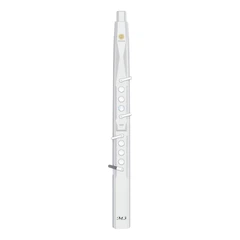

Methods for achieving accurate pitch control
Be familiar with the fingering keys:
The pitch of electric wind instruments/electronic-wind-instrument/electric-saxophone-ewi.html is mainly controlled by keys. Different key combinations correspond to different notes. First, you must remember the fingering table of the electric wind instrument, just like learning traditional wind instruments, and know the keys corresponding to each finger and the pitch produced by their combination. For example, in some electric wind models, pressing a specific combination of keys can raise or lower an octave. The player needs to master these fingering operations through repeated practice to ensure that the corresponding keys can be pressed accurately when a specific pitch needs to be played.
For some electric wind instruments with glissando function, you also need to master the use of glissando keys. Glissando can make the pitch transition smoothly between two notes, which requires the player to accurately control the start and end time of the glissando key and the amplitude of the slide, so as to accurately achieve the transition from one pitch to another.
Breath control:
Breath also plays a key role in pitch control. Generally speaking, the size of the blowing force will affect the pitch. In most electric wind instruments, a stable and appropriate blowing force can keep the pitch stable. If the air is blown too hard, the pitch may be too high; if the air is blown too weak, the pitch may be too low. The player needs to find the appropriate blowing force corresponding to each pitch through practice, and be able to maintain this force stable during the performance.
In addition, the continuity of breath is also important. When playing long notes or continuous melodies, the breath should be delivered evenly to avoid changes in pitch caused by breath fluctuations. Just as the force and speed of the bow need to be kept uniform when playing the violin, the breath continuity in the performance of the electric blowpipe also directly affects the accuracy of the pitch.
Use the tuning function:
Many electric blowpipes are equipped with a tuning function. The player can use a tuner or other equipment to tune the electric blowpipe before playing so that its base pitch is consistent with the standard pitch. Some electric blowpipes have built-in tuning devices. By adjusting the corresponding knobs or parameter settings, the pitch can be fine-tuned to adapt to different performance environments and music requirements.
At the same time, some advanced electric blowpipes can also adjust the pitch of each note individually, which is very useful for players who pursue extreme pitch accuracy. They can fine-tune individual notes that are prone to intonation problems according to their own playing habits and the requirements of specific musical works.
Tips for improving intonation
Listening training:
Good hearing is the basis for ensuring intonation. Performers need to perform listening training frequently to improve their sensitivity to pitch. You can establish the correct concept of pitch by listening to standard sounds (such as A = 440Hz on the piano), and spend time every day doing pure tone listening exercises, such as using the intonation training software on your mobile phone to judge whether the pitch is accurate after listening to a single tone.
When listening to musical works, carefully distinguish the relationship between the pitch and interval of different instruments, and strengthen the perception of pitch changes. For example, when listening to a symphony, pay attention to the pitch coordination between the string group, woodwind group and brass group, and learn how to grasp the intonation in a complex musical texture.
Slow practice:
When practicing new pieces, the slow practice method is very effective for improving intonation. Slow down the speed of the song so that you can focus more on the pitch and fingering of each note. During slow playing, listen carefully to see if each pitch is accurate, and adjust the inaccurate pitch in time.
For example, when practicing a song with a complex melody, play it one note at a very slow speed, make sure that each pitch is accurate, and then gradually speed up. This method can better form muscle memory, so that fingers and breath can be coordinated more accurately, thereby improving intonation.
Use auxiliary tools:
Using an electronic tuner is an effective auxiliary means to improve intonation. During practice and performance, connect the electric blowpipe to the tuner, and the tuner will display in real time whether the pitch is accurate and the degree of high or low. According to the feedback from the tuner, the performer can adjust his or her performance in time, such as adjusting the breath strength or fingering.
There are also some music software with intonation prompts, which can provide intonation prompts according to the melody and rhythm of the music during performance to help the performer better grasp the pitch. For example, when the performer's pitch deviates from the standard pitch, the software will issue a warning or display the direction of correction.
/electronic-wind-instrument/electric-saxophone-ewi.html
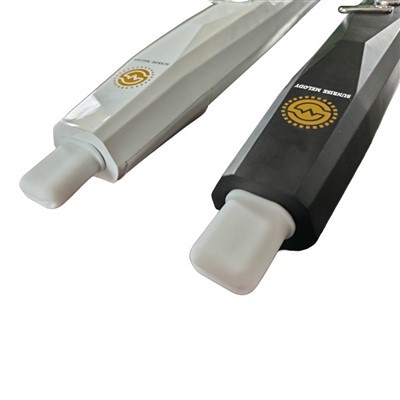
How do you achieve accurate pitch control on a wind instrument? What techniques can help you improve your playing?
Nov 01, 2024
Leave a message
How is the fingering of electric wind instruments different from that of traditional wind instruments? How can one quickly adapt to and master the fingering of electric wind instruments?
Previous
What is the circuit structure and working mechanism inside an electric wind instrument? How does it affect its tone and performance?
Next