
Electronic wind instruments can interact with other electronic instruments or musical devices through several methods, here are some common ways:
MIDI Connections: MIDI (Musical Instrument Digital Interface) is a widely used protocol that allows electronic instruments to communicate with each other. Electronic wind instruments often have MIDI output ports that can send MIDI data, such as note-on/off messages, pitch bend, and control changes, to other MIDI-compatible devices like keyboards, synthesizers, drum machines, or computer music software. Conversely, they can also receive MIDI data from other sources to control their own parameters or play along with the received MIDI information. For example, an electronic wind instrument can be connected to a MIDI keyboard, and when a key is pressed on the keyboard, the corresponding note can be triggered on the electronic wind instrument, or the electronic wind instrument's controls can be mapped to the keyboard's sliders or knobs for real-time parameter adjustments.
Audio Connections: Electronic wind instruments typically have audio output jacks (such as 1/4" or 3.5mm) that can be connected to amplifiers, speakers, or mixing consoles. This allows the sound produced by the electronic wind instrument to be amplified and heard. Additionally, some electronic wind instruments may have audio input jacks, enabling them to receive audio signals from other sources. For instance, an electronic wind instrument can be connected to a computer or a portable music player, and the audio from the external device can be played through the instrument's speakers or used as a background track while playing the instrument.
USB Connections: Many modern electronic wind instruments come with USB ports, which offer several possibilities for interaction. They can be connected directly to a computer, allowing for easy integration with music production software or digital audio workstations (DAWs). The USB connection enables the transfer of MIDI data as well as audio streaming, enabling the instrument to be used as a controller or a sound source within the software environment. Some electronic wind instruments may also support USB MIDI host functionality, which means they can act as a central hub to connect other USB MIDI devices, such as keyboards or controllers, creating a more complex setup.
Wireless Technologies: In some cases, electronic wind instruments may support wireless connection options, such as Bluetooth. This allows for seamless interaction with other Bluetooth-enabled devices, such as speakers, headphones, or mobile devices. Wireless connectivity provides greater freedom of movement and eliminates the need for physical cables, making it convenient for performers in various settings, such as on stage or in a rehearsal space.
Sound Module Integration: Some electronic wind instruments are designed to work in conjunction with specific sound modules. The sound module contains a library of sounds and effects that can be accessed and controlled by the electronic wind instrument. The instrument sends control signals to the sound module to select different sounds or apply effects, enhancing the sonic capabilities and versatility of the overall setup.
Sync and Clock Signals: In a multi-device setup, sync and clock signals can be used to synchronize the playback or sequencing of different electronic instruments or musical devices. Electronic wind instruments can receive or send these sync signals to ensure that they are in time with the other components of the system, allowing for coordinated performances or recordings.
Customization and Programming: Many electronic wind instruments offer the ability to customize and program various parameters, such as sound presets, key mappings, or MIDI control assignments. This allows musicians to tailor the instrument's behavior and interaction with other devices to suit their specific needs and creative preferences. Some advanced models may even support user-defined scripting or programming languages, enabling more complex and unique interactions.
Network Connections: In more advanced setups, electronic wind instruments can be connected to a local network or the internet, allowing for remote control, access to online music resources, or participation in online music collaborations. This opens up new possibilities for musicians to interact with others from different locations or to access a vast library of sounds and musical content.
External Controllers and Pedals: Electronic wind instruments can be connected to external controllers, such as expression pedals, footswitches, or breath controllers. These controllers can provide additional means of controlling the instrument's parameters, such as volume, pitch bend, modulation, or effects, giving the musician more expressive control during performance. For example, a breath controller can be used to vary the volume or timbre of the sound based on the player's breathing intensity, adding a more natural and dynamic feel to the playing.
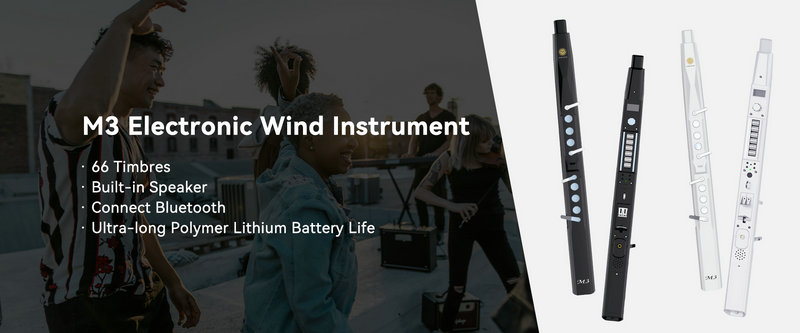
SUNRISE MELODY M3 Electronic Wind Instrument - The best-selling Electronic Wind Instrument
. 66 Timbres
. Built-in Speaker
. Connect Bluetooth
. Ultra-long Polymer Lithium Battery Life