
EWIs can generally be repaired if they are damaged, although the process and ease of repair can vary depending on several factors:
1. Type of Damage
Electrical and Electronic Failures
Power - related Issues: If there is a problem with the power supply, such as a faulty battery connector or a damaged power adapter, these components can often be replaced. For example, a loose or corroded battery terminal can be repaired by cleaning the contacts or replacing the battery compartment if necessary. In the case of a malfunctioning power adapter, a replacement with a compatible adapter of the correct voltage and amperage can usually solve the problem.
Sensor Malfunctions: When sensors (breath sensors or finger sensors) stop working properly, it may be possible to repair them. Sometimes, the issue could be due to a software glitch, which can be fixed by updating the firmware or recalibrating the sensor through the instrument's settings menu. If the sensor is physically damaged, it may require replacement. However, replacing sensors can be a more complex task as it often requires opening the instrument and dealing with delicate electronic components. In some cases, it may be best to have a professional technician handle the repair.
Circuit Board Problems: Issues with the circuit board, such as a short - circuit or a damaged component (like a capacitor or a resistor), are more difficult to repair. These repairs usually require advanced electronics knowledge and specialized tools. A technician would need to diagnose the problem using equipment like a multimeter to identify the faulty component and then replace it. In some cases, the entire circuit board may need to be replaced if the damage is extensive.
Physical Damage
Casing and Key Damage: If the instrument's casing is cracked or broken, it may be possible to replace the damaged part. Some EWIs have replaceable panels or casings that can be ordered from the manufacturer or third - party suppliers. Broken or stuck keys can also be repaired. If a key is bent, it can often be straightened with careful manipulation. If a key mechanism is damaged, the individual parts (such as springs or hinges) may need to be replaced. This requires some mechanical aptitude and knowledge of the instrument's key construction.
Connector and Port Damage: Damaged connectors (such as MIDI ports or audio output jacks) can usually be replaced if the damage is not too severe. However, this requires soldering skills if the connector is soldered to the circuit board. In cases where the port has been physically broken off or the internal contacts are damaged beyond repair, the circuit board may need to be replaced or sent to a professional repair service.
2. Repairability Factors
Availability of Parts
The availability of replacement parts is a crucial factor. For popular and well - supported EWI models, manufacturers usually offer a range of spare parts, including sensors, circuit boards, and casings. Third - party suppliers may also provide compatible parts. However, for less common or older models, finding the right parts can be a challenge. In such cases, it may be necessary to salvage parts from other similar instruments or rely on custom - made components, which can be expensive and time - consuming.
Technical Expertise Required
Repairing an EWI can require a range of technical skills. Simple tasks like cleaning contacts or replacing a battery may be within the capabilities of an average user with basic DIY skills. However, more complex repairs such as diagnosing and fixing circuit board problems or calibrating advanced sensors require a higher level of electronics and musical instrument repair expertise. Some repairs may also involve software - related issues, such as flashing the firmware or debugging software glitches, which demand knowledge of programming and the instrument's internal software architecture.
Warranty and Service Options
If the EWI is under warranty, the manufacturer's authorized service centers can provide free or discounted repairs. It is important to follow the manufacturer's warranty procedures, which usually require proper documentation of the purchase and a description of the problem. After the warranty period expires, some manufacturers still offer repair services, although these may come at a cost. There are also independent music instrument repair shops that may be able to handle EWI repairs, especially if they have technicians with experience in electronic musical instruments.
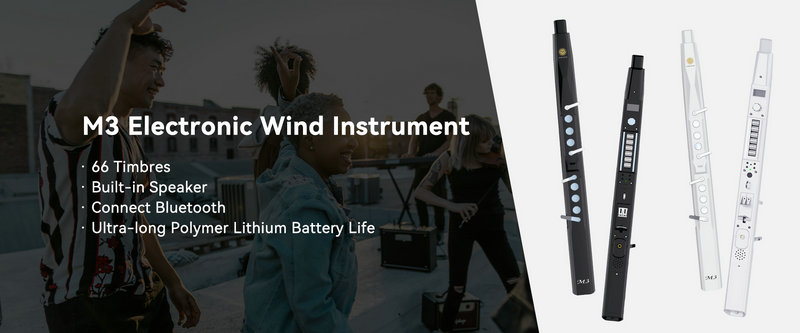
SUNRISE MELODY M3 Electronic Wind Instrument - The best-selling Electronic Wind Instrument
. 66 Timbres
. Built-in Speaker
. Connect Bluetooth
. Ultra-long Polymer Lithium Battery Life