
People with physical disabilities may face some challenges but not necessarily strict restrictions when playing electronic wind instruments.
Mobility Limitations:
For those with limited arm or hand mobility, it might be difficult to hold and manipulate the instrument in the traditional way. However, there are adaptive devices and modifications available. For example, there are straps and holders that can help secure the instrument in place, or custom-made grips that are easier to hold for people with weaker grasps.
Some electronic wind instruments are lightweight and designed with ergonomic features that can make them more accessible for people with limited mobility. Additionally, some instruments can be mounted on stands or supports to reduce the need for extensive physical handling.
Fine Motor Skills Challenges:
People with limited fine motor skills may find it challenging to press the keys or buttons accurately. However, many electronic wind instruments offer options for adjusting the sensitivity of the controls or using alternative input methods. For instance, some instruments can be controlled through touch screens or foot pedals, which can be more accessible for those with limited hand dexterity.
There are also software programs and apps that can be used in conjunction with electronic wind instruments to provide additional control options and customization. These can allow users to adjust settings such as note duration, volume, and pitch using voice commands or other alternative input methods.
Breathing Difficulties:
For people with breathing disabilities, playing a wind instrument that requires a lot of breath control can be challenging. However, some electronic wind instruments offer adjustable breath sensitivity settings or can be played without relying solely on breath control. For example, some models can be triggered by buttons or switches instead of breath, or can be set to require less air pressure for sound production.
Visual Impairments:
People with visual impairments may face difficulties in reading the instrument's controls or displays. However, many electronic wind instruments have features such as large, tactile buttons or voice prompts that can make them more accessible. Additionally, there are braille labels and other adaptive technologies available that can help visually impaired musicians navigate the instrument.
In general, while there may be some challenges for people with physical disabilities when playing electronic wind instruments, with the right adaptations and modifications, as well as creativity and determination, it is possible for them to enjoy playing and expressing themselves musically.
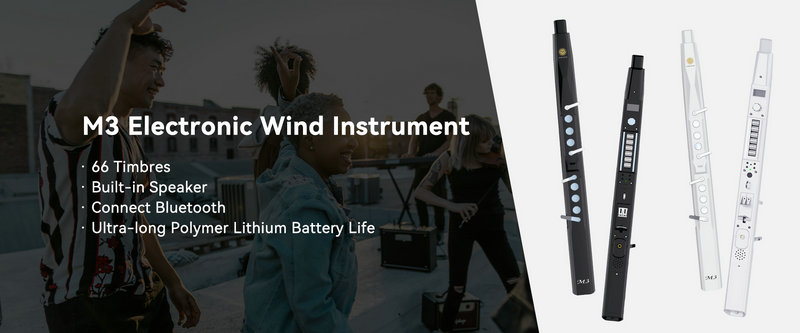
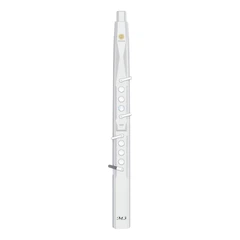
SUNRISE MELODY M3 Electronic Wind Instrument - The best-selling Electronic Wind Instrument
. 66 Timbres
. Built-in Speaker
. Connect Bluetooth
. Ultra-long Polymer Lithium Battery Life