
There are some fingering techniques specific to electronic wind instruments:
Customizable fingering settings:
Many electronic wind instruments offer the option to customize the fingering. For example, players can assign different notes or functions to specific keys according to their own preferences and playing habits. This allows for a high degree of personalization and flexibility in playing, enabling players to create unique playing styles and adapt the instrument to their specific needs.
Use of additional function keys:
Electronic wind instruments often have extra keys or controls that are not found on traditional wind instruments. These can be used to control various functions such as changing sounds, adjusting effects (like reverb, delay, or modulation), or accessing different preset modes. Mastering the use of these additional keys is a specific technique for electronic wind instruments, as it adds a new dimension to the playing experience and requires players to coordinate their finger movements with these extra functions.
Octave roller or pitch bend techniques:
Some electronic wind instruments are equipped with an octave roller or a similar mechanism for quickly changing the pitch range. Learning to control the octave roller smoothly and accurately is a specific skill for these instruments. For example, knowing when and how to use the octave roller to switch between different octaves during a performance can greatly enhance the expressiveness of the music. Additionally, pitch bend functions, which allow for subtle or dramatic changes in pitch, require specific finger control and coordination to achieve the desired musical effect.
Fingering for special effects:
Certain electronic wind instruments have features that enable special effects through specific fingering combinations. For instance, some models may allow for glissando (a smooth slide between two pitches) by using a particular finger movement or combination of key presses. Or there might be techniques for creating growl effects (a raspy or distorted sound) that involve specific finger actions along with breath control.
Finger sensitivity and velocity control:
Since the keys of electronic wind instruments are often sensitive to touch, players need to develop precise control over their finger pressure and speed. This is important for achieving accurate pitches, consistent volumes, and clean articulation of notes. Different levels of finger pressure can trigger different intensities of sound or activate specific functions on the instrument. Additionally, being able to execute rapid finger movements accurately is crucial for playing fast passages and complex musical phrases.
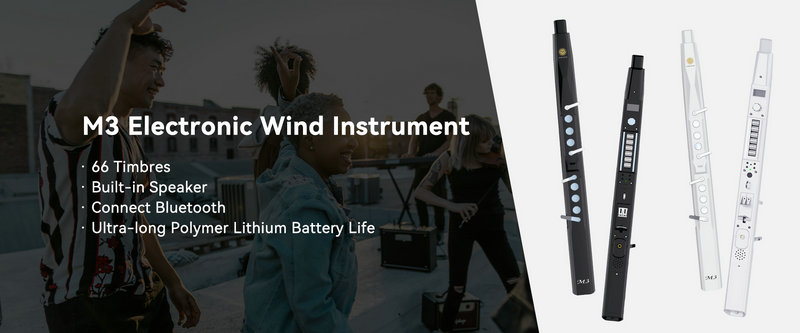
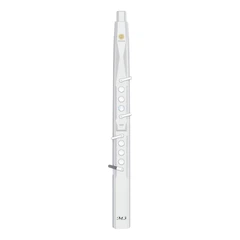
SUNRISE MELODY M3 Electronic Wind Instrument - The best-selling Electronic Wind Instrument
. 66 Timbres
. Built-in Speaker
. Connect Bluetooth
. Ultra-long Polymer Lithium Battery Life