
Are Electric Wind Instruments Suitable for Professional Performances?
The question of whether electric wind instruments are suitable for professional performances is a complex one that depends on a variety of factors. On one hand, these instruments offer several advantages that can make them highly appealing for professional musicians. On the other hand, there are also some considerations that may limit their use in certain performance settings.
One of the major advantages of electric wind instruments is their versatility. These instruments can produce a wide range of tonal possibilities, from traditional wind instrument sounds to highly processed and synthesized tones. This allows musicians to explore different musical styles and create unique sonic landscapes that can captivate audiences. For example, an electric saxophone can mimic the sound of a traditional saxophone but also be manipulated to produce distorted, ambient, or even otherworldly sounds. This versatility is particularly useful in genres such as jazz fusion, electronic music, and experimental music, where musicians are constantly looking for new ways to express themselves.
In addition to tonal versatility, electric wind instruments can also be connected to a variety of effects processors and digital audio workstations. This gives professionals the ability to customize their sound in real time, adding effects such as reverb, delay, distortion, and modulation. Musicians can use these effects to enhance the emotional impact of their performances, create dynamic changes in the music, and interact with other instruments and elements in the soundscape. For instance, a guitarist and an electric wind instrument player can synchronize their effects to create a seamless blend of sounds, adding depth and complexity to the performance.
Another advantage of electric wind instruments is their portability. Compared to traditional wind instruments, which can be bulky and heavy, electric wind instruments are often more lightweight and compact. This makes them easier to transport and set up, especially for musicians who perform in different locations or on tour. For example, a professional musician who frequently travels between gigs can pack an electric wind instrument in a carry-on bag or backpack, saving time and effort compared to lugging around a large acoustic instrument. Additionally, the portability of electric wind instruments allows musicians to perform in unconventional spaces, such as outdoor festivals, small clubs, or even street corners, expanding their performance opportunities.
Furthermore, electric wind instruments are generally more durable than traditional instruments. They are less susceptible to damage from environmental factors such as humidity, temperature changes, and physical impacts. This reliability is crucial for professional musicians who depend on their instruments for a living. With proper care and maintenance, electric wind instruments can last for many years, providing a stable and consistent performance tool.
The visual appeal of electric wind instruments can also be a factor in professional performances. These instruments often have a modern and eye-catching design, which can add to the overall stage presence and visual impact of a performance. In some cases, the unique look of an electric wind instrument can attract the attention of the audience and create a memorable experience. For example, an electric flute with LED lights or a custom paint job can stand out on stage and enhance the visual aesthetics of a performance.
However, there are also some considerations that may limit the suitability of electric wind instruments for professional performances. One of the main concerns is the issue of familiarity and tradition. In certain traditional musical settings, such as a symphony orchestra or a classical chamber music ensemble, electric wind instruments may not be as readily accepted. Audiences and conductors may have a preference for the authenticity and traditional sound of acoustic wind instruments. Additionally, some musicians may find it challenging to adapt to the different playing techniques and feel of electric wind instruments, especially if they are highly trained in playing traditional instruments. For example, an oboist who has spent years mastering the nuances of the acoustic oboe may struggle to adjust to the electronic controls and sound production of an electric oboe.
Another consideration is the sound quality and authenticity of electric wind instruments. While these instruments can produce impressive sounds, some purists may argue that they lack the natural warmth and richness of acoustic instruments. The electronic nature of these instruments can sometimes result in a more processed and artificial sound, which may not be suitable for all musical genres or performance settings. For example, in a classical music concert, the subtle nuances and organic timbre of an acoustic clarinet may be preferred over the more synthetic sound of an electric clarinet. Additionally, the sound quality of electric wind instruments can be affected by factors such as the quality of the electronics, the type of amplifier or speaker system used, and the acoustics of the performance space.
So , electric wind instruments can be suitable for professional performances, but their suitability depends on several factors. Their versatility, portability, durability, and visual appeal make them an attractive option for musicians who are looking for new creative opportunities and who are comfortable with using electronic technology. However, in traditional musical settings or for audiences and musicians who value the authenticity of acoustic instruments, electric wind instruments may face some challenges. Ultimately, the decision to use electric wind instruments in professional performances should be based on the specific needs and preferences of the musician, the nature of the performance, and the expectations of the audience.
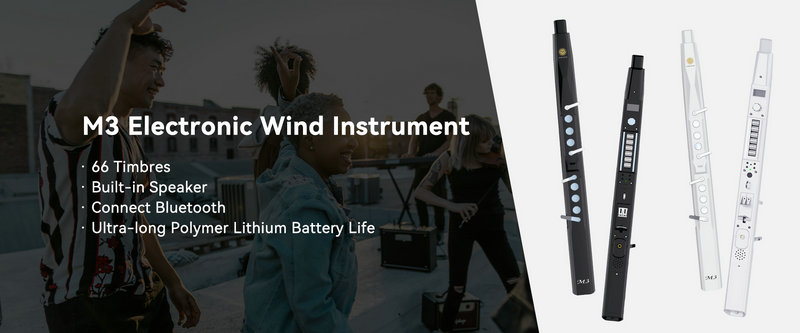
SUNRISE MELODY M3 Electronic Wind Instrument - The best-selling Electronic Wind Instrument
. 66 Timbres
. Built-in Speaker
. Connect Bluetooth
. Ultra-long Polymer Lithium Battery Life