

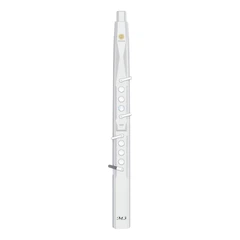

The Electronic Wind Instrument (EWI) is a sophisticated and expressive musical instrument that combines the elements of traditional wind instruments with modern electronic technology. Finger flexibility plays a crucial role in the effective performance of the EWI, and its significance can be explored from multiple aspects.
I. Precision in Note Production
Accurate Key Pressing
The EWI has a set of keys and buttons that the player needs to manipulate to produce different notes. Finger flexibility allows for precise and accurate key pressing. When the fingers are flexible, they can quickly and accurately land on the intended keys, minimizing the chances of hitting the wrong keys. For example, in a fast - paced musical passage with a series of closely - spaced notes, such as a chromatic run, flexible fingers can ensure that each note is played cleanly and in the correct pitch.
This precision is especially important in playing music that requires a high level of intonation accuracy. In classical music pieces or when playing in an ensemble, even a slight mis - key press can lead to a dissonant note that disrupts the overall harmony of the music. Finger flexibility helps the player to maintain the integrity of the musical line by ensuring that the correct notes are played every time.
Quick Transitions between Notes
Flexible fingers enable smooth and rapid transitions between different notes. In a melodic line, the ability to move from one note to another quickly is essential for creating a flowing and expressive performance. For instance, in a jazz improvisation where the player needs to jump between different scales and arpeggios, finger flexibility allows for seamless connections between the notes.
It also helps in playing complex musical phrases that involve wide intervals. When playing a melody that has large leaps between notes, such as from a low - pitched note to a high - pitched note in a single breath, flexible fingers can make the transition without hesitation. This quick movement between notes is not only important for technical proficiency but also for musical expressiveness, as it allows the player to bring out the nuances of the melody.
II. Execution of Complex Techniques
Articulation and Ornaments
Finger flexibility is vital for executing various articulation techniques. For example, in playing staccato notes, the fingers need to quickly release the keys after each note is played. Flexible fingers can achieve this rapid release, creating a crisp and distinct staccato effect. Similarly, in playing legato passages, the fingers must smoothly connect one note to the next, and finger flexibility enables this seamless legato playing.
Ornaments such as trills, mordents, and grace notes also rely on finger flexibility. A trill requires the fingers to rapidly alternate between two adjacent notes. With flexible fingers, the trill can be executed with speed and precision, adding a decorative and expressive element to the music. Grace notes, which are usually played quickly before a main note, demand quick finger movements to be played accurately and in time with the music.
Playing with Multiple Fingers Simultaneously
The EWI often requires the use of multiple fingers at the same time, especially when playing chords or polyphonic passages. Finger flexibility allows for the independent and coordinated movement of different fingers. For example, when playing a three - note chord, the player needs to press three different keys simultaneously, and each finger must apply the correct amount of pressure and be in the right position.
In polyphonic playing, where different musical lines are played with different fingers, finger flexibility is crucial for keeping each line clear and distinct. The player must be able to control the fingers independently to play different rhythms and melodies at the same time. This ability is essential for playing complex musical works such as Bach's polyphonic compositions or modern music that incorporates multiple layers of sound.
III. Adaptability to Different Musical Styles
Jazz and Improvisation
In jazz music, finger flexibility is a key asset. Jazz players often need to improvise, and this requires the ability to quickly play different scales, arpeggios, and licks. Flexible fingers can handle the rapid - fire changes in notes and patterns that are characteristic of jazz improvisation. For example, when a jazz player is soloing over a chord progression, they might need to quickly shift from a major scale to a minor scale or play a series of chromatic passing tones, and finger flexibility enables them to do so smoothly.
The use of extended techniques such as bending notes and playing microtones is also more accessible with good finger flexibility. These techniques add a unique and expressive quality to jazz playing, and fingers that can move with precision and control are essential for their effective execution.
Classical Music
In classical music, finger flexibility is necessary for playing complex passages with a high level of technical proficiency. Many classical pieces have elaborate runs, arpeggios, and trills that demand accurate and quick finger movements. For example, in a Mozart concerto or a Liszt etude, the player must have the finger flexibility to execute the intricate musical phrases with the required elegance and precision.
Moreover, in classical music, the interpretation of dynamics and phrasing often depends on the player's finger control. By using finger flexibility to vary the pressure and speed of key pressing, the player can achieve a wide range of dynamics, from a delicate pianissimo to a powerful fortissimo, and shape the musical phrases to convey the intended emotions and musical ideas.
Popular and World Music
In popular music and world music genres, finger flexibility is also important. For example, in playing pop melodies, the ability to play catchy riffs and hooks with speed and accuracy can enhance the overall performance. In world music, where different musical traditions have their own unique playing techniques, such as the rapid - fire finger - picking styles in some folk music, finger flexibility allows the player to adapt to these diverse techniques and bring out the authenticity of the music.
IV. Development of Musical Creativity and Expression
Experimentation with New Sounds and Techniques
Finger flexibility provides the player with the physical ability to experiment with new sounds and playing techniques. For example, the player can use flexible fingers to explore different fingerings for the same note, which might produce slightly different timbres. They can also try out new combinations of keys to create unique harmonies or textures.
This experimentation can lead to the discovery of new musical ideas and sounds. The ability to move fingers freely across the keys allows the player to break free from traditional playing patterns and come up with innovative musical expressions. For instance, a player might use finger flexibility to create a glissando - like effect by quickly sliding the fingers across a series of keys, adding a new dimension to the music.
Expressive Playing and Musical Interpretation
Flexible fingers contribute to more expressive playing. The player can use the nuances of finger movement to convey different emotions through the music. For example, a slow and gentle finger movement can create a soft and tender musical mood, while a forceful and quick finger movement can express excitement or passion.
In musical interpretation, finger flexibility helps the player to bring out the subtleties of the composer's intentions. By using precise finger control, the player can emphasize certain notes, add vibrato, or create other expressive effects that enhance the overall musical message.
In conclusion, finger flexibility is of utmost importance for playing the EWI. It not only affects the technical proficiency of the player but also has a far - reaching impact on musical expression, adaptability to different styles, and the exploration of new musical ideas. Therefore, EWI players should always strive to improve and maintain their finger flexibility through regular practice and training.
SUNRISE MELODY M1 Electronic Wind Instrument
. Revisit the passion and dreams of youth
. M1 electric clarinet wind instrument -- The good news for beginners
. Rich and diverse timbres
. Powerful functions and easy operation
. Perfect after-sales service
