
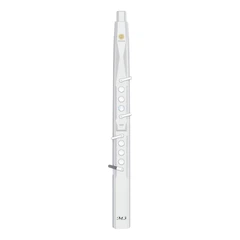


The Electronic Wind Instrument (EWI) is a remarkable musical device that demands a good deal of finger dexterity. Here are some excellent textbooks that can help EWI players enhance their finger flexibility.
I. "The EWI Method: A Comprehensive Guide to Finger Dexterity"
This textbook is designed specifically for beginners and intermediate EWI players who want to improve their finger skills.
Structured Exercises
It begins with a series of warm - up exercises. These are simple finger stretches and movements that mimic the natural range of motion of the fingers when playing the EWI. For example, there are exercises that involve gently curling and straightening the fingers one by one, which helps to loosen up the muscles and joints before more intense practice.
The book then progresses to basic finger patterns. These patterns are based on scales and arpeggios. For instance, it presents the C major scale in a step - by - step manner, showing the exact fingerings for each note. The arpeggio exercises focus on the triads of different keys, such as the C major triad (C - E - G), and how to smoothly transition between the notes using the fingers.
There are also rhythm - based finger exercises. The book includes patterns of quarter notes, eighth notes, and sixteenth - note combinations. These exercises not only improve finger flexibility but also train the player's sense of rhythm. For example, a typical exercise might involve playing a pattern of alternating eighth - notes and quarter - notes with different fingers to ensure that the fingers can move quickly and accurately in a rhythmic context.
Progressive Difficulty Levels
As the player progresses through the book, the difficulty level increases. It starts with simple one - octave scales and arpeggios and moves on to more complex two - octave and three - octave patterns. The fingerings become more challenging as well, requiring the player to use different combinations of fingers to reach the notes.
There are also sections dedicated to chromatic finger exercises. These involve playing all the notes in a chromatic scale, which demands a high level of finger control and flexibility. The book provides detailed fingerings for both ascending and descending chromatic scales, helping the player to develop the ability to move their fingers precisely across the keys.
Illustrations and Diagrams
"The EWI Method" is rich in illustrations and diagrams. Each exercise is accompanied by a clear diagram of the EWI keys and the fingers that should be used to play the notes. This visual aid is extremely helpful for beginners who are still getting used to the layout of the instrument.
The diagrams also show the correct hand positions and the angle at which the fingers should approach the keys. This attention to detail ensures that players develop good habits from the start and can improve their finger flexibility in a correct and efficient manner.
II. "Advanced EWI Finger Techniques: Beyond the Basics"
This textbook is aimed at intermediate to advanced EWI players who have already mastered the fundamentals and are looking to take their finger flexibility to the next level.
Complex Finger Patterns and Sequences
The book delves into complex finger patterns such as polyrhythms and cross - fingerings. Polyrhythmic finger exercises involve playing different rhythms simultaneously with different fingers. For example, one finger might play a pattern of triplets while another finger plays a pattern of duplets. These exercises require a high level of finger independence and flexibility.
Cross - fingerings are another area of focus. The book shows how to use non - traditional finger combinations to play notes that are not easily accessible with the standard fingerings. This can involve using the thumb and the pinky together or other unusual finger pairings. These techniques are especially useful for playing fast runs and complex melodies.
There are also exercises that focus on rapid note changes. These include patterns of grace notes, trills, and mordents. The finger movements for these ornaments need to be extremely precise and quick, and the book provides detailed instructions and practice routines to help players master them.
Musical Examples and Repertoire
"Advanced EWI Finger Techniques" includes a wide range of musical examples from different genres. There are jazz licks, classical motifs, and pop melodies that are specifically chosen to showcase the application of advanced finger techniques.
Each musical example is accompanied by a detailed analysis of the finger movements required. The book breaks down the melodies into smaller segments and shows how the fingers should move to play each part. This allows the player to understand the practical use of the finger techniques in a musical context.
The repertoire section of the book contains complete pieces that are designed to challenge the player's finger flexibility. These pieces range from short études to more extended musical compositions. The difficulty level of the repertoire is carefully graded, allowing the player to progress steadily and build their finger strength and flexibility over time.
Finger Conditioning Exercises
In addition to the musical - focused exercises, the book also provides finger - conditioning exercises. These are similar to physical conditioning exercises for athletes but are tailored for the fingers.
There are isometric finger exercises that involve holding the fingers in a certain position against resistance. For example, pressing the fingers down on the keys without actually playing a note and holding the position for a few seconds can help build finger strength.
There are also dynamic finger exercises that focus on rapid and repeated finger movements. These exercises can improve the speed and endurance of the fingers, which is crucial for playing extended passages on the EWI.
III. "EWI Finger Flexibility Exercises for All Levels"
This textbook is a comprehensive resource that caters to players of all levels, from absolute beginners to advanced musicians.
Level - Specific Sections
The book is divided into different sections based on the player's skill level. The beginner section starts with the very basics of finger placement and simple note - playing exercises. It introduces the fingers to the EWI keys in a gentle and easy - to - understand way.
The intermediate section builds on the beginner's foundation and includes more complex scale and arpeggio exercises. It also introduces basic improvisation techniques that require good finger flexibility. For example, it shows how to play simple melodic variations over a chord progression using different fingerings.
The advanced section is dedicated to more intricate finger patterns and advanced musical concepts. It includes exercises in polyphonic playing, where the player uses different fingers to play multiple voices simultaneously. This requires a high level of finger coordination and flexibility.
Adaptable Exercises
The exercises in this book are designed to be adaptable. The author provides different ways to approach each exercise depending on the player's current skill level and goals. For example, a basic scale exercise can be played slowly and simply for a beginner, but an advanced player can use the same exercise to work on speed, dynamics, and alternate fingerings.
The book also encourages players to modify the exercises according to their own musical preferences. If a player is more interested in jazz music, they can adapt the exercises to incorporate jazz - inspired licks and rhythms. This flexibility makes the textbook suitable for a wide range of players with different musical interests and goals.
Practice Plans and Goals
"EWI Finger Flexibility Exercises for All Levels" provides detailed practice plans for each level. These plans outline the amount of time that should be spent on each exercise and how often to practice. The goals for each practice session are clearly stated, which helps the player to stay focused and motivated.
The book also includes long - term goals for finger flexibility improvement. It shows how the different exercises and practice sessions can lead to overall progress in finger dexterity. For example, it might set a goal of being able to play a complex piece of music with a certain tempo and accuracy after a few months of regular practice.
In conclusion, these textbooks offer a wealth of resources for EWI players who want to improve their finger flexibility. Whether you are a beginner just starting out or an advanced player looking for new challenges, there is a textbook that can meet your needs and help you take your EWI playing to the next level.
SUNRISE MELODY M1 Electronic Wind Instrument
. Revisit the passion and dreams of youth
. M1 electric clarinet wind instrument -- The good news for beginners
. Rich and diverse timbres
. Powerful functions and easy operation
. Perfect after-sales service


