
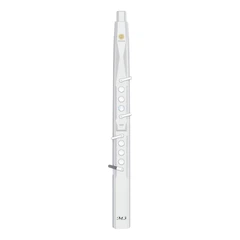


The development trend of electronic wind instruments can be analyzed from the following aspects:
Technological innovation
Sound quality improvement: In the future, electronic wind instruments will continue to strive for higher sound quality. Manufacturers will invest more in research and development of sound synthesis technology and audio processing algorithms to make the sound produced by electronic wind instruments more realistic, rich, and expressive. For example, the improvement of sampling rates and the development of more advanced sound modeling techniques will enable the sounds of electronic wind instruments to approach the timbre and tone quality of traditional acoustic wind instruments more closely, meeting the higher requirements of professional musicians for sound quality.
Enhanced expressiveness: The expressiveness of electronic wind instruments will be further enhanced. Through the improvement of sensor technology and key design, the response speed and sensitivity of the instrument will be improved, allowing musicians to better control the nuances of sound, such as pitch changes, vibrato, and dynamics. At the same time, the development of more complex control systems and the addition of various expression controllers (such as breath controllers, modulation wheels, etc.) will provide musicians with more ways to express their musical ideas, making the performance more vivid and emotional.
Integration with new technologies: The integration with emerging technologies such as artificial intelligence (AI), the Internet of Things (IoT), and virtual reality (VR) will be a major trend. For example, through the application of AI technology, electronic wind instruments can automatically adjust parameters according to the player's playing style and habits, providing personalized playing experiences. The connection with the IoT allows for remote control and interaction of the instrument, enabling musicians to collaborate and communicate with others in real-time through the network. And the combination with VR technology can create immersive virtual performance scenarios, bringing new experiences to musicians and audiences.
Function diversification
Expansion of sound library: The sound library of electronic wind instruments will continue to expand. In addition to the existing rich variety of instrument sounds, more unique and creative sounds will be added, such as special effects sounds, synthesized sounds, and ethnic musical instrument sounds from different regions of the world. This will enable musicians to have more choices in sound creation, breaking through the limitations of traditional instrument sounds and exploring more possibilities in music creation.
Multi-function integration: Electronic wind instruments will increasingly integrate multiple functions. For example, some models may combine functions such as recording, playback, and sound editing, allowing musicians to record their performances in real-time, edit and modify the recordings, and then play them back for learning and improvement. Additionally, the integration with music software and apps will become more seamless, enabling musicians to access a wealth of music resources and learning materials through the instrument, facilitating their learning and creation.
Adaptability to different musical styles: Electronic wind instruments will be designed to be more adaptable to different musical styles. Whether it is classical music, jazz, rock, or ethnic music, the instrument will be able to provide corresponding sound effects and performance modes to meet the needs of musicians in different musical fields. This will make electronic wind instruments more widely used in various musical styles and expand their application range.
Design and portability
Ergonomic design: The design of electronic wind instruments will pay more attention to ergonomics to improve the comfort of playing. The shape and size of the instrument will be optimized to fit the human hand and mouth better, reducing the fatigue caused by long-term playing. At the same time, the weight of the instrument will be further reduced, making it more convenient for musicians to carry and perform, especially for those who need to perform on different occasions frequently.
Aesthetic design: In addition to functional requirements, the aesthetic design of electronic wind instruments will also become an important aspect. Manufacturers will pay more attention to the appearance design of the instrument, using more fashionable and personalized design elements to make the instrument not only a musical instrument but also a work of art. This will meet the aesthetic needs of musicians and consumers, enhancing the market competitiveness of electronic wind instruments.
Modular design: Modular design will be widely used in electronic wind instruments. Musicians can freely assemble and customize the instrument according to their own needs and preferences, such as choosing different mouthpieces, keys, and sound modules to create a unique instrument that suits them. This will not only increase the fun of using the instrument but also meet the individual needs of different musicians.
Market and industry development
Increasing popularity and market expansion: With the continuous improvement of people's living standards and the pursuit of spiritual and cultural life, the popularity of electronic wind instruments will continue to increase. More and more music lovers, especially beginners and those who are interested in electronic music, will choose electronic wind instruments as their entry-level or main musical instrument. At the same time, the application of electronic wind instruments in music education, stage performances, and entertainment activities will also continue to expand, driving the growth of the market.
Intensified market competition and brand building: As the market for electronic wind instruments continues to grow, the competition among manufacturers will become more intense. In order to stand out in the market, manufacturers will focus on brand building, improving product quality and after-sales service, and enhancing brand influence through technological innovation and marketing strategies. At the same time, the emergence of more excellent brands and products will also promote the healthy development of the industry.
International cooperation and exchange: The development of electronic wind instruments is a global trend. In the future, there will be more international cooperation and exchange in this field. Manufacturers from different countries and regions will jointly develop and promote new products and technologies, sharing experiences and resources. This will not only accelerate the development of the industry but also promote the integration and development of global music culture.
SUNRISE MELODY M1 Electronic Wind Instrument
. Revisit the passion and dreams of youth
. M1 electric clarinet wind instrument -- The good news for beginners
. Rich and diverse timbres
. Powerful functions and easy operation
. Perfect after-sales service


