

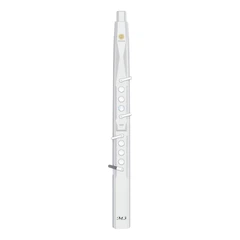

The MIDI (Musical Instrument Digital Interface) connection function of an electric saxophone offers a wide range of benefits and applications for musicians and music enthusiasts. This advanced feature not only enhances the capabilities of the electric saxophone but also opens up new creative possibilities and expands the horizons of musical expression.
I. Enhanced Musical Creativity
One of the primary uses of the MIDI connection function is to enhance musical creativity. With MIDI connectivity, the electric saxophone can be integrated into a digital music production environment, allowing musicians to combine the unique sound of the saxophone with a vast array of virtual instruments, effects, and sequencing tools.
Music Production
In a music production setting, the electric saxophone can be connected to a computer running music production software such as Ableton Live, Logic Pro, or FL Studio. This enables the musician to record the saxophone performance directly into the software, edit and manipulate the notes, and add various effects and processing.
The MIDI connection allows for precise control over the pitch, velocity, and duration of each note, giving the musician the ability to fine-tune their performance and create complex musical arrangements.
Musicians can also use the electric saxophone to trigger virtual instruments and samples within the software, creating unique sound combinations and textures that would be difficult or impossible to achieve with traditional acoustic instruments.
Sound Design
The MIDI connection function enables sound designers to use the electric saxophone as a controller for creating custom sounds and effects. By mapping the saxophone's keys and controls to different parameters in a sound design software, such as a synthesizer or sampler, the musician can create unique and innovative sounds that can be used in film, television, video games, and other media.
For example, the saxophone's pitch bend wheel can be used to control the pitch of a synthesizer, creating a smooth glissando effect. The keys can be mapped to different filters or envelopes, allowing the musician to shape the sound in real-time.
Sound designers can also use the MIDI connection to synchronize the electric saxophone with other MIDI devices, such as drum machines or sequencers, creating complex rhythmic patterns and soundscapes.
II. Expanded Sound Palette
Another significant use of the MIDI connection function is to expand the sound palette of the electric saxophone. By connecting to external MIDI devices or software, musicians can access a vast library of sounds and effects, giving them more options for expressing their musical ideas.
Virtual Instruments
MIDI connectivity allows the electric saxophone to trigger virtual instruments such as pianos, guitars, strings, brass, and percussion. This enables the musician to create a full-band sound with just one instrument, or to add additional layers and textures to an existing musical arrangement.
Virtual instruments offer a wide range of sounds and styles, from realistic emulations of acoustic instruments to futuristic synthesized sounds. Musicians can experiment with different virtual instruments to find the perfect sound for their music.
Effects Processing
The MIDI connection also enables the electric saxophone to be connected to effects processors such as reverb, delay, chorus, and distortion. These effects can be used to enhance the sound of the saxophone, adding depth, space, and character to the performance.
Effects processing can be controlled via MIDI, allowing the musician to automate the effects parameters and create dynamic changes in the sound over time. For example, a delay effect can be set to gradually increase in intensity, creating a sense of build-up and tension in the music.
Sound Libraries
Many music production software programs and virtual instrument plugins come with extensive sound libraries that can be accessed via MIDI. These libraries contain a wide variety of sounds, from traditional orchestral instruments to ethnic and world music instruments, as well as unique sound effects and textures.
Musicians can use the MIDI connection to browse and select sounds from these libraries, adding new colors and dimensions to their music. Sound libraries can also be expanded by purchasing additional plugins or sample packs, giving musicians even more creative options.
III. Collaboration and Performance
The MIDI connection function of the electric saxophone also facilitates collaboration and performance with other musicians and electronic devices. Whether in a live performance setting or in a studio recording session, MIDI connectivity allows for seamless integration with other instruments and technologies.
Live Performances
In a live performance, the electric saxophone can be connected to a MIDI controller or sequencer, allowing the musician to trigger backing tracks, loops, and other musical elements. This enables solo performers to create a full-band sound on stage, or for bands to add additional layers and textures to their live shows.
MIDI connectivity also allows for real-time communication between different instruments and devices, enabling musicians to synchronize their performances and create complex musical arrangements on the fly. For example, a drummer can send MIDI signals to a synthesizer, triggering specific sounds and patterns in response to their drumming.
Studio Recording
In a studio recording session, the MIDI connection function allows the electric saxophone to be easily integrated into a multi-track recording setup. The saxophone performance can be recorded as MIDI data, which can then be edited and manipulated in the same way as any other MIDI track.
Musicians can also use MIDI to synchronize the electric saxophone with other instruments and software plugins, ensuring that all elements of the recording are in perfect alignment. This makes it easier to create complex arrangements and overdubs, and can save time and effort in the recording process.
Collaboration with Other Musicians
MIDI connectivity makes it easy for musicians to collaborate with others, regardless of their location. By sharing MIDI files or using online collaboration platforms, musicians can work together on a project, exchanging ideas and contributions in real-time.
For example, a saxophonist in one city can record a MIDI performance and send it to a producer or musician in another city, who can then add additional elements and mix the track. This allows for greater collaboration and creativity, and can lead to the creation of unique and innovative music.
IV. Educational and Learning Tools
In addition to its creative and performance applications, the MIDI connection function of the electric saxophone can also be used as an educational and learning tool. For students and beginners, MIDI connectivity can provide valuable feedback and assistance in learning to play the instrument.
Practice and Feedback
MIDI software programs and apps can be used to provide real-time feedback on a saxophone performance. These programs can analyze the pitch, rhythm, and dynamics of the playing, and provide visual or auditory feedback to help the student improve their technique.
For example, a MIDI program can display a graph of the pitch accuracy of a performance, highlighting areas where the pitch is off and providing suggestions for improvement. This can be especially helpful for beginners who are still learning to control their pitch and intonation.
Interactive Learning
MIDI connectivity can also be used to create interactive learning experiences. For example, a student can use a MIDI controller to trigger different exercises or lessons, or to play along with pre-recorded backing tracks.
Interactive learning software can also provide challenges and games to make learning more engaging and fun. For example, a student might be asked to play a specific melody or rhythm pattern within a certain time limit, or to match the pitch and dynamics of a pre-recorded performance.
Music Theory and Composition
MIDI software can also be used to teach music theory and composition. Students can use the software to create and edit musical scores, experiment with different chord progressions and melodies, and learn about the principles of harmony and counterpoint.
MIDI connectivity can also be used to analyze existing music, breaking it down into its individual components and showing how different musical elements work together. This can help students develop a deeper understanding of music and improve their compositional skills.
In conclusion, the MIDI connection function of an electric saxophone is a powerful tool that offers a wide range of benefits and applications for musicians and music enthusiasts. Whether used for music production, sound design, collaboration, performance, or education, MIDI connectivity can enhance creativity, expand the sound palette, and open up new possibilities for musical expression. As technology continues to evolve, we can expect the MIDI connection function to become even more integrated into the world of music, providing musicians with even more powerful tools for creating and sharing their music.
SUNRISE MELODY M1 Electronic Wind Instrument
. Revisit the passion and dreams of youth
. M1 electric clarinet wind instrument -- The good news for beginners
. Rich and diverse timbres
. Powerful functions and easy operation
. Perfect after-sales service
