
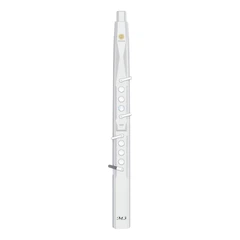


The MIDI (Musical Instrument Digital Interface) connection function of a digital wind instrument offers a wide range of possibilities and applications for musicians, composers, and producers. This advanced technology enables seamless integration with other musical equipment and software, opening up new creative avenues and enhancing the overall musical experience. In this essay, we will explore the various aspects in which the MIDI connection function of a digital wind instrument can be utilized.
I. Music Production and Composition
One of the primary applications of the MIDI connection function of a digital wind instrument is in music production and composition. With MIDI, musicians can record their performances directly into a digital audio workstation (DAW), allowing for precise editing and manipulation of the recorded data. This enables composers to create complex musical arrangements with ease, as they can layer multiple tracks of digital wind instrument performances, along with other instruments and sounds.
Recording and Editing
The MIDI connection allows for accurate recording of a digital wind instrument's performance. Each note played is captured as MIDI data, which can be easily edited and adjusted. Musicians can correct mistakes, change note durations, adjust velocities, and even transpose entire passages without having to re-record the performance.
DAWs offer a wide range of editing tools, such as cut, copy, paste, and quantization, which can be used to refine and perfect a digital wind instrument recording. Additionally, MIDI data can be looped and repeated, making it easy to create repetitive patterns or build complex musical phrases.
Instrument Layering and Sound Design
MIDI enables the layering of multiple digital wind instruments or the combination of a digital wind instrument with other MIDI-enabled instruments. This allows musicians to create unique and rich soundscapes by blending different timbres and textures. For example, a saxophone-like sound from a digital wind instrument can be combined with a string section or a synthesizer pad to create a lush and atmospheric musical backdrop.
Sound design is also enhanced with MIDI. Musicians can use MIDI controllers to manipulate various parameters of a digital wind instrument's sound engine, such as filters, envelopes, and effects. This allows for the creation of custom sounds and the exploration of new sonic territories. By adjusting these parameters in real-time while playing, musicians can add expressiveness and dynamic variation to their performances.
Composition and Arrangement
MIDI is an essential tool for composers and arrangers. It allows them to quickly sketch out musical ideas using a digital wind instrument and then expand and refine those ideas within a DAW. Composers can easily add additional instruments, adjust the tempo, change the key, and experiment with different musical structures and forms.
MIDI also enables the creation of complex musical arrangements by allowing for the precise placement of notes and the control of dynamics and articulation. Musicians can use MIDI automation to create dynamic changes in volume, pan, and effects over time, adding depth and interest to their compositions.
II. Live Performance and Stage Setup
The MIDI connection function of a digital wind instrument is also valuable in live performance settings. It allows musicians to integrate their instrument with other stage equipment and create a more engaging and dynamic live show.
Controllers and Effects
MIDI controllers can be used to control various aspects of a digital wind instrument's performance in real-time. For example, a foot pedal can be used to control volume or sustain, while a knob or slider can be used to adjust effects parameters. This gives musicians greater control over their sound and allows for more expressive performances.
Effects processors can also be integrated into a live setup using MIDI. Musicians can use MIDI to trigger and control effects such as reverb, delay, chorus, and distortion, adding depth and texture to their sound. MIDI can also be used to synchronize effects with the tempo of the music, creating a more cohesive and polished live performance.
Stage Monitoring and In-Ear Monitoring
MIDI can be used to control stage monitoring systems and in-ear monitors. Musicians can use MIDI controllers to adjust the volume and mix of their own instrument in their monitor mix, ensuring that they can hear themselves clearly and comfortably on stage. This can improve the overall performance experience and help musicians stay in sync with the rest of the band.
Lighting and Visual Effects
MIDI can be integrated with lighting and visual effects systems to create a more immersive live show. Musicians can use MIDI to trigger lighting cues, strobe effects, and video projections, synchronizing these effects with their music for a more engaging and dynamic performance. This can add an extra layer of excitement and energy to a live show and help to create a memorable experience for the audience.
III. Education and Learning
The MIDI connection function of a digital wind instrument can also be a valuable tool for education and learning. It allows students to explore music technology and gain a deeper understanding of music theory and composition.
Practice and Feedback
MIDI-enabled digital wind instruments can be used for practice and feedback. Software applications can analyze a student's performance and provide feedback on pitch accuracy, rhythm, and dynamics. This can help students identify areas for improvement and develop their skills more effectively.
MIDI can also be used to create practice loops and backing tracks. Students can play along with these tracks, improving their timing and musicality. Additionally, MIDI can be used to slow down or speed up a piece of music, making it easier for students to learn and master difficult passages.
Music Theory and Composition Education
MIDI is a powerful tool for teaching music theory and composition. Students can use MIDI software to create and edit musical scores, experiment with different chord progressions and melodies, and learn about the principles of harmony and counterpoint. MIDI can also be used to demonstrate musical concepts such as rhythm, meter, and tempo, making it easier for students to understand and internalize these concepts.
Collaborative Learning
MIDI enables collaborative learning among students. Multiple students can connect their digital wind instruments to a single computer or network and work together on a musical project. This can foster teamwork, creativity, and communication skills among students, as they learn to collaborate and share ideas.
IV. Sound Module Expansion and Customization
The MIDI connection function of a digital wind instrument also allows for the expansion and customization of its sound capabilities. By connecting to external sound modules or software synthesizers, musicians can access a wider range of sounds and effects.
Sound Module Integration
Digital wind instruments can be connected to external sound modules via MIDI. These sound modules offer a variety of additional sounds and presets, allowing musicians to expand their sonic palette. For example, a digital saxophone can be connected to a sound module that offers a wide range of brass, woodwind, and orchestral sounds, giving the musician more options for creative expression.
Sound modules can also be used to customize the sound of a digital wind instrument. Musicians can adjust parameters such as tone, volume, and effects to create a unique sound that suits their individual playing style and musical preferences.
Software Synthesizer Integration
MIDI can also be used to connect a digital wind instrument to software synthesizers. These software programs offer an almost unlimited range of sounds and effects, allowing musicians to create truly unique and experimental musical sounds. Software synthesizers can be controlled using MIDI controllers, giving musicians real-time control over the sound generation process.
Custom Sound Design
For advanced users, MIDI can be used for custom sound design. Musicians can use MIDI to control synthesizers or sound design software, creating their own custom sounds from scratch. This allows for complete creative freedom and the ability to create sounds that are truly unique and personal.
In conclusion, the MIDI connection function of a digital wind instrument offers a wide range of applications and possibilities for musicians, composers, producers, educators, and students. From music production and composition to live performance, education, and sound module expansion, MIDI provides a powerful tool for creative expression and musical exploration. As technology continues to advance, we can expect the MIDI connection function to become even more integrated and useful, opening up new frontiers in the world of digital wind instruments.
SUNRISE MELODY M1 Electronic Wind Instrument
. Revisit the passion and dreams of youth
. M1 electric clarinet wind instrument -- The good news for beginners
. Rich and diverse timbres
. Powerful functions and easy operation
. Perfect after-sales service


