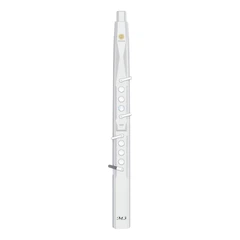


The Chinese gourd flute, known as the "Hulusi" or "Hulusi Di," is a traditional Chinese musical instrument that has been an integral part of Chinese music for centuries. This comprehensive article explores the rich history, intricate construction, playing techniques, cultural significance, and the evolution of the Hulusi in modern music.
Introduction to the Hulusi: The Hulusi is a wind instrument that has captivated listeners with its distinctive sound, which is both soothing and expressive. It is made from a gourd and bamboo pipes, reflecting the ingenuity of Chinese craftsmanship and the deep connection to nature.
Historical Background: The origins of the Hulusi can be traced back to ancient China, with some historians suggesting it may have evolved from the "Sheng," an ancient mouth-blown instrument. The Hulusi is particularly associated with the ethnic minorities in Yunnan Province, where it has been used in various cultural and ceremonial contexts.
Traditional Construction: The Hulusi is traditionally made from a dried gourd as the resonator and several bamboo pipes. The main pipe has finger holes for playing melodies, while the side pipes emit continuous bass notes. The craftsmanship involved in making a Hulusi is a testament to the skill and artistry of its makers.
Playing Techniques: Mastering the Hulusi requires breath control, finger dexterity, and an understanding of the instrument's unique playing techniques. Players must learn to modulate their breath to control the volume and expressiveness of the sound. The fingering of the Hulusi is similar to that of a Western flute, allowing for a wide range of notes and melodies.
Sound Characteristics: The Hulusi is known for its soft, mellow, and somewhat haunting sound. It has a relatively limited range but is capable of producing a variety of tones that can be both melancholic and joyful. The instrument's sound is often described as being reminiscent of a human voice, capable of conveying deep emotions.
Cultural and Ceremonial Significance: In Chinese culture, the Hulusi has been used in various ceremonies and festivals, often as a means of communication and expression of emotions. It has been especially significant in the courtship rituals of certain ethnic groups, where it was used to serenade and express love.
Modern Developments and Innovations: With advancements in technology and materials, the Hulusi has seen modern developments that have expanded its capabilities. The introduction of electronic Hulusi has allowed for a greater range of sounds and the ability to be amplified, making it suitable for contemporary music settings.
Famous Hulusi Players and Composers: Throughout its history, the Hulusi has been played by numerous skilled musicians who have contributed to its popularity and evolution. These artists have not only performed traditional pieces but have also composed new music for the instrument, pushing its boundaries and showcasing its versatility.
Educational Role: The Hulusi has also played a significant role in education, being used to teach students about traditional Chinese music and culture. Its relatively simple construction and playing techniques make it an accessible instrument for beginners.
Global Influence and Exchange: As Chinese culture has spread globally, so too has the Hulusi. It has become a point of cultural exchange, with musicians around the world incorporating it into various musical genres, from classical to jazz and beyond.
Preservation and Promotion of the Hulusi: Efforts to preserve and promote the Hulusi have been undertaken by cultural institutions and musicians alike. This includes the documentation of traditional playing techniques, the organization of festivals and competitions, and the incorporation of the instrument into school music curricula.
The Future of the Hulusi: Looking to the future, the Hulusi continues to evolve and adapt to the changing musical landscape. With its unique sound and cultural significance, it is poised to remain an important instrument in both traditional and modern Chinese music.
Conclusion: The Hulusi, with its enchanting sound and rich history, stands as a symbol of Chinese musical heritage. Its journey from a simple gourd and bamboo instrument to a modern electronic wind instrument reflects the dynamic nature of music and culture. As the Hulusi continues to be played and appreciated around the world, it serves as a bridge between the past and the future, between tradition and innovation.
This article has provided an in-depth look at the Chinese gourd flute, highlighting its significance in Chinese music and culture. The Hulusi's story is one of adaptation and innovation, ensuring that its music will continue to be enjoyed for generations to come.
SUNRISE MELODY Electric hulusi flute instrument
Chinese hulusi flute instrument it has a unique ethnic style and is extremely ethnic.
The Chinese Hulusi Flute Instrument is a distinctive and charming musical instrument. It originated from ethnic minorities in China, mainly in Yunnan Province.
The Hulusi is made of a gourd and bamboo pipes. Its unique structure gives it a gentle and mellow sound. The instrument typically has several holes on the pipes, allowing players to produce different pitches.
The Hulusi is often used to play folk music, expressing the emotions and stories of local people. Its melodies are usually simple yet beautiful, carrying a rich cultural heritage.
Playing the Hulusi requires specific breathing and fingering techniques. Mastery of these techniques enables players to create captivating music.
In modern times, the Hulusi has gained popularity beyond its original regions, becoming a beloved instrument for many music lovers.