

To make a simple electric wind instrument, you'll need a carefully selected set of components and tools.
Hardware Components:
Microcontroller: The heart of your instrument. For example, an Arduino Uno offers a user-friendly platform with plenty of processing power for handling the input from the pressure sensor and generating the appropriate audio output. It has multiple input/output pins that can be programmed to perform various tasks.
Pressure sensor: This is crucial for detecting the force of your breath. A high-quality pressure sensor like a MEMS-based sensor can provide accurate and consistent readings. It should be sensitive enough to detect even the slightest changes in breath pressure, allowing for nuanced control over the sound.
Speaker or audio output device: A small, high-quality speaker can produce clear and crisp sounds. You might also consider using an audio amplifier if you want a louder output. For a more portable option, you could use headphones with an appropriate audio jack.
Battery or power supply: A rechargeable lithium-ion battery is a great choice for portability. Make sure it has enough capacity to power your instrument for an extended period. Alternatively, a USB power supply can be used if you don't need portability.
Wires and connectors: Use quality wires with appropriate insulation to ensure reliable connections. Connectors like breadboard jumper wires or soldered connectors can make it easier to connect the various components.
Enclosure or case: This not only gives your instrument a professional look but also protects the internal components. You can use a plastic project box or even build a custom wooden case. Consider adding ventilation holes if necessary to prevent overheating.
Software and Tools:
Programming software: The Arduino IDE is a popular choice for programming Arduino boards. It provides a simple and intuitive interface for writing code and uploading it to the microcontroller. You'll need to learn some basic programming concepts to configure the microcontroller to read the pressure sensor and generate the audio output.
Soldering iron and solder: If you want to make permanent connections between components, soldering is a reliable method. A good soldering iron with a fine tip and appropriate solder will ensure strong connections. However, if you're not comfortable soldering, you can use breadboards and jumper wires for temporary connections.
Multimeter: This tool is essential for testing electrical connections and measuring voltages and currents. It can help you troubleshoot any issues with your circuit and ensure that everything is working properly.
Optional Components:
Buttons or switches: Adding buttons or switches can enhance the functionality of your instrument. For example, you could use a push button to change the pitch or a toggle switch to turn on/off a specific effect. These can be connected to the microcontroller's input pins and programmed to perform different actions.
LEDs: LEDs can provide visual feedback, indicating when the instrument is on, when a certain function is activated, or when the battery is low. They can be connected to the microcontroller's output pins and controlled through programming.
Potentiometers: Potentiometers allow you to adjust parameters like volume or tone. You can connect them to the microcontroller's analog input pins and use them to vary a specific value in your program.
Making a simple electric wind instrument can be a fun and rewarding project. It requires some basic knowledge of electronics and programming, but with the right components and a bit of patience, you can create a unique musical instrument that you can enjoy playing.
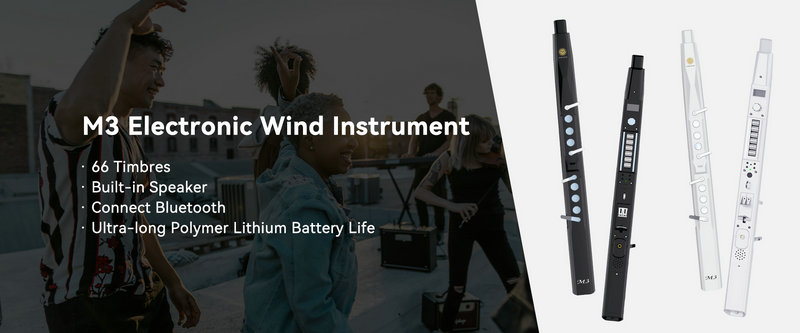
SUNRISE MELODY M3 Electronic Wind Instrument - The best-selling Electronic Wind Instrument
. 66 Timbres
. Built-in Speaker
. Connect Bluetooth
. Ultra-long Polymer Lithium Battery Life