

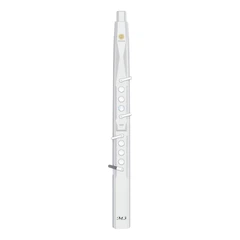

Precautions When Practicing the Fingering Flexibility of Electronic Wind Instrument (EWI)
I. Posture and Hand Position
A. Maintaining a Correct Posture
Body Alignment
Proper body alignment is essential for efficient practice. When playing the EWI, stand or sit upright. Standing, keep your feet shoulder - width apart to provide a stable base. Sitting, make sure your back is straight and you're sitting on the front part of the chair. This correct posture allows for better air support and freedom of movement for the hands and fingers. Incorrect posture can lead to muscle tension and restricted movement. For example, slouching can cause the chest to compress, affecting breath control and indirectly influencing the fluidity of fingering as you may become distracted by discomfort.
Instrument Holding Position
Hold the EWI at a comfortable angle. It should be balanced well so that you can easily access all the keys without straining your wrists or arms. The position of the instrument relative to your body should be such that your fingers can fall naturally onto the keys. Avoid holding it too high or too low, as this can put unnecessary stress on your joints and muscles. For instance, if the EWI is held too low, you may have to stretch your fingers uncomfortably to reach the upper keys, reducing the speed and accuracy of your fingering.
B. Hand and Finger Placement
Natural Curve of Fingers
Your fingers should have a natural curve when placed on the keys. This allows for quick and precise movements. The fingertips should rest gently on the keys, not pressing down too hard. Imagine your fingers as springs that are ready to actuate the keys with just the right amount of force. If the fingers are too flat or too tense, it can impede the speed and flexibility of fingering. For example, when playing a rapid scale, fingers that are not in a natural curve may struggle to move smoothly from one key to another.
Thumb Placement
The thumb's position is crucial for stability. It should be placed comfortably on the thumb rest to support the weight of the instrument and provide a pivot point for the hand's movements. The thumb should not be overly tense or loose. A tense thumb can cause the whole hand to become rigid, while a loose thumb may lead to a lack of control over the instrument's position. When playing complex finger patterns, the thumb's stability helps in coordinating the other fingers' movements more effectively.
II. Warm - up and Stretching
A. Importance of Warming - up
Preparing the Muscles and Joints
Just like athletes warm up before a strenuous activity, warming up your fingers and hands before practicing EWI fingering is vital. Warming up increases blood flow to the muscles and joints, making them more pliable and less prone to injury. It also helps in getting the nervous system ready for the precise movements required. For example, starting with cold fingers and attempting complex fingering exercises can lead to muscle strains or tendonitis over time.
Mental Preparation
Warming up also has a psychological aspect. It gets you in the right mindset for practice, helping you focus and anticipate the challenges ahead. A proper warm - up routine can set a positive tone for the entire practice session and improve your overall concentration and performance.
B. Effective Warm - up Exercises
Finger Stretches
Simple finger stretches can be very effective. Gently stretch each finger individually, pulling it back slightly and holding the stretch for a few seconds. Then, make a fist and release it slowly, repeating this a few times. You can also do a spread - fingers stretch, where you try to spread your fingers as far apart as possible and hold the position. These stretches help in loosening the muscles and tendons in the fingers and hands.
Light Key Pressing
Before diving into full - fledged fingering exercises, do some light key pressing. Press the keys slowly and evenly, getting a feel for the resistance and the movement of each key. This helps in familiarizing your fingers with the instrument and wakes up the muscle memory associated with the fingering patterns.
III. Practice Techniques and Progression
A. Starting Slow and Gradual Progression
Building a Solid Foundation
When beginning a new fingering exercise or a piece of music, it's crucial to start at a slow tempo. This allows you to focus on the accuracy of each finger movement. By going slow, you can ensure that you're using the correct fingers for each note and that your finger transitions are smooth. For example, when learning a complex arpeggio, starting slowly helps you internalize the finger pattern and build muscle memory without making mistakes.
Incremental Increase in Difficulty
As you become more proficient at a particular tempo and fingering pattern, gradually increase the difficulty. This can mean increasing the speed, adding more complex finger combinations, or incorporating more intricate rhythms. However, it's important not to rush this process. A small, incremental increase in difficulty ensures that your fingers can adapt and maintain the flexibility and accuracy you've developed. For instance, if you're practicing a scale, first master it at a slow tempo, then gradually increase the speed, and later add elements like alternate fingerings or syncopated rhythms.
B. Focus on Precision and Consistency
Precision of Finger Movements
Each finger movement should be precise. Make sure you're hitting the correct keys and that your fingers are not slipping or accidentally pressing adjacent keys. Precision is especially important when playing fast passages or when performing complex musical phrases. You can practice precision by playing single notes slowly and deliberately, making sure each note sounds clear and distinct.
Consistency in Fingering
Once you've determined the correct fingering for a particular passage or note, strive to be consistent. Inconsistent fingering can lead to confusion and errors, especially during a performance. For example, if you sometimes use one fingering for a note and other times a different fingering, it can disrupt the flow of your playing and affect the overall sound quality. Practice the same fingering pattern repeatedly until it becomes second nature.
IV. Breathing and Rhythm Coordination
A. Relationship between Breathing and Fingering
Synchronized Movements
Breathing and fingering need to be coordinated in EWI playing. The breath provides the energy for the sound, and the fingers shape the notes. When playing a phrase, the inhalation and exhalation should be timed with the finger movements. For example, in a long, legato passage, a smooth inhalation followed by a controlled exhalation should accompany the seamless movement of the fingers from one note to another.
Impact on Fingering Flexibility
Proper breathing support can enhance the flexibility of fingering. When you have good breath control, your fingers are less likely to tense up due to lack of air or forced exhalation. The stability provided by correct breathing allows the fingers to move more freely and accurately. On the other hand, poor breathing can cause your fingers to work harder to compensate for the lack of air flow, reducing their flexibility.
B. Rhythm - based Fingering Practice
Using a Metronome
A metronome is an invaluable tool for practicing fingering flexibility. Set a steady tempo and practice your fingering exercises in time with the metronome. This helps in developing a strong sense of rhythm and ensures that your finger movements are consistent and evenly spaced. For example, when playing a scale, the metronome can help you maintain a steady pace as you move from one note to the next, improving the accuracy and speed of your fingering over time.
Rhythmic Variations
Once you're comfortable with basic rhythms, explore different rhythmic variations. Practice playing the same fingering pattern with different note values such as triplets, dotted notes, or syncopated rhythms. This challenges your fingers to adapt to new rhythmic contexts and enhances their flexibility. For example, playing a familiar arpeggio with a syncopated rhythm requires your fingers to anticipate and execute the movements in a different way than in a straight - forward rhythm.
V. Avoiding Over - practice and Injury
A. Recognizing Signs of Fatigue
Physical Fatigue
Your fingers and hands may feel tired, heavy, or sore after a period of intense practice. This is a sign that you may be over - practicing. Other physical signs can include muscle cramps, joint stiffness, or a decrease in the precision of your finger movements. When you notice these symptoms, it's important to take a break and give your hands and fingers some rest.
Mental Fatigue
Mental fatigue can also occur during practice. You may find it difficult to concentrate, make more mistakes than usual, or feel frustrated with your progress. This can be an indication that you've been practicing for too long without a break. Mental fatigue can also lead to a decrease in the quality of your practice as you're no longer fully engaged and focused.
B. Preventing Injury
Proper Rest and Recovery
Allow your hands and fingers enough time to rest and recover between practice sessions. This doesn't mean you have to take long breaks, but short, frequent breaks during a practice session can be beneficial. For example, practice for 20 - 30 minutes, then take a 5 - 10 - minute break to stretch and relax. Additionally, make sure to get enough sleep and maintain a healthy diet to support the overall health of your muscles and joints.
Using Correct Technique
Using incorrect technique is a major cause of injury. Make sure you're following the correct fingering patterns, not over - straining your fingers, and maintaining a proper posture and hand position. If you experience pain or discomfort during practice, it's important to stop and assess your technique. Seek advice from a professional teacher or a healthcare provider if the pain persists.
SUNRISE MELODY M1 Electronic Wind Instrument
. Revisit the passion and dreams of youth
. M1 electric clarinet wind instrument -- The good news for beginners
. Rich and diverse timbres
. Powerful functions and easy operation
. Perfect after-sales service
