

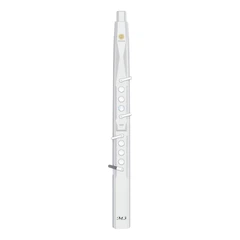

There are mainly the following methods to learn to play the electric wind instrument:/electronic-wind-instrument/electric-saxophone-ewi.html
1. **Basic preparation**:
- **Master music theory knowledge**: Learn basic music theory, such as notes, beats, modes, scales, etc., which is the basis for understanding and playing music. Being able to read music scores and understand the meanings of different symbols and marks is very important for subsequent learning and playing. For example, knowing the length of the duration of quarter notes and eighth notes, and understanding the impact of key signatures on pitch, etc.
- **Purchase equipment**: Prepare a reliable and suitable electric wind instrument for yourself. At the same time, according to personal needs and usage scenarios, you can equip it with auxiliary equipment such as headphones (to facilitate your own practice without disturbing others), speakers (to improve the sound effect of performance), sound cards (for recording performances), and music score readers (to facilitate viewing music scores).
- **Adjust posture**: Maintain a correct playing posture. When playing while sitting, do not fill the entire chair with your body. You should lean forward slightly, keep your feet firmly on the ground, and keep your body balanced and stable. When playing while standing, keep your feet shoulder-width apart, your body straight, and your shoulders relaxed. When holding the pipe, hold the electric blowpipe naturally with both hands, and press your fingers on the buttons to ensure comfort and flexible operation.
2. **Breath training**:
- **Breathing method**: Use chest-abdomen combined breathing method. When inhaling, inhale through the mouth and nose at the same time, quickly and deeply inhale the air, and let the air sink into the abdomen, at this time the abdomen will swell; when exhaling, use the control ability of the chest muscles, abdominal muscles and diaphragm to exhale the breath evenly and steadily, and keep the breath continuous and stable.
- **Long tone practice**: Train the control ability and stability of breath by playing long notes. Choose a tone and play it continuously with a steady breath, try to keep the tone steady and the tone full, and the time of each practice can be gradually increased, from the initial 10 seconds or so to 20 seconds, 30 seconds or even longer.
- **Strength and weakness change practice**: During the playing process, practice controlling the strength of the breath to achieve the strength and weakness of the volume. For example, play a strong tone first, then gradually weaken, and then gradually increase, and feel the impact of breath on the volume.
- **Breathing practice**: Breathe at the places marked with breathing symbols (usually represented by "V") on the score. Breathe quickly and decisively to avoid affecting the continuity of the music. Beginners can start with simple music, practice according to the breathing points on the score, and gradually develop good breathing habits.
3. **Fingering practice**:
- **Choose fingering**: Common fingerings for electric blowpipes include saxophone fingering and flute fingering. If you have a foundation in learning saxophone or flute before, you can choose the corresponding fingering, which is easier to get started; if you don't have a foundation, you can choose according to your preferences and habits. Saxophone fingering is similar to the scale key arrangement of saxophone instruments, setting the scale from bottom to top; flute fingering is usually called tube tone 5 (sou), the index finger, middle finger, and ring finger of the left hand, and the index finger, middle finger, and ring finger of the right hand are all pressed to form 5 (sol), and then released in turn.
- **Fingering familiarity**: Understand the scale arrangement and key position of the selected fingering, and familiarize yourself with the fingering operation of each note through repeated practice. You can start with simple scale exercises, such as ascending scales and descending scales, and then gradually transition to some simple melody exercises.
- **Fingering speed and accuracy training**: After mastering the basic fingering, practice fingering speed and accuracy. You can practice some fast scale runs, arpeggios and other fingering techniques to improve finger flexibility and key accuracy. For example, choose some faster exercises, slow down the speed first to ensure the correct fingering, and then gradually increase the speed.
4. **Timbre control**:
- **Understand the characteristics of timbre**: The electric blowpipe can simulate the timbre of many instruments, and different timbres have different characteristics and expressiveness. In the learning process, you should understand the characteristics of various timbres, such as brightness, softness, sharpness, etc., so as to choose the appropriate timbre according to the style and emotional needs of the music.
- **Timbre switching practice**: Familiarize yourself with the timbre switching button or setting on the electric blowpipe, and practice switching timbre quickly and accurately during performance. You can choose some music with multiple timbre changes to practice and improve your ability to use timbre.
- **Timbre modification**: Some electric wind instruments have tone modification functions, such as vibrato, glissando, and pitch bend. Learn how to use these functions to modify the timbre and enhance the expressiveness of the music. For example, vibrato can make the notes more vivid, and glissando can increase the fluency and fun of the music.
5. **Playing skills training**:
- **Timbre**: Timbre is an important technique in electric wind instrument performance, which is divided into single spit, double spit, triple spit, etc. Single spit is to touch the mouthpiece with the tongue to produce a clear staccato; double spit is to use the tongue and breath alternately on the basis of single spit to produce a fast staccato; triple spit is composed of a single spit and a double spit. By practicing spit, the notes played can be made clearer and rhythmic.
- **Legato**: Legato refers to playing multiple notes in a row without obvious pauses in between. When practicing legato, pay attention to the continuity and stability of the breath, as well as the coordination of the fingers, to ensure that the connection between the notes is smooth and natural.
- **Circular breathing**: Circular breathing is a difficult technique used to achieve uninterrupted blowing during the performance. You need to store a certain amount of air through your mouth, inhale quickly through your nose while exhaling, and then continue to exhale to keep the airflow continuous.
6. **Music practice**:
- **Choose the right repertoire**: Start practicing with simple children's songs, folk songs, etc., and gradually transition to more difficult classical music, pop music, etc. Choosing your favorite repertoire can increase your interest and enthusiasm in learning.
- **Segmented practice**: Divide the music into several sections and practice them one by one. First, familiarize yourself with the melody, rhythm and fingering of each section, and then connect the sections to play the music completely.
- **Pay attention to details and expressiveness**: During the practice, pay attention to the details of the music, such as the duration of the notes, changes in strength, and timbre selection. At the same time, according to the emotional expression needs of the music, add your own understanding and feelings to make the performance more expressive.

/electronic-wind-instrument/electric-saxophone-ewi.html
Item size: 52*57*560mm
Item weight: 500g
Control:music note key,5-octave
Effects:reverb,vibrato,Pitch Bend
Characteristic:display screen,earphones monitoring
Battery life after full charge:6-8 hours
Play:Bluetooth
Speaker:Yes