
Using Digital Wind Instruments (DWIs) in live performance settings, while offering many advantages, also presents some challenges. Here are a few common considerations:
Technical Reliability:
Ensuring the DWI, along with its electronic components and connections, remains reliable throughout the performance is crucial. Technical issues can disrupt the live experience.
Battery Life:
Battery-powered DWIs require careful monitoring of battery life. Unexpected battery drain can lead to instrument failure during a performance.
Signal Interference:
Wireless DWIs may be susceptible to signal interference from other electronic devices, which could affect the audio transmission.
Setup Time:
The time required to set up the DWI, connect it to amplifiers or PA systems, and perform sound checks can be challenging, especially in live settings with time constraints.
Sound Check:
Getting the right sound balance in a live mix can be difficult, as DWIs may produce a broader frequency range than traditional instruments.
On-Stage Monitoring:
Musicians need to hear themselves clearly through stage monitors or in-ear monitors, which can be a challenge if the mix is not properly adjusted.
Portability and Setup Complexity:
While DWIs are generally portable, the additional equipment needed (e.g., cables, stands, wireless receivers) can complicate the setup process.
Weather Conditions:
Outdoor performances can pose challenges due to weather conditions that might affect electronic equipment, such as humidity or temperature extremes.
Audience Perception:
Some audiences may have expectations based on traditional instruments, and the unique sounds of a DWI might not resonate with everyone.
Learning Curve:
For musicians accustomed to traditional instruments, there can be a learning curve to master the controls and features of a DWI.
Cost of Equipment:
High-quality DWIs and the necessary accessories can be expensive, which might be a barrier for some performers, especially those starting out.
Maintenance:
Proper maintenance of the DWI is essential to prevent malfunctions. This includes cleaning, regular checks of the instrument's condition, and software updates.
Limited Physical Feedback:
Some musicians might find the lack of physical feedback from a traditional instrument to be an issue, as DWIs do not provide the same tactile response.
Accompaniment Synchronization:
Syncing the DWI with pre-recorded tracks or live accompaniment can be technically challenging and requires precise timing.
Backup Plan:
Having a backup plan, such as a spare instrument or a traditional wind instrument, is important in case the DWI fails during a performance.
Despite these challenges, many musicians successfully incorporate DWIs into live performances by preparing adequately, ensuring reliable equipment, and rehearsing with the same conditions they will encounter during the live event.
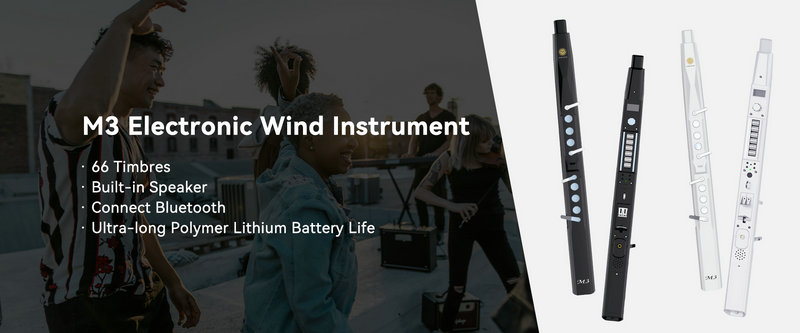
SUNRISE MELODY M3 Electronic Wind Instrument - The best-selling digital wind instruments
. 66 Timbres
. Built-in Speaker
. Connect Bluetooth
. Ultra-long Polymer Lithium Battery Life