

Yes, digital wind instruments (DWIs) can be used to create complex musical arrangements. The versatility and technological capabilities of digital wind instruments make them well-suited for producing intricate and layered compositions. Here's how digital wind instruments can be utilized for complex musical arrangements:
Multi-Timbral Capabilities:
digital wind instruments often have the ability to produce multiple sounds simultaneously. This feature allows musicians to layer different timbres and textures within a single performance.
MIDI Integration:
As MIDI controllers, digital wind instruments can send MIDI signals to trigger a wide array of sounds and effects from external devices or software synthesizers, enabling the creation of complex arrangements.
Polyphonic Expression:
Most digital wind instruments are polyphonic, allowing players to perform chords and complex melodic lines with ease, contributing to the depth of the arrangement.
Breath and Articulation Control:
The breath control and articulation features of digital wind instruments enable expressive playing that can add dynamic and emotional depth to musical arrangements.
Sound Shaping Features:
Many digital wind instruments come with built-in effects and parameters for sound shaping, such as filters, reverb, and modulation, which can be used to create intricate sonic landscapes.
Programmable Sounds:
Users can program and save custom sounds on digital wind instruments, allowing for the creation of unique timbres that can be integral to a musical arrangement.
Sequencer and Looping Capabilities:
Some digital wind instruments have built-in sequencers or looping functions that can be used to build up arrangements layer by layer.
Integration with DAWs:
When connected to a digital audio workstation (DAW), digital wind instruments can be used to record multiple tracks with different sounds, facilitating the construction of detailed arrangements.
External Effects and Processing:
digital wind instruments can be connected to external effects units for additional sound processing, further enhancing the complexity of the music.
Real-Time Performance Options:
Musicians can use digital wind instruments to perform complex arrangements live, with the ability to switch between sounds and effects in real-time.
Educational and Compositional Tools:
digital wind instruments are often used in educational settings to teach music theory and composition, and they can be valuable tools for composers looking to explore new sounds in their work.
Collaboration Opportunities:
In ensemble or band settings, a musician playing a DWI can contribute unique sounds and textures that can complement and contrast with other instruments, enriching the overall arrangement.
Digital wind instruments offer a high degree of flexibility and creativity for musicians looking to create complex musical arrangements, both in the studio and in live performances. Their combination of traditional wind instrument techniques with modern electronic capabilities opens up a vast range of possibilities for musical expression.
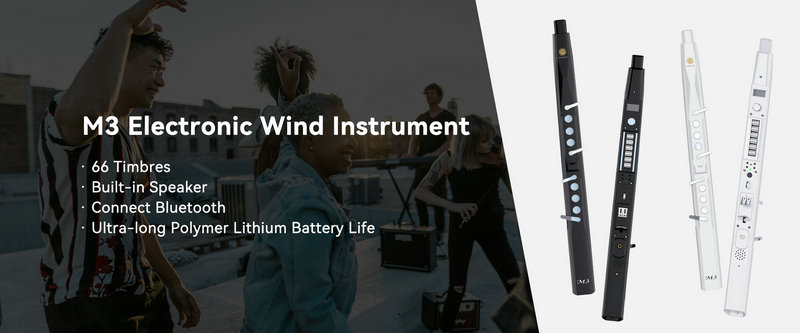
SUNRISE MELODY M3 Electronic Wind Instrument - The best-selling digital wind instruments
. 66 Timbres
. Built-in Speaker
. Connect Bluetooth
. Ultra-long Polymer Lithium Battery Life