
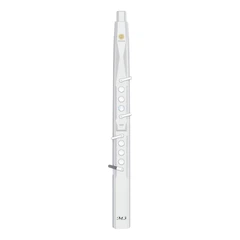


I. Technological Advancements and Versatility
1. Sound Customization
The digital saxophone offers an extensive range of sound customization options. Musicians can access a vast library of pre - programmed sounds that mimic various traditional saxophone models, such as the alto, tenor, soprano, and baritone saxophones. Additionally, they can also produce sounds that resemble other wind instruments like the flute, clarinet, or even non - traditional electronic and synthesized sounds. This versatility allows players to experiment with different tonal qualities and timbres without the need to carry multiple physical instruments. For example, a jazz musician can switch from a mellow alto - sax - like sound for a ballad to a bright and edgy synthesized tone for a more experimental fusion piece.
The ability to adjust parameters such as vibrato speed and depth, attack, and release times gives players precise control over the expressiveness of the sound. They can create unique sonic textures by tweaking these settings to suit their musical vision. This level of sound customization is highly appealing to both professional musicians looking to expand their sonic palette and amateurs who enjoy exploring different sounds.
2. Integration with Technology
Digital saxophones are designed to integrate seamlessly with other music - making technologies. They often come equipped with MIDI (Musical Instrument Digital Interface) capabilities, enabling them to communicate with computers, music software, and other MIDI - enabled devices. This allows for easy recording, music production, and collaboration. For instance, a composer can use a digital saxophone to record a melody directly into a digital audio workstation (DAW), where they can then add additional tracks such as drums, bass, and keyboards to create a full - fledged composition.
Some digital saxophones also support wireless connectivity, such as Bluetooth. This enables musicians to connect to amplifiers, speakers, or other audio - receiving devices without the hassle of cables. It also provides the opportunity for real - time streaming of performances, which is becoming increasingly popular in the digital age. Musicians can share their music with a global audience through online platforms, enhancing their reach and exposure.
II. Accessibility and Ease of Use
1. Beginner - Friendly Features
For beginners, the digital saxophone has several advantages. The fingering system is often designed to be intuitive and similar to that of a traditional saxophone, making it easier for those new to the instrument to learn the basics. However, it also offers additional aids such as lighted keys or visual guides that can help learners identify the correct fingerings. Some models even have built - in tutorials and practice modes that teach basic scales, chords, and melodies.
The instrument's volume can be easily controlled, allowing beginners to practice in a quiet environment without disturbing others. This is especially beneficial for those who live in apartments or have limited space for practice. Additionally, the digital saxophone's pitch - correction features can assist beginners in developing a good sense of intonation. By providing immediate feedback and subtly adjusting the pitch, it helps learners play in tune more quickly.
2. Portability and Durability
Digital saxophones are generally more portable than their traditional counterparts. They are often lighter in weight and more compact, making them easier to carry around. This is advantageous for musicians who are constantly on the move, such as those who travel for gigs, music lessons, or rehearsals. The instrument's construction is also more durable in some cases, as it may not be as susceptible to damage from changes in temperature and humidity as a wooden traditional saxophone.
The lack of a reed (in some digital saxophone designs) means that there is one less component to worry about replacing or maintaining. Reeds can be a hassle for traditional saxophone players, as they need to be carefully selected, stored, and replaced regularly. With a digital saxophone, this concern is eliminated, adding to its convenience and ease of use.
III. Cost - Effectiveness and Affordability
1. Initial Investment
The cost of a digital saxophone can be more affordable than a high - quality traditional saxophone. While top - of - the - line traditional saxophones can cost thousands of dollars, there are digital saxophone models available at a wide range of price points. Entry - level digital saxophones are relatively inexpensive, making them accessible to a larger number of people, including students and hobbyists. This lower initial investment allows more individuals to explore the world of saxophone playing without a significant financial burden.
In addition to the instrument itself, the accessories required for a digital saxophone are often less expensive. For example, the mouthpiece (if it is a non - traditional design) may be more durable and less costly to replace than a traditional saxophone mouthpiece. There is also less need for a large collection of reeds, which can add up in cost over time.
2. Long - Term Savings
Digital saxophones can offer long - term savings in terms of maintenance and repairs. Traditional saxophones require regular servicing by a professional technician, including tasks such as pad replacement, key adjustment, and body polishing. These services can be quite expensive and time - consuming. In contrast, digital saxophones have fewer mechanical parts that require such extensive maintenance. While they may need software updates and occasional electrical component checks, the overall cost and frequency of these maintenance tasks are generally lower.
The ability to use the digital saxophone with headphones also means that there is less wear and tear on the instrument's speakers and amplifiers. This can extend the life of these components and reduce the need for costly replacements. Overall, the cost - effectiveness of the digital saxophone makes it an attractive option for those looking to enjoy saxophone playing without a large financial commitment.
IV. Musical Creativity and Performance Flexibility
1. Sound Manipulation in Real - Time
Digital saxophones allow musicians to manipulate the sound in real - time during a performance. They can add effects such as reverb, delay, chorus, and distortion on the fly, creating a unique and dynamic sonic experience. This ability to transform the sound instantaneously gives performers more creative freedom and enables them to adapt to different musical contexts and audience expectations. For example, a performer can add a dreamy reverb effect to a slow ballad to create an atmospheric sound or use a distortion effect to add an edgy, rock - inspired tone to a fast - paced number.
The real - time sound manipulation also opens up possibilities for improvisation. Musicians can experiment with different sound combinations and effects during an improvised solo, adding an element of surprise and innovation to their performance. This flexibility in sound shaping is a significant draw for creative musicians who want to push the boundaries of traditional saxophone playing.
2. Adaptability to Different Genres
The digital saxophone's versatility in sound production makes it highly adaptable to different musical genres. It can fit seamlessly into a jazz ensemble with its ability to produce traditional saxophone sounds, but it can also be used in a pop or rock band to add a unique wind - instrument - inspired texture. In electronic music genres, the digital saxophone's synthesized and modified sounds can be a key element in creating a futuristic and experimental sonic landscape.
Musicians can easily switch between different genre - appropriate sounds, allowing them to participate in a wide variety of musical projects. This adaptability broadens the musical opportunities for saxophone players and makes the digital saxophone a valuable tool for those who want to explore different musical styles and collaborate with musicians from diverse backgrounds.
The future development direction of the digital saxophone
The future development direction of the digital saxophone.3000字
The Future Development Direction of the Digital Saxophone
The digital saxophone, a remarkable fusion of traditional wind instrument design and advanced digital technology, has already made significant inroads in the music world. Looking ahead, there are several exciting directions in which this innovative instrument is likely to evolve.
I. Enhanced Sound Quality and Realism
1. Advanced Sound Synthesis
In the future, digital saxophones will likely feature even more sophisticated sound synthesis techniques. Current models already offer a wide range of sounds that can mimic traditional saxophones as well as other instruments and unique synthesized tones. However, ongoing research and development in sound synthesis algorithms will lead to even more realistic and expressive sounds.
For example, physical modeling synthesis, which attempts to recreate the acoustic properties of an instrument by simulating its physical behavior, will become more refined. This could result in digital saxophones that produce sounds that are virtually indistinguishable from those of a high-quality acoustic saxophone. The nuances of tone, timbre, and response to different playing techniques will be captured with greater accuracy, providing a more immersive playing experience.
Additionally, machine learning and artificial intelligence may be employed to analyze and learn from the playing styles of renowned saxophonists. By incorporating these learned patterns into the sound synthesis process, digital saxophones could offer personalized and highly realistic emulations of specific playing styles. This would enable musicians to recreate the sounds of their favorite saxophone legends or develop their own unique sound signatures.
2. Improved Sound Sampling
Sound sampling, the process of recording actual acoustic instruments and using these recordings to create digital sounds, will also continue to improve. Higher resolution sampling and more extensive sample libraries will be developed, offering a vast array of authentic saxophone sounds from different eras, makes, and models.
Musicians will be able to choose from a plethora of vintage saxophones, modern custom-built instruments, and rare and exotic saxophones that they might not otherwise have access to. The samples will be captured in different playing environments and with various microphone setups to provide a rich and diverse sonic palette.
Moreover, dynamic sampling techniques will become more advanced, allowing for more accurate reproduction of the changes in sound that occur as a player varies their breath pressure, embouchure, and fingering. This will result in a more responsive and lifelike playing experience, where every nuance of the player's performance is faithfully reproduced.
II. Increased Expressiveness and Control
1. Advanced Sensors and Controls
Future digital saxophones will incorporate more advanced sensors and control mechanisms to enhance expressiveness. For example, pressure-sensitive keys and pads will provide greater control over dynamics and articulation. By varying the pressure applied to the keys, musicians will be able to produce a wider range of volume levels and playing styles, from soft and delicate pianissimo to powerful fortissimo.
Breath sensors will become more accurate and responsive, allowing for finer control over pitch bend, vibrato, and other expressive techniques. These sensors could also detect subtle changes in breath pressure and direction, enabling players to create unique sound effects and add a new dimension to their performances.
In addition, touch-sensitive surfaces and gesture recognition technology may be integrated into the instrument. Musicians could use gestures such as swipes, taps, and holds to trigger effects, change sounds, or control other parameters in real-time. This would open up new possibilities for creative expression and improvisation.
2. Customizable Playing Experience
Digital saxophones will offer greater customization options to suit the individual playing styles and preferences of musicians. Players will be able to adjust various parameters such as key layout, response curves, and sound characteristics to create a truly personalized instrument.
Software interfaces will become more intuitive and user-friendly, allowing musicians to easily customize and save their preferred settings. They could also share these settings with other players or download presets created by renowned saxophonists, further expanding their creative options.
Additionally, modular design concepts may be introduced, where different components of the digital saxophone can be swapped out or upgraded. This would allow musicians to customize the instrument's appearance, functionality, and sound quality over time, keeping up with the latest technological advancements and their evolving musical needs.
III. Integration with Emerging Technologies
1. Internet of Things (IoT) Connectivity
Digital saxophones will likely become part of the Internet of Things, enabling seamless connectivity with other devices and services. This could include integration with smart home systems, allowing musicians to control their playing environment through voice commands or automated settings. For example, they could adjust the lighting, temperature, and acoustics of a room to create the perfect performance space.
IoT connectivity could also enable real-time collaboration with other musicians around the world. Musicians could connect their digital saxophones to online platforms and participate in virtual jam sessions, sharing their performances in real-time and receiving feedback from other players. This would open up new opportunities for collaboration and learning, breaking down geographical barriers and fostering a global community of saxophone players.
Moreover, IoT-enabled digital saxophones could provide valuable performance data and analytics. Musicians could track their playing progress, analyze their technique, and receive personalized recommendations for improvement. This data could also be shared with teachers and coaches, enabling more effective remote instruction and feedback.
2. Augmented Reality (AR) and Virtual Reality (VR) Integration
Augmented reality and virtual reality technologies will likely play an increasingly important role in the future of digital saxophone playing. AR could be used to overlay visual information on the player's field of view, such as sheet music, chord diagrams, or instructional videos. This would enhance the learning experience and make it easier for musicians to follow along during practice or performances.
VR could create immersive virtual performance environments, allowing musicians to perform in stunning virtual concert halls, collaborate with virtual musicians, or explore otherworldly soundscapes. This would add a new level of excitement and creativity to saxophone playing, opening up endless possibilities for artistic expression.
Additionally, VR and AR could be used for music education and training. Students could interact with virtual saxophone instructors, practice in virtual rehearsal spaces, and participate in simulated performances. This would provide a more engaging and effective learning experience, especially for those who may not have access to traditional music education resources.
IV. Sustainability and Eco-Friendliness
1. Green Materials and Manufacturing
As concerns about environmental sustainability grow, the manufacturing of digital saxophones will likely become more eco-friendly. Manufacturers will increasingly use sustainable materials such as recycled plastics, biodegradable composites, and responsibly sourced metals.
Production processes will be optimized to reduce waste and energy consumption. For example, 3D printing technology could be used to create custom parts with minimal material waste. Additionally, manufacturers may adopt renewable energy sources and implement sustainable packaging solutions to reduce the environmental impact of their products.
Musicians will also become more conscious of the environmental impact of their instruments and may choose digital saxophones that are produced in an environmentally responsible manner. This could lead to a shift in the market towards more sustainable products, driving innovation in green manufacturing and design.
2. Longevity and Repairability
Future digital saxophones will be designed for longevity and repairability. Instead of being disposable or having a limited lifespan, these instruments will be built to last. Components will be modular and easily replaceable, allowing musicians to repair and upgrade their instruments over time.
Manufacturers will provide better support for instrument maintenance and repair, offering extended warranties, repair services, and access to spare parts. This will not only reduce waste but also save musicians money in the long run.
Additionally, digital saxophones could be designed with software updates in mind, ensuring that they remain compatible with the latest technologies and can be enhanced over time. This would extend the useful life of the instrument and make it a more sustainable investment for musicians.
V. Expanded Musical Applications and Education
1. Cross-Genre and Experimental Music
Digital saxophones will continue to push the boundaries of musical genres and styles. Musicians will explore new combinations of sounds and techniques, blurring the lines between different musical traditions and creating truly unique and experimental music.
The instrument's versatility will make it a valuable tool for composers and arrangers looking to create innovative and boundary-pushing compositions. It could be integrated into electronic music, world music, avant-garde compositions, and other experimental forms, adding a new dimension to these genres.
Additionally, digital saxophones will inspire collaborations between musicians from different backgrounds and disciplines. Artists from fields such as visual art, dance, and theater may incorporate the digital saxophone into their performances, creating multi-sensory experiences that challenge traditional notions of music and art.
2. Music Education and Training
Digital saxophones will play an increasingly important role in music education. Their accessibility, ease of use, and advanced features make them ideal for teaching students of all ages and skill levels.
Interactive learning software and apps will be developed specifically for digital saxophones, providing engaging and personalized learning experiences. These tools could include tutorials, practice exercises, virtual instructors, and performance analysis features.
Schools and music programs will incorporate digital saxophones into their curriculums, offering students the opportunity to explore the latest in music technology and develop their creative skills. Online learning platforms will also make it easier for students to access high-quality music education from anywhere in the world, democratizing access to music education and fostering a new generation of saxophone players.
In conclusion, the future of the digital saxophone is bright and full of possibilities. As technology continues to advance, we can expect to see digital saxophones that offer even more realistic sounds, enhanced expressiveness, seamless integration with emerging technologies, and a greater focus on sustainability. These instruments will not only revolutionize the way we play and create music but also open up new avenues for musical exploration and education. Whether you are a professional musician, a hobbyist, or a student, the digital saxophone is sure to play an important role in your musical journey for years to come.
SUNRISE MELODY M1 Electronic Wind Instrument
. Revisit the passion and dreams of youth
. M1 electric clarinet wind instrument -- The good news for beginners
. Rich and diverse timbres
. Powerful functions and easy operation
. Perfect after-sales service


