
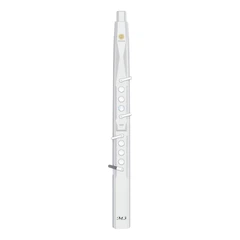


The electric saxophone is a unique and versatile instrument that combines the traditional saxophone playing techniques with modern electronic features. To improve your playing skills on the electric saxophone, here are some effective practice methods.
I. Fundamentals and Warm-up Exercises
Long Tones
Long tones are essential for developing a good tone quality and breath control. Start by playing a single note for as long as you can, maintaining a steady volume and pitch. Focus on producing a rich, full sound without any wavering or cracking. Gradually increase the duration of your long tones as you progress.
Vary the dynamics (loudness and softness) while playing long tones to work on your breath control and the ability to control the intensity of your sound. For example, start soft and gradually crescendo (get louder) and then decrescendo (get softer) back to a soft volume.
Scales and Arpeggios
Practicing scales and arpeggios helps improve your finger dexterity, intonation, and knowledge of different keys. Start with simple major and minor scales and gradually progress to more complex ones. Play scales in different tempos and rhythms to challenge yourself.
Arpeggios are broken chords that can help you understand harmony and improve your ability to play chords on the electric saxophone. Practice arpeggios in different inversions and voicings to expand your musical vocabulary.
Chromatic Exercises
Chromatic exercises involve playing all the notes in succession, one after another. This helps improve your intonation and finger control. Start slowly and focus on playing each note accurately and evenly. Gradually increase the tempo as you become more comfortable.
You can also play chromatic exercises in different patterns, such as ascending and descending chromatic scales, chromatic arpeggios, or chromatic runs. These exercises will challenge your fingers and ears and help you develop a better sense of pitch.
II. Breath Control and Tone Production
Breath Exercises
Good breath control is crucial for playing the electric saxophone. Practice deep breathing exercises to expand your lung capacity and improve your ability to control the air flow. For example, take slow, deep breaths in through your nose and exhale slowly through your mouth.
Try different breathing techniques such as diaphragmatic breathing, where you use your diaphragm to control the air flow instead of just your chest muscles. This will give you more power and control over your sound.
Use a metronome to practice breathing in time with a steady beat. This will help you develop a consistent rhythm and timing for your breathing, which is essential for playing in a band or ensemble.
Tone Production
Experiment with different embouchures (the way you form your lips and mouth on the mouthpiece) to find the one that produces the best tone for you. Adjust the pressure of your lips on the mouthpiece, the position of your tongue, and the shape of your oral cavity to create different tones.
Listen to professional saxophonists and try to imitate their tone quality. Pay attention to the nuances of their sound, such as the warmth, brightness, and projection. Use this as a reference to improve your own tone production.
Play with different dynamics (loudness and softness) to explore the full range of your tone. Practice playing soft, delicate passages as well as loud, powerful ones to develop your ability to control the volume and intensity of your sound.
III. Technique and Finger Dexterity
Finger Exercises
Develop your finger dexterity by practicing finger exercises such as trills, tremolos, and slurs. Trills involve rapidly alternating between two adjacent notes, while tremolos involve repeating a single note rapidly. Slurs are smooth transitions between notes without lifting your fingers off the keys.
Use a metronome to practice these exercises at different tempos. Start slowly and gradually increase the speed as you become more comfortable. Focus on playing cleanly and accurately without any hesitation or mistakes.
Practice playing scales and arpeggios with different fingerings to improve your finger independence and coordination. For example, try playing a scale using only alternate fingers or playing an arpeggio with different finger combinations.
Technical Studies
There are many technical studies and exercises available for saxophone players that can help improve your technique. Look for books or online resources that offer specific exercises for finger dexterity, breath control, and tone production.
Some popular technical studies include the Klose Method, the Ferling Etudes, and the Marcel Mule Studies. These studies are designed to challenge and improve your playing skills and can be a great addition to your practice routine.
Improvisation
Improvisation is a great way to develop your creativity and musicality on the electric saxophone. Start by learning some basic scales and chords and then experiment with playing different melodies and phrases over them.
Listen to different styles of music and try to imitate the sounds and techniques of your favorite saxophonists. Use improvisation as a way to explore new sounds and ideas and develop your own unique style.
Join a jam session or play with other musicians to gain experience improvising in a group setting. This will help you learn to listen and respond to other players and develop your ability to communicate musically.
IV. Electronic Features and Effects
Explore the Electronic Features
The electric saxophone often comes with various electronic features such as built-in effects, MIDI capabilities, and different tone settings. Take the time to explore these features and understand how they work.
Experiment with different effects such as reverb, delay, distortion, and wah-wah to add depth and texture to your sound. Use the MIDI capabilities to connect your saxophone to a computer or other electronic devices and explore the possibilities of digital music production.
Practice with Effects
Once you are familiar with the electronic features of your saxophone, practice playing with the effects on. This will help you develop a better understanding of how the effects can enhance your playing and how to control them effectively.
Use the effects sparingly and tastefully, as too much can overwhelm your sound and make it difficult to hear the nuances of your playing. Experiment with different combinations of effects to find the ones that work best for your style of playing.
Incorporate Electronic Elements into Your Playing
As you become more comfortable with the electronic features of your saxophone, start incorporating them into your regular playing. For example, you can use the effects to create unique intros or outros to a song, or use the MIDI capabilities to trigger other instruments or sounds during a performance.
Use the electronic elements to add variety and interest to your playing and create a more engaging and dynamic performance.
V. Performance and Practice Tips
Record Yourself
Recording yourself while you practice can be a great way to identify areas for improvement. Listen back to your recordings and pay attention to your tone quality, intonation, rhythm, and overall musicality.
Analyze your playing and identify specific areas that need more work. Use this feedback to focus your practice sessions and make targeted improvements.
Practice with a Metronome
Using a metronome while you practice helps you develop a solid sense of rhythm and timing. Start at a slow tempo and gradually increase the speed as you become more comfortable.
Practice playing different exercises and pieces with the metronome to improve your accuracy and consistency. This will also help you develop the ability to play in time with other musicians.
Play with Others
Playing with other musicians is one of the best ways to improve your playing skills. Join a band, ensemble, or jam session to gain experience playing with others and learn from their playing.
Listen to other musicians and pay attention to how they approach different musical situations. This will help you develop your musicality and learn new techniques and styles.
Set Goals and Practice Regularly
Set specific goals for your playing and practice regularly to achieve them. Whether it's learning a new piece, improving your tone quality, or mastering a particular technique, having clear goals will help you stay motivated and focused.
Make practice a regular part of your routine and set aside dedicated time each day or week to work on your playing. Consistency is key to making progress and improving your skills.
In conclusion, improving your electric saxophone playing skills requires a combination of fundamental exercises, breath control, technique development, exploration of electronic features, and regular practice. By incorporating these practice methods into your routine and staying committed to your growth as a musician, you can achieve great progress and enjoyment on this unique instrument.
SUNRISE MELODY M1 Electronic Wind Instrument
. Revisit the passion and dreams of youth
. M1 electric clarinet wind instrument -- The good news for beginners
. Rich and diverse timbres
. Powerful functions and easy operation
. Perfect after-sales service


