

There are some differences between the music scores for electric wind instruments and those for ordinary instruments:
Instrument Range and Transposition:
Range: Electric wind instruments often have a wider range than many traditional acoustic instruments. For example, a traditional flute may have a range of about two to three octaves, while an electric wind instrument can typically cover three octaves or even more. This means that the notation for electric wind instruments may need to account for a wider range of pitches in the score. As a result, some musical passages that might be difficult or impossible to play on a regular instrument due to limited range can be easily performed on an electric wind instrument49.
Transposition: Electric wind instruments can be easily transposed to different keys with the push of a button or a simple setting adjustment. This is different from many traditional instruments where changing the key often requires learning different fingerings or positions. Therefore, the music scores for electric wind instruments may not always be written in a specific key, or there may be indications for easy transposition within the score.
Expression Marks and Effects:
Expression Marks: Traditional instruments rely on the player's physical control and technique to express musical emotions, such as dynamics (loudness and softness), articulation (staccato, legato, etc.), and phrasing. The music scores for these instruments will have detailed expression marks to guide the player. Electric wind instruments, although also require player expression, may have additional electronic effects and controls that can be used to enhance the expression. For example, there might be markings for using built-in vibrato, glissando, or other special effects that are unique to the electric wind instrument. These effects are not typically found in the scores of traditional instruments.
Effect Notations: Electric wind instruments can simulate various sounds and timbres of different instruments. The scores may include specific notations or indications for switching between different timbres or sound effects during the performance. This is not relevant for the scores of ordinary instruments that have a fixed timbre.
Playing Techniques and Fingerings:
Fingerings: The fingerings for electric wind instruments can be different from those of traditional wind instruments. For example, some electric wind instruments use a touch-sensitive key or button system, while traditional instruments like the saxophone or flute have keys or holes that require specific finger placements and techniques. As a result, the notation for fingerings in the scores may be distinct. In addition, electric wind instruments may have multiple fingering systems or settings that can be selected, so the scores may need to indicate which fingering to use in a particular passage9.
Breathing and Air Flow: Traditional wind instruments rely heavily on the player's breathing and air flow control to produce sound. The scores for these instruments may have indications related to breathing patterns, such as breath marks or phrases that require specific breathing techniques. Electric wind instruments also require some degree of air flow control, but the relationship between air flow and sound production is different due to the electronic nature of the instrument. Therefore, the notation for breathing and air flow in the scores of electric wind instruments may be less emphasized or have a different meaning compared to traditional instruments.
Score Layout and Format:
Display and Readability: Electric wind instruments often have digital displays or interfaces that can show the music score in an electronic format. This allows for different ways of presenting the score, such as scrolling, zooming, or highlighting certain parts. The layout and format of the electronic scores may be designed to be more user-friendly and convenient for the player to read during performance. In contrast, the scores for ordinary instruments are usually printed on paper and have a traditional layout that has been used for centuries.
Compatibility with Software and Technology: Electric wind instruments can be connected to music software or digital devices for recording, editing, and playing along with other musical tracks. The music scores for these instruments may be designed to be compatible with specific music software or digital platforms, allowing for easy integration and manipulation of the score. Ordinary instrument scores are mainly used in a traditional paper-based format and may not have the same level of compatibility with digital technology.
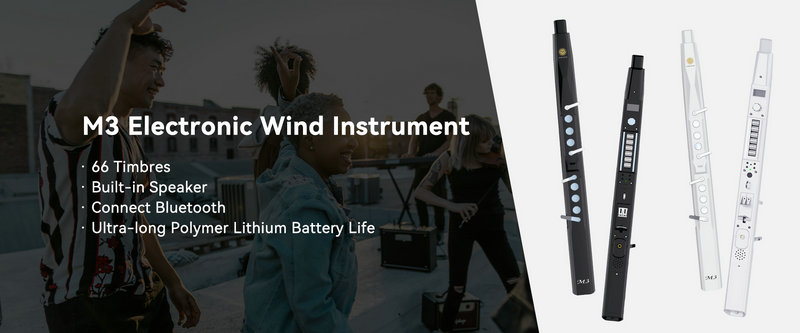
SUNRISE MELODY M3 Electronic Wind Instrument - The best-selling Electronic Wind Instrument
. 66 Timbres
. Built-in Speaker
. Connect Bluetooth
. Ultra-long Polymer Lithium Battery Life