

The sound produced by electronic wind instruments is different from that of traditional instruments in several ways:
Sound Source and Generation Mechanism:
Traditional Wind Instruments: Rely on the vibration of a physical component, such as a reed (in clarinets and saxophones), a lip vibration against a mouthpiece (in trumpets and trombones), or the vibration of air columns within the instrument's body. The material, shape, and construction of the instrument play a crucial role in determining the sound quality. For example, the wooden body of a clarinet gives it a warm and rich tone, while the brass body of a trumpet provides a bright and powerful sound.
Electronic Wind Instruments: Use electronic components and digital technology to generate sound. They typically have a sensor that detects the player's breath and finger movements, which then trigger pre-recorded or synthesized sounds stored in the instrument's sound module. The sound can be based on samples of real instruments, synthesized waveforms, or a combination of both.
Timbre and Tone Quality:
Timbre Variability in Traditional Instruments: Timbre in traditional wind instruments is highly influenced by the player's technique, breathing control, and the instrument's unique characteristics. Different playing styles, embouchure (the way the player's mouth forms around the mouthpiece), and articulation can create a wide range of timbres, from smooth and mellow to bright and sharp. Each instrument also has its own distinct timbral qualities, making them easily recognizable.
More Consistent Timbre in Electronic Wind Instruments: Electronic wind instruments generally offer a more consistent timbre as the sounds are pre-programmed. However, some advanced models allow for some degree of timbre modulation through built-in effects or parameter controls, but the range of variation is often not as extensive as that of traditional instruments. The timbre may also lack the natural resonances and overtones that are characteristic of acoustic instruments.
Pitch and Tuning Stability:
Traditional Instruments: Pitch stability can be affected by factors such as temperature, humidity, and the player's embouchure control. For example, a woodwind instrument may go slightly out of tune in a hot and humid environment, or a brass player may need to adjust their embouchure to maintain a stable pitch. Additionally, the intonation of some traditional instruments can be more challenging to master, requiring the player to have a good ear and fine-tuning skills.
Electronic Wind Instruments: Typically have more stable pitch and tuning as the sounds are digitally generated. The instrument can be programmed to maintain a precise pitch, making it easier for beginners to play in tune. However, if the instrument's sensor or electronics malfunction, it may result in pitch errors or unstable sound.
Dynamic Range and Expression:
Dynamic Range in Traditional Instruments: Traditional wind instruments offer a wide dynamic range, allowing players to produce soft, delicate sounds (pianissimo) as well as powerful, loud sounds (fortissimo). The player's breath control, embouchure pressure, and the instrument's response to these factors contribute to the dynamic expression. For example, a saxophonist can create a wide range of dynamics from a whisper-like sound to a blaring solo.
Electronic Wind Instruments: While some electronic wind instruments can simulate a certain level of dynamic expression, the response may not be as natural or nuanced as that of traditional instruments. The dynamic range is often limited by the instrument's sensor sensitivity and the programmed sound samples or synthesis algorithms. However, advanced models with more sophisticated sensors and software can offer better dynamic control and expression.
Sound Customization and Versatility:
Traditional Instruments: The sound of a traditional wind instrument is relatively fixed based on its design and construction. However, players can use accessories such as mouthpieces, reeds, and ligatures to slightly modify the sound to some extent. The range of sounds that can be produced is still limited to the natural capabilities of the instrument.
Electronic Wind Instruments: Offer a high degree of sound customization and versatility. They often come with a variety of built-in sounds, effects, and presets, allowing the player to switch between different instrument sounds (such as saxophone, flute, trumpet, etc.) and apply various effects like reverb, delay, and distortion. Additionally, through MIDI connectivity, they can be connected to external sound modules or software for even more extensive sound manipulation and customization.
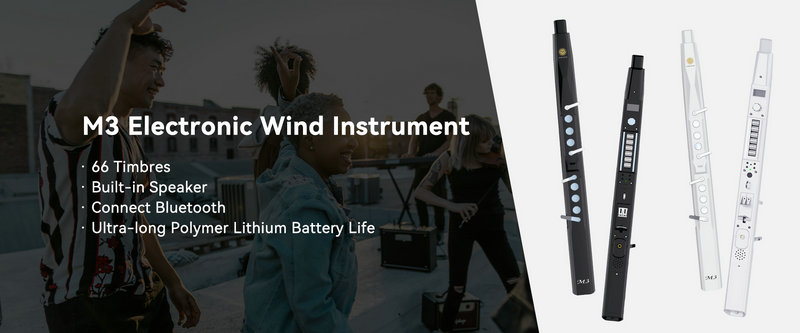
SUNRISE MELODY M3 Electronic Wind Instrument - The best-selling Electronic Wind Instrument
. 66 Timbres
. Built-in Speaker
. Connect Bluetooth
. Ultra-long Polymer Lithium Battery Life