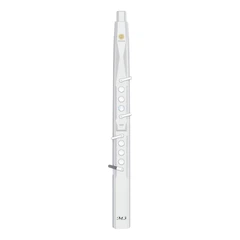


The electronic circuitry in electronic wind instruments affects the sound in the following ways:
1. Sound Generation
The electronic circuitry is at the heart of sound production in these instruments. When a player blows or performs other actions, sensors convert these movements into electrical signals. These signals are then transmitted to the electronic circuitry, where they are processed and transformed to generate sound. Different circuit designs and components can produce different types of and characteristic sounds. For example, the type of oscillator used can determine the basic waveform of the sound, whether it is a sine wave, square wave, or sawtooth wave, which in turn affects the overall timbre.
2. Timbre Shaping
The circuitry can shape and adjust the timbre of the sound. By manipulating parameters within the circuit, such as filters, equalizers, and oscillators, it is possible to change the frequency response, harmonic content, and timbral characteristics of the sound. For instance, a low - pass filter can be adjusted to make the sound warmer by reducing the high - frequency components, while a high - pass filter can make the sound brighter by attenuating the low - frequency parts. Equalizers can boost or cut specific frequency ranges, allowing for precise control over the tonal balance of the sound.
3. Effect Addition
Most electronic wind instruments' circuitry has the function of adding various effects. Common effects include reverb, delay, chorus, and distortion. Reverb adds a sense of space to the sound, making it seem as if it is being played in a large hall or a small room, depending on the reverb settings. Delay creates echoes of the original sound at specified time intervals, which can add a rhythmic or ambient quality. Chorus gives the impression of multiple instruments playing the same note slightly out of phase, creating a thicker and more harmonious sound. Distortion can be used to add a gritty or edgy quality to the sound, often used in more modern or experimental music.
4. Dynamic Control
The electronic circuitry controls the dynamic range of the sound. It can adjust parameters such as volume, gain, and compression. Volume control allows the player to increase or decrease the overall loudness of the sound. Gain adjustment can boost the initial signal strength, which is useful for emphasizing certain notes or passages. Compression is used to limit the dynamic range, making the softer sounds louder and the louder sounds softer within a certain range. This helps in creating a more even and consistent sound output, especially in live performances or when recording.
5. MIDI Control
Some electronic wind instruments support MIDI (Musical Instrument Digital Interface). Through the electronic circuitry, they can communicate and be controlled by other MIDI - enabled devices. This enables the player to integrate the electronic wind instrument with other electronic instruments, such as synthesizers, drum machines, or music software on a computer. MIDI data can be used to control various aspects of the sound, including pitch, velocity (how hard a note is played), and modulation, allowing for more complex and creative musical arrangements.
SUNRISE MELODY M3 Electronic Wind Instrument - The best-selling Electronic Wind Instrument
. 66 Timbres
. Built-in Speaker
. Connect Bluetooth
. Ultra-long Polymer Lithium Battery Life