

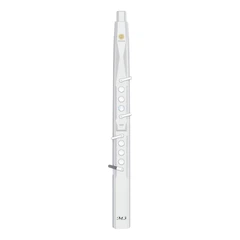

Introduction to the Clarinet Tones and Fingerings of the Sunrise Melody Electric Saxophone
Tone Aspects
Purity: The clarinet tone is pure and clear, with a unique wooden texture. This pure tonal quality gives the music a fresh and natural feel, enabling it to stand out among many instruments. It is highly suitable for playing some lyrical and soft musical passages, bringing a peaceful and comfortable auditory enjoyment to the listeners.
Range Characteristics: The clarinet has a relatively wide range. In the high register, the tone is bright and clear, giving a feeling of being fresh, refined, and highly penetrating. It can excellently express cheerful and passionate emotions and often takes on the part of playing the high melody in a band performance. The middle register is rich in expressiveness. It can convey both cheerful and melancholic moods, possessing strong expressiveness and appeal, and is the most commonly used register in clarinet playing. The low register has a deep and mellow tone, giving a sense of steadiness and depth, which can add a sense of weight and atmosphere to the music.
Fingering Aspects
Basic Fingerings
Left Hand: The left thumb usually rests on a support point or a specific hole on the back of the instrument (the exact position may vary slightly depending on the instrument model), serving to stabilize the instrument. The index finger, middle finger, and ring finger of the left hand respectively press on different holes of the instrument to control different pitches. For example, in playing some basic scales, different combinations of pressing are used to produce different pitches.
Right Hand: The fingers of the right hand also press on the corresponding holes or keys to assist the left hand in controlling the pitch. The fingerings of the right hand cooperate with those of the left hand, enabling the performer to control the pitch and tone more flexibly.
Altered Pitch Fingerings
Semitone Change Fingerings: The semitone changes on the clarinet can be controlled by the little finger of the left hand. For example, when playing some chromatic scales or musical passages that require semitone changes, the flexible use of the little finger of the left hand is very important. By gently pressing or releasing the hole or key corresponding to the little finger, the semitone change of the pitch can be achieved, making the music more diverse.
Whole Tone Change Fingerings: The whole tone changes are relatively more complex. Not only do the other fingers of the left hand need to press different combinations of holes, but it may also be necessary to cooperate with the fingerings of the right hand to complete the task together. For example, in playing some complex scales or mode transitions, the performer needs to master the fingering techniques of whole tone changes proficiently to ensure the accuracy of the pitch and the smoothness of the music.
Special Fingerings
Double Tone Fingerings: When playing some special musical effects, double tone fingerings are used. This kind of fingering means pressing two or more holes simultaneously at the same hole and quickly switching their pressing methods to produce different pitches and sound effects, increasing the layering and richness of the music.
Cross Fingerings: Cross fingerings refer to the need for the fingers to move quickly between different holes during the playing process to produce a continuous and smooth sound effect. This is very important for playing fast musical passages or parts that require frequent pitch changes, and it requires the performer to have high finger flexibility and coordination.
SUNRISE MELODY M1 Electronic Wind Instrument
. Revisit the passion and dreams of youth
. M1 electric clarinet wind instrument -- The good news for beginners
. Rich and diverse timbres
. Powerful functions and easy operation
. Perfect after-sales service
