
The role of fingering in electronic wind instruments (EWIs) is crucial for several reasons, and it plays a similar role to that in traditional wind instruments, albeit with some distinct differences due to the electronic nature of the instrument. Here's how fingering functions in EWIs:
Pitch Control:
Fingering determines the pitch of the notes produced. Different combinations of key presses correspond to different notes, much like on a piano or a traditional wind instrument.
Expressiveness:
Fingering, along with breath control and other EWI-specific features, contributes to the expressiveness of the performance. The speed, pressure, and precision of finger movements can affect the dynamics and articulation of the sound.
Technique Execution:
Certain techniques such as trills, grace notes, and bends require specific fingerings to execute effectively. These techniques are essential for playing various musical styles and adding character to performances.
Instrument Mimicry:
Electronic wind instruments often aim to emulate the sound and behavior of traditional wind instruments. Fingering plays a significant role in this mimicry, as the same fingering patterns are often used to produce similar timbres and styles across different EWI sounds.
Learning and Transition:
For musicians transitioning from traditional wind instruments to EWIs, familiar fingering patterns can ease the learning curve. It allows them to leverage their existing skills and focus on the unique aspects of playing an electronic instrument.
Accessibility:
EWIs may offer alternative fingering options to accommodate different player preferences or abilities, making the instrument more accessible to a wider range of musicians.
Sound Shaping:
In some EWIs, fingering can influence the sound beyond pitch, such as affecting the timbre or triggering certain effects, depending on the instrument's design and capabilities.
Technological Integration:
Fingering in EWIs is integrated with electronic components, which can respond to the speed and pressure of key presses, adding another layer of control and nuance to the instrument's sound production.
Performance Precision:
Accurate fingering is essential for playing melodies and harmonies correctly. It ensures that the intended notes are played with clarity and precision.
Educational Tool:
For beginners, learning fingering on an EWI helps develop a foundational understanding of music theory and the mechanics of wind instrument playing.
In summary, fingering in electronic wind instruments is fundamental to playing the instrument, controlling pitch, expressing musically, and replicating the techniques and nuances of traditional wind instruments within a digital environment.
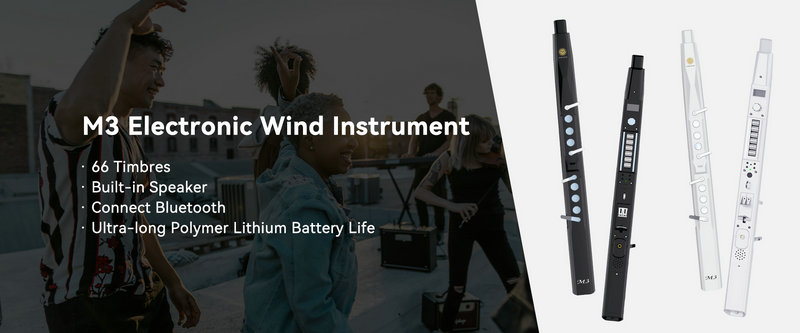
SUNRISE MELODY M3 Electronic Wind Instrument - The best-selling Electronic Wind Instrument
. 66 Timbres
. Built-in Speaker
. Connect Bluetooth
. Ultra-long Polymer Lithium Battery Life