

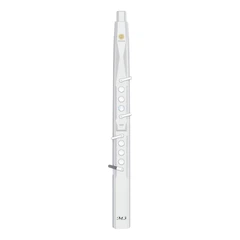

The electric saxophone, with its advanced technology and diverse special effects functions, offers musicians a wide range of creative possibilities. These special effects can enhance the expressiveness and uniqueness of the music, making the performance more engaging and memorable. In this article, we will explore the usage methods of common special effects functions of the electric saxophone.
I. Reverb Effect
Reverb is one of the most commonly used special effects on the electric saxophone. It simulates the sound of playing in different acoustic environments, adding depth and spaciousness to the sound. The reverb effect can be adjusted in terms of intensity, decay time, and pre-delay.
To use the reverb effect effectively, consider the following:
Intensity: Adjust the intensity of the reverb to match the musical context. A higher intensity can create a more immersive and expansive sound, suitable for slow, atmospheric pieces. A lower intensity can provide a subtler enhancement, maintaining the clarity of the saxophone's tone.
Decay Time: The decay time determines how long the reverb lasts after the initial sound. A longer decay time can create a more lingering and dreamy effect, while a shorter decay time can be used for a more crisp and defined sound.
Pre-Delay: Pre-delay adds a delay between the initial sound and the onset of the reverb. This can help to separate the dry sound from the reverb, making the effect more natural and less muddy. Experiment with different pre-delay settings to find the right balance for your music.
II. Delay Effect
The delay effect creates echoes of the played notes, adding rhythmic interest and depth to the music. Delay can be adjusted in terms of time, feedback, and mix.
Here's how to use the delay effect:
Time: The delay time determines the interval between the original note and the echo. Short delay times can create a subtle doubling effect, while longer delay times can be used for more pronounced rhythmic patterns.
Feedback: Feedback controls how many times the echo repeats. A higher feedback setting can create a more complex and evolving sound, but be careful not to overdo it, as too much feedback can lead to a chaotic and muddy sound.
Mix: The mix controls the balance between the dry sound and the delayed sound. A higher mix setting will make the delay more prominent, while a lower mix setting will keep the delay more in the background.
III. Distortion Effect
Distortion adds grit and edge to the sound, giving it a more aggressive and powerful quality. Distortion can be adjusted in terms of gain, tone, and output level.
When using the distortion effect, keep these points in mind:
Gain: Gain controls the amount of distortion. A higher gain setting will produce a more intense and saturated distortion, while a lower gain setting will provide a milder distortion effect.
Tone: The tone control allows you to adjust the frequency balance of the distortion. You can make the distortion sound more bass-heavy, mid-range focused, or treble-enhanced, depending on your musical needs.
Output Level: Be careful not to overdo the output level when using distortion, as it can lead to clipping and a harsh sound. Adjust the output level to ensure that the distorted sound is still within a comfortable listening range.
IV. Wah-Wah Effect
The wah-wah effect creates a sweeping, vocal-like sound by filtering the frequencies of the saxophone's tone. Wah-wah can be controlled by a pedal or a built-in control on the electric saxophone.
Here's how to use the wah-wah effect:
Pedal Control: If using a wah-wah pedal, experiment with different foot movements to create different wah-wah patterns. You can use slow sweeps for a more dramatic effect or quick movements for a more rhythmic effect.
Built-In Control: Some electric saxophones have a built-in wah-wah control that can be adjusted manually. Use this control to fine-tune the wah-wah effect and find the right balance between the filtered and unfiltered sound.
Musical Context: Consider the musical context when using the wah-wah effect. It can be used to add emphasis to certain notes or phrases, or to create a unique solo sound. However, be careful not to overuse it, as it can become tiresome if used too frequently.
V. Pitch Shifting Effect
The pitch shifting effect allows you to change the pitch of the saxophone's tone up or down. This can be used for creating harmonies, adding dissonance, or simply for creating unique melodic effects. Pitch shifting can be adjusted in terms of semitones and cents.
Here's how to use the pitch shifting effect:
Semitones: Adjust the pitch shift in semitones to create intervals such as a major third, minor third, or perfect fifth. This can be used to create harmonies or to add a different tonal color to the music.
Cents: Fine-tune the pitch shift in cents to create microtonal effects or to correct intonation. This can be especially useful when playing with other instruments or in a studio setting.
Musicality: Use pitch shifting sparingly and with musicality. It can be a powerful effect, but too much pitch shifting can make the music sound artificial and unappealing. Consider the overall musical context and use pitch shifting to enhance the emotional impact of the music.
VI. Combining Special Effects
One of the great advantages of the electric saxophone is the ability to combine multiple special effects to create unique sounds. Experiment with different combinations of reverb, delay, distortion, wah-wah, and pitch shifting to find the perfect combination for your music.
For example, you could combine reverb and delay for a spacious and dreamy sound, or add distortion and wah-wah for a more aggressive and funky sound. The possibilities are endless, so let your creativity run wild and explore different combinations to find your own signature sound.
In conclusion, the special effects functions of the electric saxophone offer a wealth of creative possibilities for musicians. By understanding the usage methods of these common special effects, you can enhance the expressiveness and uniqueness of your music, taking your performances to the next level. Experiment with different settings and combinations, and let your imagination guide you as you explore the world of electric saxophone special effects.
SUNRISE MELODY M1 Electronic Wind Instrument
. Revisit the passion and dreams of youth
. M1 electric clarinet wind instrument -- The good news for beginners
. Rich and diverse timbres
. Powerful functions and easy operation
. Perfect after-sales service
