

In daily life, we can use electronic wind instruments to compose or improvise music in the following ways:
For Composition:
Explore Different Sounds: Experiment with the various instrument sounds available on the electronic wind instrument. Try out sounds that you might not typically associate with a traditional composition, such as unique synth tones or ethnic instrument simulations. This can add an unexpected and creative element to your music.
Create Themes and Melodies: Start by playing a simple melody on the instrument. This could be a catchy tune that comes to mind or a series of notes that you find pleasing. Use the instrument's pitch bend and modulation controls to add expression and variation to the melody.
Build Layers: Once you have a melody, add layers by playing additional parts on different instrument sounds. For example, you could add a harmony line, a bass line, or some rhythmic elements. This can be done by recording each part separately and then playing them back together, or by playing multiple parts simultaneously if you're comfortable with multitasking.
Use Looping: Many electronic wind instruments have looping functions. Record a short phrase or pattern and loop it to create a repetitive element that can serve as the foundation for your composition. You can then build on top of the loop by adding more instruments or variations.
Incorporate Effects: Play around with the built-in effects on the instrument, such as reverb, delay, and distortion. These effects can add depth and atmosphere to your music. For example, a touch of reverb can make your sound seem more spacious, while delay can create interesting rhythmic patterns.
For Improvisation:
Listen and Respond: Start by listening to a backing track, another musician playing, or just the ambient sounds around you. Use what you hear as inspiration and respond with your electronic wind instrument. Play off the rhythms, melodies, and moods of what's already there, adding your own unique twists and turns.
Free Association: Don't think too much and just let your fingers and breath guide you. Play whatever comes to mind without judgment. This can lead to spontaneous and creative musical ideas that you might not have come up with if you were overthinking.
Change Parameters on the Fly: While improvising, adjust the instrument's settings in real time. For example, change the tone, volume, or effects. This can add an element of surprise and keep the improvisation fresh and engaging.
Collaborate with Others: Improvising with other musicians can be a great way to push your creative boundaries. Whether it's jamming with friends or collaborating online, the interaction with other musicians can lead to exciting musical exchanges and new ideas.
Set Constraints: Sometimes, setting constraints can actually enhance creativity. For example, limit yourself to a specific key, tempo, or instrument sound. This forces you to think outside the box and come up with new ways to express yourself within the given constraints.
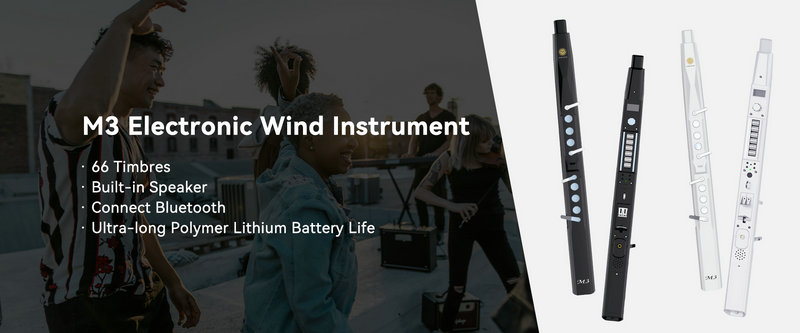
SUNRISE MELODY M3 Electronic Wind Instrument - The best-selling Electronic Wind Instrument
. 66 Timbres
. Built-in Speaker
. Connect Bluetooth
. Ultra-long Polymer Lithium Battery Life