
How long does it take to become proficient at playing an electric wind instrument?
Becoming proficient at playing an electric wind instrument is a journey that varies greatly in duration depending on numerous factors. There is no one-size-fits-all answer to this question, as each individual's learning experience is unique.
For those with a background in playing traditional wind instruments, the transition to an electric wind instrument may seem somewhat less daunting. If they already possess a solid foundation in breath control, finger dexterity, and an understanding of musical notation and theory, they may find the initial stages of learning the electric instrument a bit easier. However, this does not mean that they will become proficient overnight. Even with their prior experience, mastering the electronic features and capabilities unique to electric wind instruments can take time.
The electronic components of these instruments, such as built-in effects processors, pitch bending controls, and the ability to connect to external devices, require a different skill set than traditional instruments. Musicians with a traditional background will need to learn how to effectively use these features to enhance their playing and create unique sounds. This might involve spending time experimenting with different settings and effects to understand how they can be incorporated into their performances.
If such a person practices regularly, perhaps devoting a few hours several times a week to their electric wind instrument, they may start to feel comfortable playing simple melodies and using basic effects within a few months. But becoming truly proficient, where they can flawlessly execute complex compositions, improvise with ease, and fully utilize the instrument's electronic capabilities to create captivating musical experiences, could take anywhere from six months to a year or even longer.
Now consider a complete beginner with no prior musical experience. The learning curve for them is much steeper. They must start from the very basics, learning about musical notation, developing an understanding of rhythm and pitch, and learning how to control their breath to produce a consistent sound. This initial stage alone can take several months of dedicated practice.
As they progress, they will need to master the fingerings and key controls of the electric wind instrument. This can be a challenging task, as it requires coordination between the hands and the breath. Additionally, beginners will need to become familiar with the instrument's various settings and electronic functions, which can be overwhelming at first.
With consistent practice, perhaps an hour or two a day several times a week, a beginner might start to play simple tunes and use basic effects after six months to a year. But achieving proficiency, where they can play with confidence and creativity, might take two to three years or more.
The complexity of the electric wind instrument itself also has a significant impact on the learning timeline. Some models are more advanced and have a wider range of features, such as multiple effects presets, programmable controls, and the ability to connect to complex digital audio workstations. These instruments can take longer to master as the user needs to understand and utilize all of these features effectively.
On the other hand, simpler models with fewer electronic functions may be easier for beginners to learn but might limit the musician's creative potential as they progress.
The type of music one wants to play on the electric wind instrument also plays a role in the learning time. If someone is interested in playing simple pop or rock tunes, they may be able to achieve a level of proficiency more quickly than if they are aiming to play complex jazz or classical compositions. Jazz and classical music often require a higher level of technical skill, musical understanding, and improvisational ability.
Dedication and practice schedule are crucial factors as well. A person who is highly dedicated and practices intensively for several hours a day will likely progress more quickly than someone who practices sporadically. However, it's important to balance intense practice with rest and proper technique to avoid burnout and injury.
Moreover, access to quality instruction can significantly shorten the learning time. A good teacher can provide guidance on proper technique, musical theory, and how to effectively use the instrument's features. However, finding a qualified instructor who is experienced in teaching electric wind instruments can be a challenge, especially in areas where these instruments are less common.
In conclusion, becoming proficient at playing an electric wind instrument is a complex and individualized journey. It can take anywhere from several months to several years, depending on factors such as prior musical experience, the complexity of the instrument, the type of music one wants to play, dedication, practice schedule, and access to instruction. Patience, perseverance, and a love for music are essential qualities as one embarks on this journey of learning and growth.
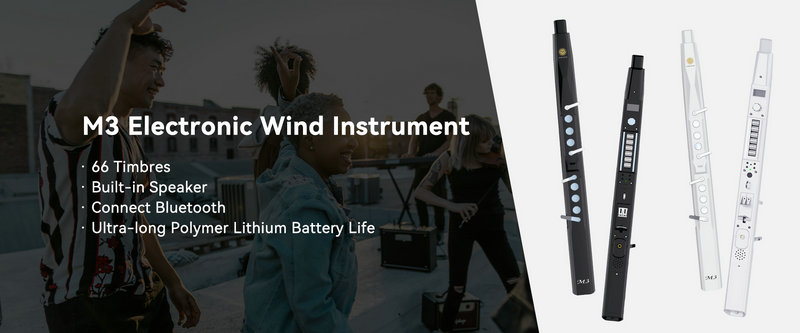
SUNRISE MELODY M3 Electronic Wind Instrument - The best-selling Electronic Wind Instrument
. 66 Timbres
. Built-in Speaker
. Connect Bluetooth
. Ultra-long Polymer Lithium Battery Life