
The fingering technique of the player has a profound and multi-faceted impact on the sound quality of the hulusi. Let's delve into the various ways in which this occurs.
Precision in finger placement is of utmost significance. When a player is meticulous in covering and uncovering the holes accurately, it leads to clear and distinct notes. Each note has a specific pitch, and any slight deviation in finger position can cause pitch inaccuracies. For example, if a hole is not covered completely, the resulting note might be flat or sharp, disrupting the harmony and overall tonal quality of the music.
The speed and agility of the fingers also play a crucial role. In fast-paced passages or complex melodies, a player with rapid and dexterous finger movements can produce smooth transitions between notes. This avoids any breaks or hesitations in the sound, creating a seamless and flowing musical experience. Imagine a rapid sequence of notes where the fingers are sluggish; it would result in a choppy and disjointed sound, detracting from the musicality.
The pressure applied by the fingers on the holes can affect the volume and intensity of the notes. By exerting the right amount of pressure, the player can control the amount of air escaping and thus modulate the volume. This gives them the ability to add dynamics to the music, from soft and delicate passages to bold and powerful ones.
The consistency and smoothness of finger transitions are essential for maintaining a consistent sound quality. When moving from one note to another, jerky or uneven finger movements can cause fluctuations in tone and pitch. A skilled player ensures that these transitions are seamless, creating a uniform and pleasing sound.
The way fingers are lifted off the holes can also have an impact. A sudden and forceful removal might cause a brief interruption in the airflow, affecting the smoothness of the sound. On the other hand, a controlled and gradual lift-off can maintain the continuity of the tone.
Fingering technique also influences the articulation of the notes. Different styles of starting and ending notes, such as staccato (short and detached) or legato (smooth and connected), can be achieved through precise finger control. This adds variety and expressiveness to the music.
Furthermore, the coordination between the fingers of both hands is vital. In some cases, both hands need to work in perfect harmony to produce simultaneous or sequential notes accurately. Poor coordination can lead to timing errors and compromised sound quality.
The player's ability to handle trills, glissandos, and other ornamental techniques with finesse depends on their fingering skills. These embellishments can enhance the beauty and complexity of the music, but they require precise and controlled finger movements to be executed effectively and without distorting the sound.
Let's consider a scenario where two players are performing the same piece, but one has superior fingering technique. The player with better skills would be able to handle rapid passages with ease, maintaining pitch accuracy and tonal consistency. Their ability to control the volume and dynamics through finger pressure would add depth and emotion to the performance. In contrast, the player with less developed fingering skills might struggle with the speed and accuracy, resulting in a less polished and less engaging sound.
In another example, imagine a player attempting a delicate and expressive melody. With precise fingering, they can create soft, nuanced tones that convey the intended emotions. However, if the fingers are not controlled properly, the sound might lack the subtlety and refinement needed to make the music truly captivating.
In conclusion, the fingering technique of the player is a critical factor in determining the sound quality of the hulusi. It affects everything from pitch accuracy and note clarity to volume control, dynamic range, and the expressiveness of the music. Mastery of fingering techniques allows the player to unlock the full potential of the instrument and create rich, beautiful, and emotionally resonant sounds.
I hope this extensive discussion has provided you with a detailed understanding of how the player's fingering technique influences the sound quality of the hulusi. If you have any further questions or need more in-depth analysis, please don't hesitate to ask.
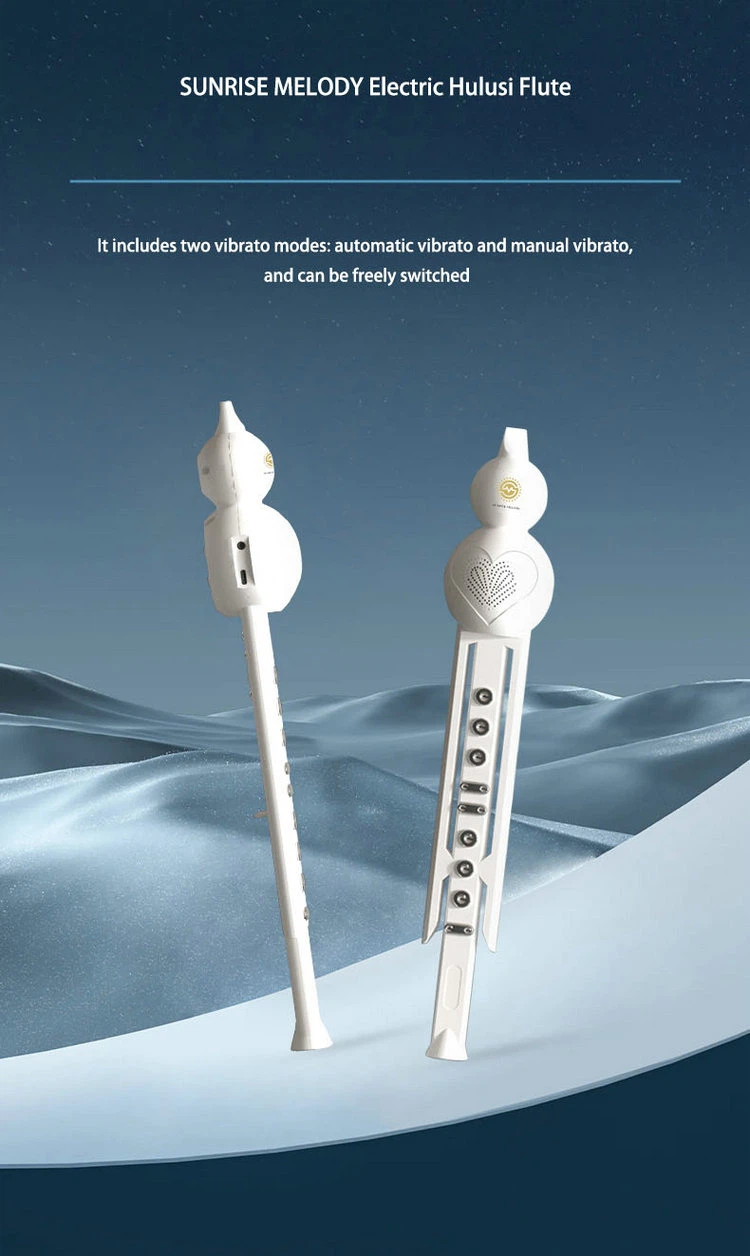
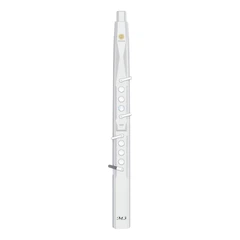
SUNRISE MELODY Electric hulusi flute instrument
Chinese hulusi flute instrument has a unique ethnic style and is extremely ethnic.
And it has a good volume and 10 timbres, it is easy to learn and simple to use, especially suitable for beginners.
6 Major Core Selling Points, a variety of innovative functions to meet different performance needs:
10 kinds of timbres
Touchable octave
Connect headphones
Four fingerings
Built-in battery
Built-in speakers