
Electronic wind instruments and traditional wind instruments differ in sound and playing techniques in the following ways:
Sound:Sound Source and Quality:
Traditional Wind Instruments: Rely on the vibration of air columns inside the instrument caused by the player's blowing to produce sound. The sound quality is affected by factors such as the material, structure, and manufacturing process of the instrument. For example, a wooden flute will have a different timbre from a metal trumpet. The timbre is relatively natural and pure, with rich overtones and unique characteristics of the instrument itself.
Electronic Wind Instruments: Generate sound through electronic components and circuits. The sound is often synthesized or sampled from other instruments, and then processed and amplified. The sound quality is more stable and can be adjusted and modified through electronic means. However, compared to traditional instruments, the electronic sound may lack some of the natural and organic feel of traditional wind instruments.
Range and Flexibility of Sound:
Traditional Wind Instruments: Generally have a certain range limit determined by the physical structure and design of the instrument. Although skilled players can use some special playing techniques to expand the range to a certain extent, the overall range is relatively fixed. Different traditional wind instruments have different ranges, such as the piccolo having a higher range and the bassoon having a lower range.
Electronic Wind Instruments: Often have a wider range, sometimes even exceeding the range of traditional wind instruments. They can easily cover multiple octaves, allowing players to play a wider range of music. In addition, electronic wind instruments can also simulate the sounds of various instruments and even create some unique electronic sounds, providing more choices for players in terms of sound.
Sound Dynamics and Expression:
Traditional Wind Instruments: The change in sound dynamics is mainly achieved through the player's control of breathing, blowing strength, and lip tension. Skilled players can use these techniques to create a rich variety of dynamics, such as soft and gentle tones for expressing tenderness and strong and powerful tones for expressing excitement. The subtle changes in sound can convey deep emotions and musical expressions.
Electronic Wind Instruments: In addition to the player's breath control, they also have various electronic control functions, such as volume knobs, tone adjustment buttons, and effect switches. These functions enable players to adjust the sound dynamics and effects more precisely and quickly, but the expression may be relatively more mechanical compared to traditional instruments in some cases, lacking the natural and spontaneous changes of traditional playing.
Playing Techniques:Breath Control Requirements:
Traditional Wind Instruments: Breath control is a crucial and difficult skill. Players need to have a good understanding of the relationship between breathing and sound production, and accurately control the strength, duration, and stability of breathing to produce accurate pitches, beautiful tones, and smooth musical phrases. Different instruments have different requirements for breath control, and it takes a long time of practice and experience accumulation to master.
Electronic Wind Instruments: Although breath control is also important for electronic wind instruments to a certain extent, the requirements are relatively lower. Some electronic wind instruments have built-in sensors or detection devices that can automatically adjust the volume and pitch according to the player's breath intensity, making it easier for beginners to get started. However, for players who pursue high-level performance, mastering breath control still plays an important role in expressing music.
Finger Technique Complexity:
Traditional Wind Instruments: Require high finger dexterity and coordination. Players need to master complex fingerings and key pressing techniques to accurately play different pitches and musical phrases. For example, in woodwind instruments like the clarinet and saxophone, different finger positions can produce different notes and scales, and rapid passages require precise and rapid finger movements.
Electronic Wind Instruments: The finger technique requirements are relatively simpler in some aspects. Many electronic wind instruments use buttons or touch screens for operation, and the key layout is often designed to be more user-friendly. However, to play complex music and use various functions and effects of the instrument, players still need to familiarize themselves with the operation of the instrument and master certain finger control techniques.
Special Playing Techniques and Effects:
Traditional Wind Instruments: Have a variety of special playing techniques developed through long-term practice and exploration, such as vibrato, glissando, trill, and tongue techniques in wind instruments. These techniques add unique expressions and styles to the music, requiring players to have high skill levels and musical understanding to master and apply them appropriately.
Electronic Wind Instruments: Can achieve various special effects and functions through electronic technology, such as pitch bending, modulation, delay, reverb, and other effects. These effects can be easily adjusted and controlled through the instrument's settings or external equipment, allowing players to create more diverse and modern musical effects.
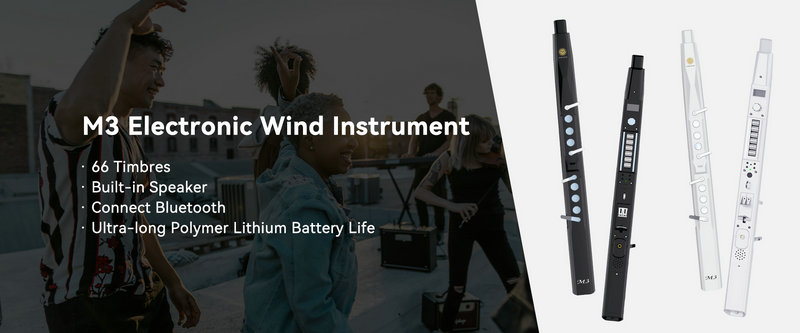
SUNRISE MELODY M3 Electronic Wind Instrument - The best-selling Electronic Wind Instrument
. 66 Timbres
. Built-in Speaker
. Connect Bluetooth
. Ultra-long Polymer Lithium Battery Life