


I. Understanding the Basics of Harmony
A. Learn Chord Structures
Major and Minor Chords
Start by thoroughly understanding the construction of major and minor chords. A major chord consists of a root, a major third, and a perfect fifth. For example, in a C major chord, the notes are C (root), E (major third), and G (perfect fifth). A minor chord has a root, a minor third, and a perfect fifth. In an A minor chord, the notes are A (root), C (minor third), and E (perfect fifth). Practice playing these basic chords on the EWI to internalize their sounds.
Analyze the intervals between the notes of the chords. The distance between the root and the third determines whether the chord is major or minor. Understanding these intervals helps you anticipate how a chord will sound and how it will interact with other chords.
Chord Inversions
Explore chord inversions. A chord inversion is when the order of the notes in a chord is changed. For example, instead of playing a C major chord in root position (C - E - G), you can play it in first inversion (E - G - C) or second inversion (G - C - E). Each inversion has a different sonic quality and can affect the flow of harmony. Practice moving smoothly between different chord inversions to get a feel for how they can be used to create harmonic interest.
B. Study Common Chord Progressions
I - IV - V Progression
The I - IV - V progression is one of the most fundamental in Western music. In the key of C major, it would be C (I), F (IV), and G (V). Play this progression on the EWI and listen carefully to how the chords move and resolve. Notice the tension and release as the progression unfolds. The V chord often creates a sense of anticipation, leading back to the I chord.
Experiment with different rhythms and melodies over this progression. Try playing a simple scale over each chord to understand how the notes of the scale interact with the changing chords. For example, play the C major scale over the C chord, the F major scale over the F chord, and the G major scale over the G chord.
ii - V - I Progression (Especially in Jazz)
In jazz music, the ii - V - I progression is ubiquitous. For example, in the key of C major, it would be Dm (ii), G (V), and C (I). This progression has a more complex harmonic structure than the I - IV - V. The ii chord provides a sense of movement towards the V chord, which then resolves to the I chord.
Practice playing different modes over each chord in the ii - V - I progression. The Dorian mode works well over the ii chord, the Mixolydian mode over the V chord, and the Ionian mode over the I chord. This will help you develop a more sophisticated harmonic palette.
II. Ear Training for Harmony
A. Interval Training
Recognizing Intervals by Ear
Use ear - training apps or software to practice recognizing intervals. Start with simple intervals like the perfect fifth (e.g., C to G) and the major third (e.g., C to E). Listen to the intervals played on the EWI or other instruments and try to identify them. As you become more proficient, move on to more complex intervals like the minor seventh (e.g., C to B♭).
Practice singing the intervals along with the EWI. This helps you internalize the sound of the intervals and makes it easier to recognize them in a harmonic context. For example, when you hear a chord progression, you can better identify the intervals between the chords.
Harmonic Intervals in Chords
Focus on the harmonic intervals within chords. Play a chord on the EWI and isolate the intervals between the notes. For example, in a G major chord (G - B - D), listen to the interval between G and B (a major third) and between G and D (a perfect fifth). This awareness of the internal structure of chords helps you understand how they blend and interact with other chords.
B. Chord Recognition
By Ear Training Exercises
Do chord - recognition exercises. Have someone play a chord on the EWI or another instrument and try to identify it. Start with basic chords and gradually increase the complexity to include inversions and extended chords. For example, learn to distinguish between a C major chord in root position and its first inversion.
Practice recognizing chord qualities (major, minor, diminished, augmented). Listen to the brightness or darkness of the chord sound to identify its quality. A major chord generally sounds brighter than a minor chord, and a diminished chord has a more tense and dissonant quality.
In Context of Music
Listen to music and try to identify the chords being used. Start with simple songs and work your way up to more complex pieces. For example, when listening to a pop song, try to identify the chord progressions in the chorus and verse. This helps you develop an ear for how chords are used in real - musical situations.
III. Applying Harmony in Improvisation
A. Melodic Harmony
Using Scales and Modes
When improvising, choose scales and modes that fit the underlying chord progression. For example, if you're playing over a C major chord, the C major scale (C - D - E - F - G - A - B) will work well. However, if the chord is a C minor, the C natural minor scale (C - D - E♭ - F - G - A♭ - B♭) or the C Dorian mode (C - D - E♭ - F - G - A - B♭) might be more appropriate. Practice switching between scales and modes as the chord progression changes.
Pay attention to the leading tones in the scales. The leading tone in a major scale (the seventh note) has a strong pull towards the tonic. In a harmonic minor scale, the raised seventh note creates a more pronounced leading tone effect, which can add a sense of direction to your melodies and enhance the harmonic feel.
Harmonic Rhythm
Consider the harmonic rhythm, which is the rate at which the chords change. In a slow - changing harmonic rhythm, you have more time to develop a melodic line over each chord. In a faster - changing harmonic rhythm, your melodies need to be more concise and responsive to the chord changes. For example, in a ballad with a slow - changing chord progression, you can play long, flowing melodies over each chord. In a fast - paced jazz tune with quick chord changes, your melodies might be more staccato and focused on hitting the important chord tones.
B. Voice - Leading
Smooth Voice Movement
Practice voice - leading, which is the smooth movement of individual voices (notes) in a chord progression. When moving from one chord to another, try to have the notes move in a logical and smooth manner. For example, if you're playing a three - note chord and the root of the first chord moves up a step to become the third of the next chord, this creates a smooth voice - leading effect.
Avoid large, disjunct leaps between notes unless it's for a specific musical effect. Smooth voice - leading helps create a sense of continuity and harmonic coherence in your improvisation.
Outer Voices and Inner Voices
Pay attention to the outer voices (the highest and lowest notes) and the inner voices. The outer voices often define the overall shape of the harmony. The inner voices can add richness and complexity. For example, in a four - note chord, the outer voices might outline the basic chord structure, while the inner voices can move in contrary motion or parallel motion to create different harmonic textures.
IV. Harmonizing with Other Instruments
A. Ensemble Playing
Listening to Other Instruments
When playing in an ensemble, listen carefully to the other instruments. If you're in a jazz combo with a piano, bass, and drums, pay attention to how the piano outlines the chord progressions. The bass provides the harmonic foundation, and the drums set the rhythmic context. Try to fit your EWI playing into this harmonic and rhythmic framework.
For example, if the piano is playing a complex chord voicing, you can simplify your own harmonic approach and focus on the melodic aspect that complements the overall sound. Or, if the bass is emphasizing a particular chord tone, you can echo that in your playing.
Blending with the Group
Work on blending your sound with the other instruments. Adjust your volume, tone, and timbre to create a cohesive ensemble sound. If the other instruments have a mellow tone, you might want to adjust your EWI settings to match. Use effects on the EWI, such as reverb or chorus, to help it blend better with the overall sonic landscape.
In a situation where the group is playing a soft, delicate passage, play with a lighter touch and a more subdued tone. Conversely, in a louder, more energetic section, match the energy level of the other instruments.
B. Backing Tracks and Harmonic Support
Using Backing Tracks Effectively
When using backing tracks, analyze the harmonic content of the track. Understand the chord progressions and the overall harmonic structure. You can then use the EWI to add melodic and harmonic elements that enhance the track. For example, if the backing track has a simple chord progression, you can play more complex harmonies or counter - melodies to add interest.
Experiment with different harmonic voicings on the EWI to fill out the sound of the backing track. If the track sounds a bit thin in the mid - range, you can use the EWI to add harmonic content in that area.
Harmonic Interaction with Recorded Tracks
When playing along with recorded tracks, be aware of the harmonic interactions. If the track has a lot of dissonance in a particular section, you can either resolve it with your playing or add to it for a more edgy effect. For example, if a rock track has a power chord progression with a lot of distortion, you can play a more melodic line that either contrasts or complements the dissonance.
In conclusion, cultivating a sense of harmony in EWI improvisation is a multifaceted process that involves understanding the building blocks of harmony, training your ear, applying harmony in your playing, and interacting harmonically with other instruments. With consistent practice and attention to these aspects, you can develop a strong harmonic sense and enhance the quality of your improvisations.
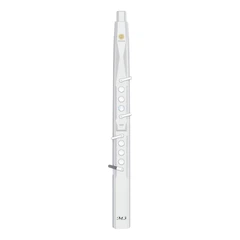
SUNRISE MELODY M1 Electronic Wind Instrument
. Revisit the passion and dreams of youth
. M1 electric clarinet wind instrument -- The good news for beginners
. Rich and diverse timbres
. Powerful functions and easy operation
. Perfect after-sales service


