
Do Professional Musicians Need to Use MIDI for Electronic Wind Instruments When Performing?
Electronic wind instruments have gained significant popularity in recent years, offering musicians a wide range of sounds and capabilities. One technology that often comes into play with these instruments is MIDI (Musical Instrument Digital Interface). But do professional musicians really need to use MIDI for electronic wind instruments when performing? This question delves into the complex world of modern music performance and the role of technology in enhancing the musical experience.
I. Introduction to Electronic Wind Instruments and MIDI
Electronic wind instruments (EWIs) are a relatively new addition to the world of musical instruments. They combine the traditional playing style of wind instruments with advanced digital technology, allowing musicians to access a vast array of sounds and effects. MIDI, on the other hand, is a protocol that enables different musical instruments and devices to communicate with each other. It allows for the transmission of musical data such as notes, velocities, and control signals.
II. Advantages of Using MIDI with Electronic Wind Instruments for Professional Musicians
A. Expanded Sound Palette
One of the main advantages of using MIDI with EWIs is the expanded sound palette it offers. Professional musicians can access a virtually unlimited number of sounds, ranging from traditional orchestral instruments to exotic and experimental sounds. This allows them to create unique and diverse musical arrangements that would be difficult or impossible to achieve with traditional wind instruments alone.
B. Real-Time Control and Customization
MIDI also provides real-time control and customization options for professional musicians. They can use MIDI controllers to adjust parameters such as volume, pitch, and effects in real time, giving them greater control over their performance. Additionally, MIDI allows for the creation of custom patches and presets, enabling musicians to quickly access their preferred sounds and settings during a performance.
C. Integration with Other Musical Equipment
Another benefit of using MIDI with EWIs is the ability to integrate with other musical equipment. Professional musicians can connect their EWIs to synthesizers, drum machines, and other MIDI-enabled devices, creating complex and layered musical compositions. This integration also allows for seamless collaboration with other musicians who may be using different instruments or devices.
D. Recording and Production
MIDI is also essential for recording and production. Professional musicians can use MIDI to record their performances directly into a digital audio workstation (DAW), allowing for easy editing and manipulation of the recorded data. MIDI also enables the creation of complex musical arrangements and compositions in the studio, which can then be performed live using EWIs.
III. Disadvantages of Using MIDI with Electronic Wind Instruments for Professional Musicians
A. Complexity and Learning Curve
Using MIDI with EWIs can be complex and require a certain level of technical knowledge and skill. Professional musicians may need to spend time learning how to use MIDI controllers, configure MIDI settings, and troubleshoot any issues that may arise. This can be a significant disadvantage for musicians who are not familiar with technology or who prefer a more traditional approach to playing.
B. Reliability and Compatibility Issues
Another potential disadvantage of using MIDI with EWIs is reliability and compatibility issues. MIDI connections can be prone to glitches and errors, especially when using multiple devices or in a live performance setting. Additionally, not all EWIs and MIDI devices are fully compatible with each other, which can lead to compatibility issues and limitations.
C. Loss of Organic Sound and Feel
Some musicians argue that using MIDI with EWIs can result in a loss of the organic sound and feel of traditional wind instruments. While MIDI can offer a wide range of sounds, it may not be able to fully replicate the nuances and expressiveness of a live acoustic instrument. This can be a concern for professional musicians who value the authenticity and emotional impact of traditional playing.
IV. Factors to Consider When Deciding Whether to Use MIDI with Electronic Wind Instruments
A. Musical Genre and Style
The musical genre and style being played can have a significant impact on the decision to use MIDI with EWIs. For example, electronic music genres such as techno and trance often rely heavily on MIDI and electronic instruments, while traditional jazz or classical music may be more suited to acoustic instruments. Professional musicians should consider the musical context and requirements of their performance when deciding whether to use MIDI.
B. Performance Environment
The performance environment also plays a role in the decision to use MIDI. In a live concert setting, reliability and ease of use may be more important than having access to a large number of sounds. On the other hand, in a studio recording or experimental music project, MIDI may offer more creative possibilities and flexibility.
C. Personal Preference and Skill Level
Ultimately, the decision to use MIDI with EWIs comes down to personal preference and skill level. Some professional musicians may be comfortable and proficient with technology and see MIDI as an essential tool for their performances. Others may prefer a more traditional approach and rely on the natural sound and feel of acoustic instruments. Musicians should consider their own musical goals and preferences when making this decision.
V. Conclusion
In conclusion, whether professional musicians need to use MIDI for electronic wind instruments when performing is a complex question that depends on a variety of factors. While MIDI offers many advantages such as expanded sound palettes, real-time control, and integration with other musical equipment, it also has some disadvantages such as complexity, reliability issues, and a potential loss of organic sound. Professional musicians should carefully consider their musical genre, performance environment, and personal preferences when deciding whether to use MIDI with their EWIs. By weighing the pros and cons and making an informed decision, musicians can enhance their performances and create unique and memorable musical experiences.
Can MIDI be used to control other aspects of the performance besides sound?
Are there any downsides to using MIDI with electronic wind instruments?
How do professional musicians decide whether or not to use MIDI for a particular performance?
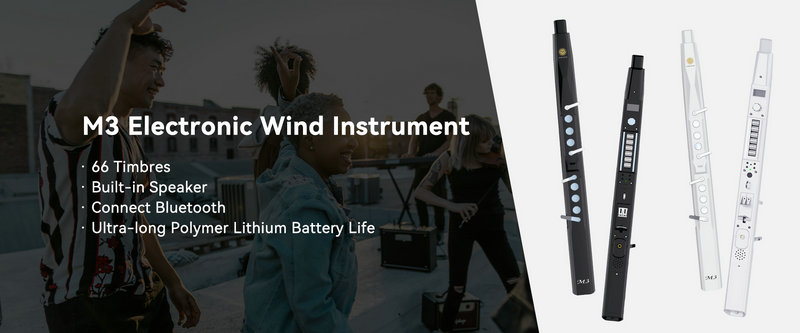
SUNRISE MELODY M3 Electronic Wind Instrument - The best-selling Electronic Wind Instrument
. 66 Timbres
. Built-in Speaker
. Connect Bluetooth
. Ultra-long Polymer Lithium Battery Life