
Electronic wind instruments cannot completely replace traditional instruments. Each has its own unique characteristics, advantages, and limitations, and they coexist and complement each other in the field of music. Here's a detailed comparison:
Sound quality and expressiveness:
Traditional instruments: Generally, they can produce more natural and rich sounds. For example, the tone color and timbre changes of a violin, the unique blowing feeling and tone of a saxophone, etc., are difficult to be accurately reproduced by electronic wind instruments. Traditional instruments have a certain degree of randomness and subtlety in sound production, which makes their performance more vivid and full of vitality.
Electronic wind instruments: They can simulate a variety of instrument sounds, and some can achieve relatively high similarity. However, compared with traditional instruments, there is still a lack of that kind of natural and organic texture in the sound. But it also has its own characteristics, such as being able to create some special sound effects and electronic music styles that traditional instruments cannot achieve.
Playing techniques and feel:
Traditional instruments: Require players to master certain physical skills and techniques, such as blowing strength, fingering accuracy, and bowing skills. The process of learning and practicing these techniques is also an important part of experiencing music. Each traditional instrument has its own unique playing method and feel, which gives players a direct and in-depth connection with the instrument.
Electronic wind instruments: Usually have relatively simple operation methods, and some even do not require too much professional playing skills. They often use digital control and preset functions, which is convenient for beginners to get started quickly. However, for professional musicians who pursue high-level playing skills and artistic expression, traditional instruments may offer more room for exploration and challenge.
Aesthetic and cultural value:
Traditional instruments: Carry a long history and cultural heritage, representing the artistic achievements and aesthetic concepts of different eras and regions. They are an important part of human music culture and have unique artistic value and historical significance.
Electronic wind instruments: As a product of modern technology, they reflect the combination of music and technology. They bring new musical experiences and creative possibilities, but in terms of cultural heritage and historical accumulation, they are relatively weaker than traditional instruments.
Application scenarios and audiences:
Traditional instruments: Are widely used in various music fields, such as classical music, jazz, folk music, etc. They are favored by professional musicians and music lovers who pursue traditional music styles and high-quality music performances.
Electronic wind instruments: Are more popular in some modern music styles, such as electronic music, pop music, and some experimental music. They are suitable for musicians and audiences who like new and trendy music forms and are more acceptable to young people and those who are interested in modern technology.
Portability and convenience:
Traditional instruments: Generally, they are relatively bulky and inconvenient to carry, especially some large instruments such as pianos and cellos.
Electronic wind instruments: Are usually more portable and easy to carry, and some can even be connected to mobile devices for use, which is more convenient for outdoor performances and on-the-go creation.
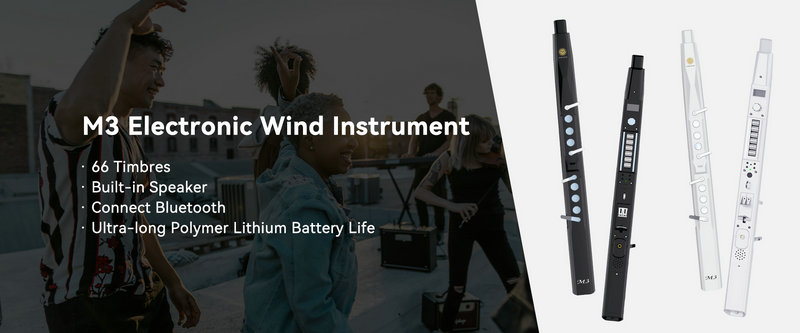
SUNRISE MELODY M3 Electronic Wind Instrument - The best-selling Electronic Wind Instrument
. 66 Timbres
. Built-in Speaker
. Connect Bluetooth
. Ultra-long Polymer Lithium Battery Life