
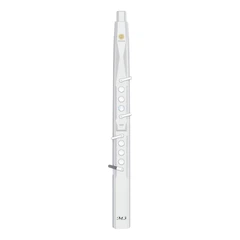


Digital wind instruments can indeed be used in electronic music, and they offer several unique advantages and creative possibilities within the realm of electronic music production and performance.
Advantages of Using Digital Wind Instruments in Electronic Music
Sound Variation and Manipulation
Digital wind instruments can produce a vast array of sounds, ranging from realistic imitations of traditional wind instrument tones to completely unconventional and unique timbres. This allows electronic music producers and composers to access a much wider sonic palette compared to using only traditional instruments or pre-existing samples. For example, a digital saxophone might be able to generate distorted, reverberated, or modulated sounds that are not possible with an acoustic saxophone. These sounds can be further manipulated and processed using various digital effects and tools available in electronic music production software, such as filters, delays, reverbs, and distortions. This enables the creation of highly customized and distinctive sounds that can add a lot of character and innovation to an electronic music composition.
In addition to the standard sounds, many digital wind instruments offer the ability to layer multiple sounds or combine them with other synthesized sounds. This layering capability can result in complex and rich textures that are difficult to achieve with a single instrument. For instance, combining a flute-like sound with a synthesized pad or a rhythmic sequence can create a captivating and immersive sonic experience.
Integration with Electronic Music Production
Digital wind instruments often come with connectivity options such as MIDI (Musical Instrument Digital Interface). MIDI allows for seamless integration with other electronic music equipment and software. Musicians can use the digital wind instrument to control virtual instruments, software synthesizers, or other MIDI-enabled devices. This means that the performance on the digital wind instrument can trigger and manipulate other sounds or sequences in real-time, opening up endless possibilities for creative expression and interaction within the digital music setup. For example, a musician can play a melody on a digital wind instrument and use it to trigger different chords or arpeggios on a connected synthesizer, creating complex harmonic progressions with ease.
They can also be used to record and edit performances directly into a digital audio workstation (DAW). This makes the process of capturing ideas and creating music very convenient, as the musician can play the digital wind instrument and have the performance immediately recorded as a digital audio file in the DAW. From there, they can edit, arrange, and mix the recorded performance along with other elements of the electronic music composition, such as beats, basslines, and additional synthesized sounds.
Portability and Versatility
Many digital wind instruments are relatively portable and lightweight compared to their traditional acoustic counterparts. This makes them highly convenient for use in various electronic music settings, especially for musicians who need to move around or perform in different locations. For example, a digital wind instrument can easily be taken to a live electronic music performance venue, a studio session, or even used for impromptu jam sessions outdoors. Their portability allows for greater flexibility and spontaneity in the creative process.
Some digital wind instruments offer additional features that enhance their versatility. For instance, they may have built-in speakers, headphone jacks, or the ability to connect to external speakers or amplifiers. This means that musicians can practice and perform without the need for extensive external equipment, making them suitable for both solo performances and collaborative sessions where quick setup is required. Moreover, some models may have programmable settings or presets that can be customized according to the musician's preferences, allowing for quick access to specific sounds or configurations during a performance or production.
Accessibility and Ease of Use
Digital wind instruments are often designed to be user-friendly, especially for those who may not have extensive experience with traditional wind instruments. They typically have intuitive interfaces and controls that make it easier for musicians to quickly learn and start playing. For example, some digital wind instruments may have clearly labeled buttons or touch-sensitive pads that correspond to different notes, scales, or functions. This accessibility allows musicians with different levels of technical expertise to incorporate digital wind instruments into their electronic music creations without having to invest a significant amount of time in learning complex playing techniques associated with traditional wind instruments.
Furthermore, the use of digital technology in these instruments can sometimes simplify the playing process. For instance, some models may offer features like auto-tuning or pitch correction, which can help musicians achieve more accurate pitches, especially for those who are still developing their playing skills. This can be particularly beneficial in electronic music, where precise pitch control is often crucial for creating harmonious and polished compositions.
Examples of Digital Wind Instruments in Electronic Music
The Yamaha WX5 Wind MIDI Controller : This digital wind instrument is widely used in electronic music. It allows musicians to control various MIDI parameters through its breath control and fingering mechanisms. Musicians can use it to trigger different sounds and effects in a DAW or connected synthesizers, creating dynamic and expressive performances. For example, in a live electronic music setup, a musician might use the WX5 to control a series of synthesized pads and leads, adding a layer of organic expressiveness to the otherwise electronically generated sounds.
The Akai EWI series (Electronic Wind Instrument) : The EWI series is known for its versatility in the electronic music scene. It can emulate the sounds of various wind instruments and also has the ability to access a wide range of user-programmable sounds. Musicians have used the EWI in various electronic music genres, from ambient and downtempo to more energetic and experimental styles. It can be used to create soaring melodies, complex rhythmic patterns, or unique sound effects that add a distinctive touch to the music. For instance, in an experimental electronic music project, an EWI player might use its capabilities to create evolving soundscapes by manipulating the instrument's parameters in real-time, reacting to the music and the environment.
In conclusion, digital wind instruments bring a wealth of creative opportunities and practical advantages to the world of electronic music. Their ability to produce diverse sounds, integrate with digital music production tools, offer portability and ease of use, makes them a valuable asset for electronic music producers, composers, and performers alike. Whether used in a studio setting for detailed music production or in a live performance to add a unique and interactive element, digital wind instruments have firmly established their place in the realm of electronic music.
SUNRISE MELODY M1 Electronic Wind Instrument
. Revisit the passion and dreams of youth
. M1 electric clarinet wind instrument -- The good news for beginners
. Rich and diverse timbres
. Powerful functions and easy operation
. Perfect after-sales service


