

Playing digital wind instruments (DWIs) effectively in a live setting does require some specific techniques and skills that may differ from playing traditional wind instruments. Here are some key points to consider:
Familiarity with the Instrument:
Knowing your DWI's features, controls, and capabilities is essential. This includes understanding how to switch sounds, adjust settings, and use any onboard effects.
Breath Control:
Similar to traditional wind instruments, breath control is crucial for expression and dynamics. Practice controlling the intensity and pressure of your breath for varied articulation.
Finger Dexterity:
Quick and accurate fingerwork is necessary for playing fast passages and for smoothly transitioning between different keys or scales.
Use of Effects and Expression Pedals:
Many digital wind instruments can be connected to external effects processors or expression pedals. Knowing how to use these to enhance your sound in real-time is an important skill.
MIDI Control:
Understanding MIDI implementation on your DWI can help you make the most of its capabilities, such as using MIDI to control external sound modules or DAWs.
Volume Management:
Learning how to manage the volume of your DWI in a live setting, possibly using the instrument's built-in controls or an external mixer.
Ear Training:
Being able to hear how your instrument blends with the rest of the band or ensemble and making adjustments accordingly is a valuable skill.
Cueing and Timing:
In a live setting, it's important to be able to follow cues from other musicians or a conductor and to have a strong sense of timing.
Adaptability:
Being able to adapt to different musical contexts and genres, and to switch between various sounds and styles as required by the performance.
Technical Reliability:
Ensuring that your DWI and all its connections are reliable and that you have backup plans in case of technical issues.
Stage Presence:
Engaging with the audience and being aware of your positioning and movement on stage.
Monitor Usage:
Knowing how to use stage monitors or in-ear monitors to hear your DWI and the rest of the band clearly.
Rehearsal and Practice:
Practicing with the same amplification and sound setup as you will use during the performance to get accustomed to the sound and any feedback issues.
Interacting with Sound Engineers:
Communicating with sound engineers to ensure your DWI is well-balanced in the mix both on stage and front of house.
Backup Instruments:
Having a backup plan, such as a spare DWI or a traditional wind instrument, in case of any issues during the performance.
By honing these skills and being well-prepared, you can effectively perform with a DWI in a live setting, providing a unique and engaging musical experience for your audience.
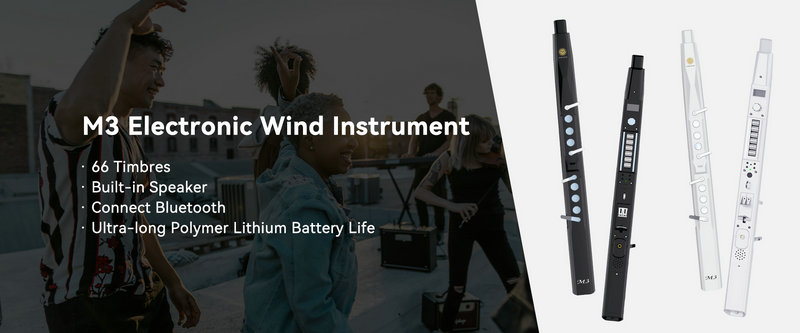
SUNRISE MELODY M3 Electronic Wind Instrument - The best-selling digital wind instruments
. 66 Timbres
. Built-in Speaker
. Connect Bluetooth
. Ultra-long Polymer Lithium Battery Life