
In daily life, there are relatively few strict restrictions on playing electronic wind instruments, but there are some considerations:
Noise Level:
If played in a residential area, especially at night or early morning, excessive volume can disturb neighbors. Some communities or housing complexes may have noise regulations or guidelines that should be adhered to. For example, if the sound of the electronic wind instrument is too loud and persists for a long time, neighbors may file complaints, which could lead to requests to lower the volume or even potential fines in some cases where there are specific noise ordinances.
Power and Battery Life:
Electronic wind instruments often require power sources such as batteries or need to be connected to an electrical outlet. This can be a limitation if one is playing in a location where power access is limited or unavailable. For instance, if playing outdoors in a remote area without access to electricity and with a limited battery life, the instrument may not be able to be used for an extended period.
Social Etiquette:
In public places like libraries, museums, or quiet cafes, playing an electronic wind instrument may be considered inappropriate due to the need to maintain a quiet environment for others. Even if the volume is low, the sound may still be distracting in such settings.
Skill and Learning Curve:
For beginners, there may be a learning curve associated with playing electronic wind instruments. This can limit the ability to play smoothly and enjoyably in public or social settings until a certain level of proficiency is achieved. For example, someone who is just starting out may struggle with producing consistent sounds or controlling the instrument's various functions, which could be off-putting or embarrassing in a group setting.
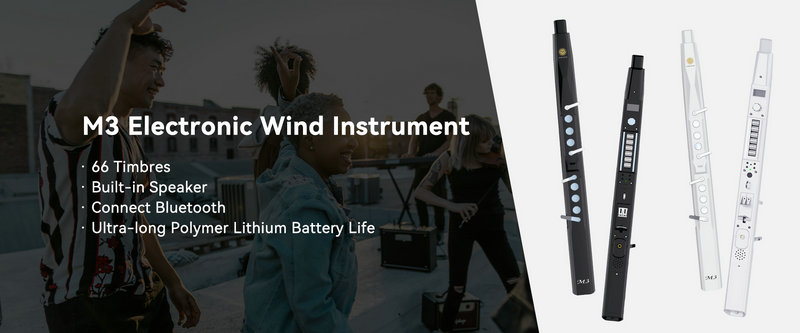
SUNRISE MELODY M3 Electronic Wind Instrument - The best-selling Electronic Wind Instrument
. 66 Timbres
. Built-in Speaker
. Connect Bluetooth
. Ultra-long Polymer Lithium Battery Life