
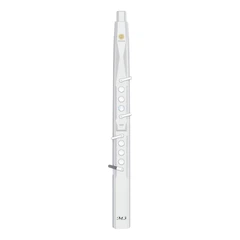


Advanced Techniques for Electric Wind Instruments: Creating Richer Timbre Variations
Electric wind instruments have revolutionized the way musicians can explore and manipulate timbre. With advancements in technology, these instruments offer a plethora of techniques to create richer and more diverse sound variations. Here, we delve into some of the advanced techniques that can be employed to achieve a wider range of timbral expressions.
1. Breath Control and Pressure Sensing
One of the key aspects of acoustic wind instruments that electronic counterparts strive to emulate is the responsiveness to breath control. Instruments like the KeyWI, an electronic wind instrument based on the melodica, feature a breath pressure sensor with a large dynamic range. This allows musicians to shape the timbre of the instrument by varying their breath pressure, much like in an acoustic instrument .
2. Polyphonic Pitch Selection
Unlike many traditional wind instruments that are limited to monophonic play, electronic wind instruments can offer polyphonic capabilities. This opens up new possibilities for harmonization and chordal play, adding a new dimension to the timbral palette .
3. Sound Synthesis and Processing
The use of sound synthesis, such as through the Faust programming language on platforms like the Bela Mini, allows for real-time digital signal processing. This can be used to manipulate the harmonic content, envelope, and other aspects of the sound, leading to a rich variety of timbres .
4. Effects Pedals and Signal Processing
The application of effects pedals, similar to those used in electric guitar, can drastically alter the timbre of electronic wind instruments. Distortion, reverb, and other effects can be combined and altered to create unique sonic textures .
5. Timbre as a Structuring Force
Understanding the role of timbre in music can lead to innovative techniques. Timbre can be used to create musical units, formal boundaries, and expressive shaping in performances. By analyzing the characteristic frequencies and envelopes of sounds, musicians can create more nuanced and expressive performances .
6. Timbre Adaptation and Perception
Research into how listeners perceive and adapt to timbre can inform the development of new techniques. For instance, understanding that timbre adaptation is robust to changes in pitch can lead to techniques that exploit this perceptual phenomenon to create more engaging and dynamic performances .
7. Interactive Processing of Timbre Dimensions
The interactive processing of different timbre dimensions, such as spectral centroid and attack time, can lead to new techniques for creating complex and evolving soundscapes. By manipulating these dimensions in real-time, musicians can create timbral changes that are both subtle and dramatic .
8. Open-Source Hardware and Software
The open-source nature of some electronic wind instruments allows for a community-driven approach to developing new techniques. Musicians and developers can collaborate to push the boundaries of what is possible, leading to a constant evolution of timbral possibilities .
In conclusion, the future of electric wind instruments is one of endless exploration and innovation. By leveraging advanced breath control, polyphonic capabilities, sophisticated sound synthesis, and an understanding of timbre perception, musicians can create incredibly rich and varied soundscapes that push the boundaries of musical expression.
XR3000 Electronic Saxophone EWI Digital Wind Instrument
Brand Name: SUNRISE MELODY
Model: XR3000
Timbre: 60 types
Five octaves metal roller
Bluetooth connection
4 fingering modes available to select


