



Company Profile
Since 2015, shenzhen shengyang musical instruments technology co., ltd. From china has been a professional manufacturer of digital musical instruments for over more than 10 years.Has more than 60,000 square meters of working shops,our overseas sales market is in shenzhen.The electronic piano, electronic wind instrument, silicone electronic drums, and other items are among our primary offerings.
Why Choose Us
Our factory
Since 2015, shenzhen shengyang musical instruments technology co., ltd. From china has been a professional manufacturer of digital musical instruments for over more than 10 years.
Our product
Has more than 60,000 square meters of working shops,our overseas sales market is in shenzhen,the electronic piano, electronic wind instrument, silicone electronic drums, and other items are among our primary offerings.
Production market
Our digital wind instruments and pianos have been tested in a variety of settings and are especially good for classrooms, beginning students, and more experienced players. Around the world, a lot of families and kids are interested in listening to music, but their budgets prevent them from doing so.
Our service
We really seek for seasoned foreign distributors, wholesalers, and other sales partners that are enthusiastic about expanding music's global reach.Whether you're searching for digital wind instruments and pianos that are ready to sell for your market or custom items, we have a large selection of affordable choices. Please contact us to discuss additional information.
Related Product

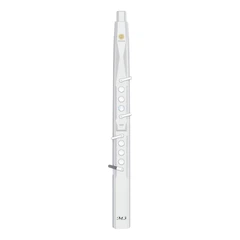
XR3000 Electronic Saxophone EWI Digital Wind Instrument
XR3000 electronic saxophone ewi digital wind instrument octave wheel true roller design five octaves allow you to play songs of any style and melody with ease the true roller of the octave wheel makes the switch more coherent the touch glide makes the performance smoother.

The battery-operated sunrise melody m3 wind instrument makes learning and performing both effortless and enjoyable, regardless of your proficiency level. Boasting 66 built-in sounds to select from, intuitive recorder-like fingering, and a sensitive breath detector that offers an excellent tone instantly, you possess all that is necessary to embark on your musical adventure.

M1 Electric Clarinet Wind Instrument
For beginners, the SUNRISE MELODY M1 electronic wind instrument is an ideal choice. Unlike traditional musical instruments that require long-term basic practice and complex skill accumulation, even if you have no musical foundation at all, you can master the basic playing methods and play wonderful notes in a short time.

If you have always desired to play a musical instrument, then this ewi electronic wind instrument is the quickest means to fulfill your aspiration. This enjoyable and modern wind instrument is extremely easy to learn, and thus you will be able to play along with your favorite tunes in no time at all. The fingering is straight forward to comprehend, and there aren't any complex chords to master like those of the piano, guitar, or ukulele, and its compact design can accompany you anywhere you go.

Are you seeking a fun and effortless way to master a new ewi electronic wind instrument? Search no more. Tailored for beginners and amateur musicians, the sunrise melody xr3000 electronic saxophone ewi provides you with an enjoyable musical adventure.

Digital Musical Wind Instruments XR3000
If you have always desired to play a musical instrument, then this ewi electronic wind instrument is the quickest means to fulfill your aspiration. This enjoyable and modern wind instrument is extremely easy to learn, and thus you will be able to play along with your favorite tunes in no time at all. The fingering is straightforward to comprehend, and there aren't any complex chords to master like those of the piano, guitar, or ukulele, and its compact design can accompany you anywhere you go.

XR3000 Midi Flute Controller EWI
XR3000 Midi Flute Controller EWI 3.7V 1600mAh, 8 hours of playing time using the rechargeable lithium-ion battery , silicone material, A silica-gel responsive mouthpiece with air-pressure and bite sensors to control volume and pitch dynamics precisely.

XR3000 Midi Wind Controller EWI
XR3000 Midi Wind Controller EWI Large-capacity battery Long-lasting battery life for smooth performances Built-in 1600mAh lithium battery Practiceand perform more worry-free.

Electronic Flute Instrument XR3000
Wish to boost your performance or practice more productively? The sunrise melody xr3000 electronic wind instrument saxophone comes with bluetooth connectivity, enabling you to link the instrument to your phone or tablet. Play accompaniments during your performance, or make use of a sheet music scanner for practice sessions.
What is Electronic Alto Saxophone?
The electronic alto saxophone is the most common saxophone, with a key of e flat, and is also the saxophone most used in classical music ensembles. Due to its moderate key distance, breath requirements and mouth control difficulty between the soprano saxophone and the tenor saxophone, as well as its relatively cheap price and easy portability, it has become the most commonly used saxophone for beginners.
Advantages of Electronic Alto Saxophone
Adjustable timbre
The timbre of the electronic saxophone can be adjusted through the built-in timbre settings, which can simulate the timbre of the traditional saxophone or create some non-traditional timbre.
Digital control
Unlike the traditional saxophone, the electronic saxophone can achieve some special effects through digital control, such as synthesizer timbre, pitch change, volume control, etc.
Lightweight and portable
Compared with the traditional saxophone, the electronic saxophone is smaller in size and lighter in weight, making it easier to carry and play.
Strong compatibility
The electronic saxophone can usually be connected to a computer or other digital device, and can be recorded, edited and processed through software, with high compatibility.
Stable timbre
The timbre of the electronic saxophone is usually more stable and accurate than that of the traditional saxophone, which can avoid some pitch deviations and other problems that are easy to occur during the performance of some traditional saxophones.
How to Practice the Electronic Alto Saxophone: Four Key Principles That Can Help You Advance
Isolate
Whether you're learning a new scale, practicing patterns, hashing out a lick, moving around the circle of fifths, or memorizing a charlie parker solo, the way to approach musical material is in increments.
Pick groups of notes and repeat them till they lay well under your fingers. In particular, isolate problem areas and focus on them, oiling them with repetition until they're working smoothly. Work out which alternate fingerings work best in a given situation. If you're playing in the key of f#, for example, you may find yourself using the bis, one-four, and side fingerings for a# almost consecutively as the context for your approach to the note a# changes.
Repeat
Repetition is woven into the first principle of isolation. You isolate a group of notes or even just two notes in order to repeat, repeat, repeat them, often enough to drill them into your muscle memory. Since i've already written a post on repetition, there's no need for me to–ahem–repeat what i've already said. Go read the article.
Connect
Once you're playing a group of notes fluently, add a note or two in front of it or behind it. Or work on the next group of notes until you're playing it as fluently as you were playing the first, then connect the two groups.
In the process of focusing on the second group, you may find that you've lost a bit of ground with the first group. That's okay. Go back to the first group and smooth it out. The point is, you work on small units of material, then you work on connecting them to create something larger–to which you will, in turn, connect still more material.
Memorize
As long as you're depending on the paper to tell you what to play, the music you're working on isn't really yours. I'm not referring to extended pieces of music where a chart is mandatory, but to scales, licks, patterns…to the building blocks of technique and the language of jazz improvisation. Memorization is an indispensable part of the jazz saxophonist's toolkit.
The whole point of all this isolating, repeating, and connecting is to move the music off the printed page and into your head and your fingers. So at the very beginning of the process, make a point of looking away from the sheet music. Consult it as freely as you need to, but remember that your goal is to wean yourself from it. When you're in mid-flight on the bridge to "cherokee" on your alto sax, you had better be thoroughly acquainted with the keys of ab, f#, e, and d, because the rhythm section is not going to pause while you look them up in your larry teal workbook.
How Do I Adjust My Tuning?
The first step is to get hold of a music tuner for your sax. Traditionally, standalone digital tuners were the way to go, and you can get a free online digital tuner or one from your music store quite cheaply.
The other option, and one which I use daily, is to get a saxophone tuner app on your smartphone. There are tons of these available – some free or very cheap.
Before starting any tuning exercises, make sure your alto or tenor saxophone is nicely warmed up. A cold sax will always sound flat. Also, if you are practicing in a really cold room, you might find that the top of the sax is warm, but the bottom is cold. This will make your low notes flat and your top notes sharp!
So, if your sax is cold, blow some air through it to get it up to room temperature. You could also make long notes to get the whole instrument up to temperature.
Once warmed up, make sure your alto or tenor sax is in tune overall. The chromatic tuner will show your tuning on any note, but it's best to start by checking the notes a and f# in both your low register and upper register (with the octave key on).
These notes are good to check because they are in the middle range of the sax and aren't traditionally problem-tuning notes.
Start by playing a long, solid tone on each of these notes while watching your tuner display. If your saxophone tuner says you are playing sharp or too high, then move your mouthpiece out slightly on the neck cork.
If your tuner shows your sound to be a little low or flat, then you will need to push your saxophone mouthpiece further in on the neck cork.
As a general rule, most saxophones are roughly in tune, with about 1 cm or 1/2 an inch of cork showing beyond the mouthpiece. When making adjustments to the mouthpiece position, only move a millimeter or so at a time and then re-check with your tuner.
With some practice, you will soon get to know where your mouthpiece needs to be on your tenor or alto sax to be in tune, and the tuning process becomes much faster.
However, it is a great idea to make tuning part of your daily routine. Even if you have been playing for years, there will still be other notes on which you can improve your tuning!
Components of Electronic Alto Saxophone


The mouthpiece
The mouthpiece, one of the most crucial components of the saxophone when it comes to tone quality, is the first item we'll examine.The musician blows into this portion of the horn, which is where the sound is first produced because it fits in the mouth.
The reed
We refer to saxophones as single reed instruments.The musician blows over reeds, which are objects made of wood (typically bamboo) that rest on top of the mouthpiece.It is the component that actually generates the sound because when the musician blows into the mouthpiece, the reed vibrates and produces the sound.
The ligature
The reed is held firmly in place on the mouthpiece by the ligature, a device that wraps around the mouthpiece.They are typically made of metal, but, like the mouthpiece, they can also be made of many other things, including string, leather, leatherette, gold, and plastic.
The neck (or crook)
The neck, also referred to as the crook, is the next component in the saxophone assembly process and it connects the mouthpiece to the instrument's body.It is made to fit inside the saxophone's body on one end, where a screw (known as the neck screw) at the top of the body secures it.The mouthpiece is attached to the neck on the other end, and the cork-which we'll examine next-holds the neck in place.
The cork
The mouthpiece slides over a piece of cork called the cork to connect to the neck, as you might have guessed.When attaching the mouthpiece, push it over the cork while gently twisting it back and forth.Additionally, you can lubricate it with some cork grease to make it simpler to slide the mouthpiece up and down to tune the saxophone.
The body
The brass tube that the air travels through as it is blown into the saxophone is known as the instrument's body.It has all the keys, rods, and pads necessary to alter the pitch of the note being played.The body of your saxophone may be straight, as in the case of a soprano saxophone, or it may curve downward, as in the case of a tenor or baritone saxophone.
The keys
The 23 keys on a contemporary saxophone include the six pearl keys on the front. The palm keys are used with your left hand, and the remaining keys are used with both pinkies.Each tone hole on the instrument can be closed or opened to change the pitch depending on which keys are depressed.The saxophone's pitch falls as a result of the air having to travel farther down the instrument as more keys are depressed.
Key guards
To safeguard the keys stored beneath them, the key guards are depicted on the saxophone's bell and elbow.The key guards on more sophisticated saxophone models are frequently engraved with elaborate patterns.
The octave key
You use your left thumb to operate the octave key, which is the key on the back of the horn above the thumb rest.Any note being played is raised an octave when the octave key is depressed because it opens the tone hole on the neck.The altissimo, or extremely upper, range, is also played using this key.
Thumb rest and hooks
There is a thumb rest that you can use to balance the horn while holding it.This is the outward shelf that protrudes from the back's horn's base.Its curvature makes it easy to hold the horn with your right thumb.
The elbow
The curved portion at the bottom of the alto, tenor, and baritone saxophones-basically any curved sax-is known as the elbow or bow.You should take extra care when carrying your saxophone around because this is the part that gets dented the most frequently.Your saxophone's playability and intonation could be severely impacted by a dent, making it less enjoyable to play.
The bell
The horn's flared end is referred to as the bell.While some of the keys that play lower notes are located there, its primary job is to stabilize the note and project the horn's sound.Consider the type of bell you want before buying a saxophone because different models have varying bell sizes.
Like with other woodwind instruments, removing moisture is probably the most important thing you can do when caring for and maintaining your sax. By doing so, the pads on your keys will last longer, your case won't stink, and you'll also be preventing any chance for mold and mildew to form, especially on the reed. This is critical because inhaling mold and mildew can be very hazardous to your health.
Remove the reed from the mouthpiece, run it through lukewarm water to rinse it off, then wipe it dry. Once wiped dry, place it in a reed guard.
Use a soft, clean cloth to wipe the mouthpiece dry, then use a mouthpiece swab to remove the moisture built up during your session.
Run a neck swab, through the sax's neck to remove any moisture.
Tip the sax upside down to let the water run out of the bell. Next, use a sax body swab to dry it out completely. While not completely necessary, you can run the swab through again for peace of mind.
Place the weighted part in the bell, tip the sax upside down, then grab it from the other end and pull the cloth through.
Lastly, use cleaning paper to soak up any moisture from the pads and tone hole key. Using a pad saver will also help draw out moisture.
FAQ