

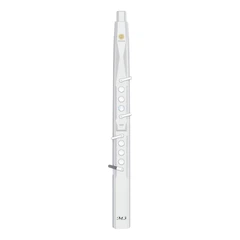


SUNRISE MELODY XR3000 synth wind instrument
If you have always desired to play a musical instrument, then this EWI electronic wind instrument is the quickest means to fulfill your aspiration. This enjoyable and modern wind instrument is extremely easy to learn, and thus you will be able to play along with your favorite tunes in no time at all. The fingering is straight forward to comprehend, and there aren't any complex chords to master like those of the piano, guitar, or ukulele, and its compact design can accompany you anywhere you go.
Highlights
- Brand Name: SUNRISE MELODY
- Model: XR3000
- Timbre: 60 types
- Five octaves metal roller
- Bluetooth connection
- 4 fingering modes available to select
- Battery: 3.7V 1600mAh, 8 hours of playing time using the rechargeable lithium-ion battery
- Mouthpiece: silicone material, A silica-gel responsive mouthpiece with air-pressure and bite sensors to control volume and pitch dynamics precisely
- Tonality: 12
- Built-in Speaker:3W
- Display:LCD display
- Weight: 500g
- Size:35*45*464mm
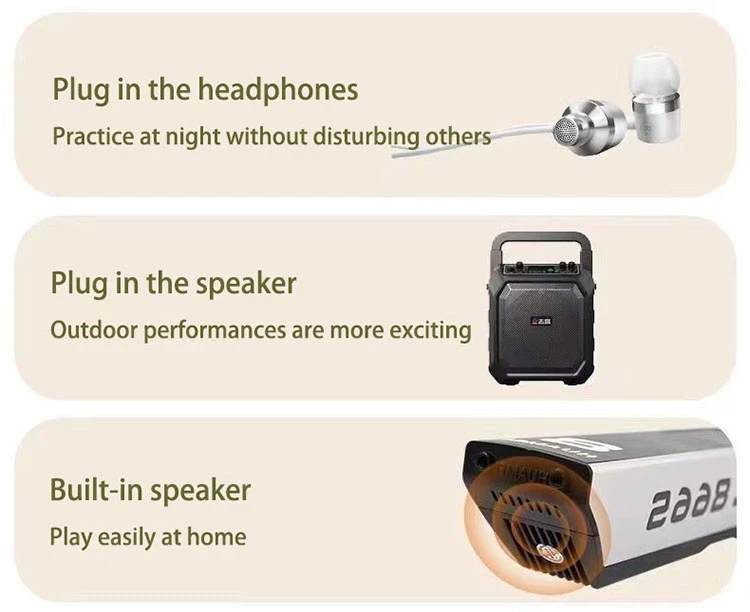
- Interface: 3.5 headphone audio port, TYPE-C charging hole
Function Key Diagram

Products Description


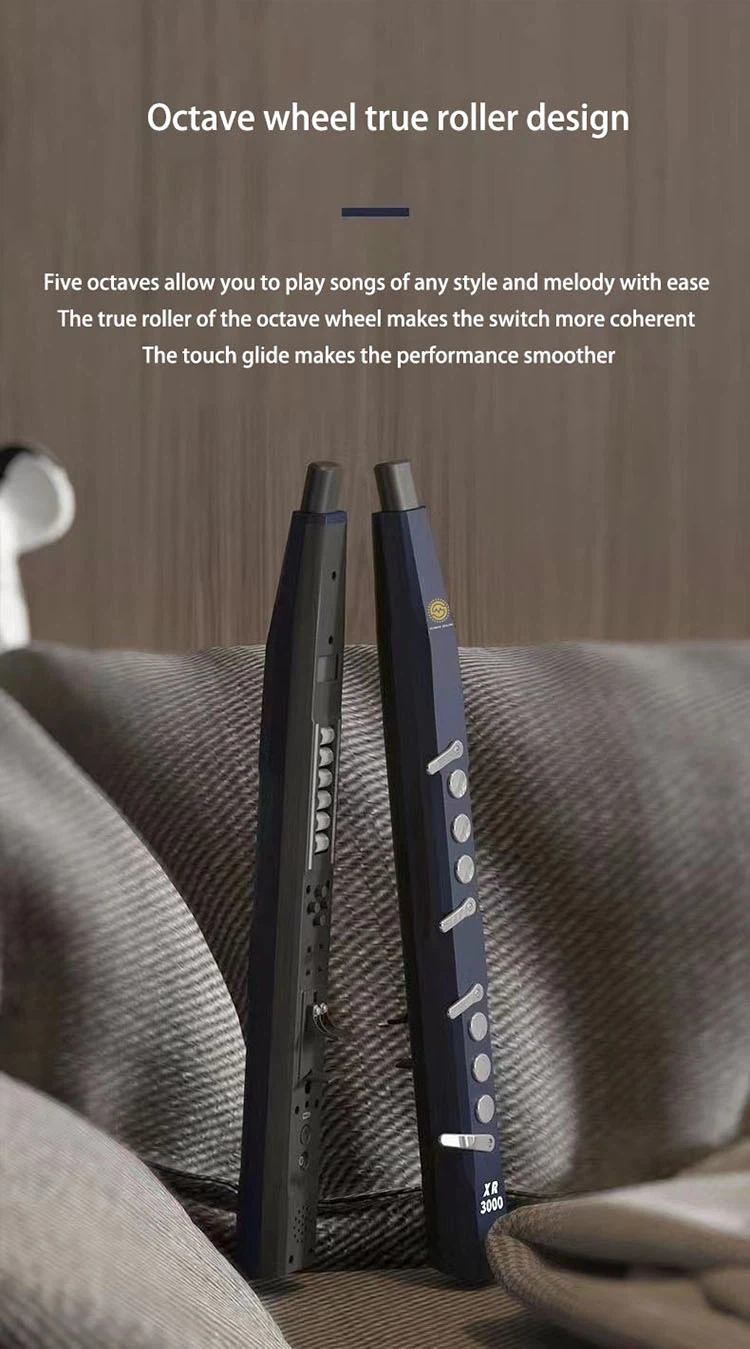
Octave wheel true roller design
Five octaves allow you to play songs of any style and melody with ease
The true roller of the octave wheel makes the switch more coherent
The touch glide makes the performance smoother
Built-in 60 kinds of timbres
Learning to play a musical instrument is like having a band
with real sampled tones, restoring the instrument itself

Large-capacity battery
Long-lasting battery life for smooth performances
Built-in 1600mAh lithium battery
Practiceand perform more worry-free

One key achieve instant tone change
Instant timbre change

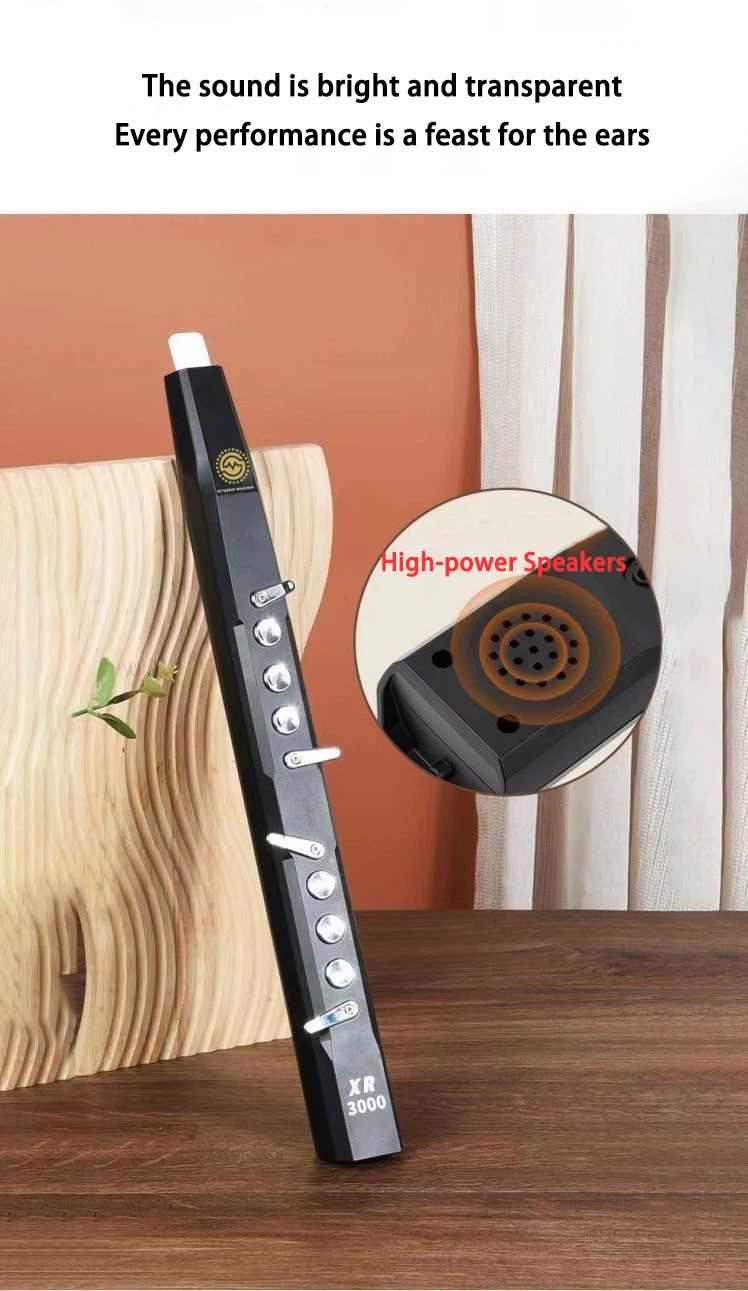
The sound is bright and transparent
Every performance is a feast for the ears
It is universal for both left and right hands and no modification is needed
Directly adjust the left and right hand mode and get started easily



FAQ
FAQ
Q: 1. How does the breath control mechanism work in a synth wind instrument?
Q: 2. Can synth wind instruments replicate the sound of traditional wind instruments accurately?
Q: 3. What types of synthesis methods are commonly used in synth wind instruments?
For instance, subtractive synthesis might be used to shape basic waveforms, while physical modeling aims to simulate the acoustic behavior of a real instrument.
Q: 4. Are synth wind instruments suitable for live performances?
Q: 5. How do you connect a synth wind instrument to a computer or other devices for recording and production?
Q: 6. Can you layer multiple sounds or apply effects to a synth wind instrument's output?
Q: 7. What is the learning curve for mastering a synth wind instrument compared to a traditional wind instrument?
Q: 8. Are there any limitations to the expressiveness of a synth wind instrument compared to its acoustic counterpart?
Q: 9. How do different brands and models of synth wind instruments differ in terms of features and sound quality?
Q: 10. Can synth wind instruments be used in combination with traditional wind instruments in an ensemble?