
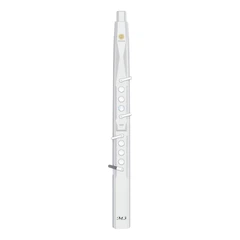


SUNRISE MELODY xR3000 flute controller
If you have always desired to play a musical instrument, then this EWI electronic wind instrument is the quickest means to fulfill your aspiration. This enjoyable and modern wind instrument is extremely easy to learn, and thus you will be able to play along with your favorite tunes in no time at all. The fingering is straight forward to comprehend, and there aren't any complex chords to master like those of the piano, guitar, or ukulele, and its compact design can accompany you anywhere you go.
Highlights
- Brand Name: SUNRISE MELODY
- Model: XR3000
- Timbre: 60 types
- Five octaves metal roller
- Bluetooth connection
- 4 fingering modes available to select
- Battery: 3.7V 1600mAh, 8 hours of playing time using the rechargeable lithium-ion battery
- Mouthpiece: silicone material, A silica-gel responsive mouthpiece with air-pressure and bite sensors to control volume and pitch dynamics precisely
- Tonality: 12
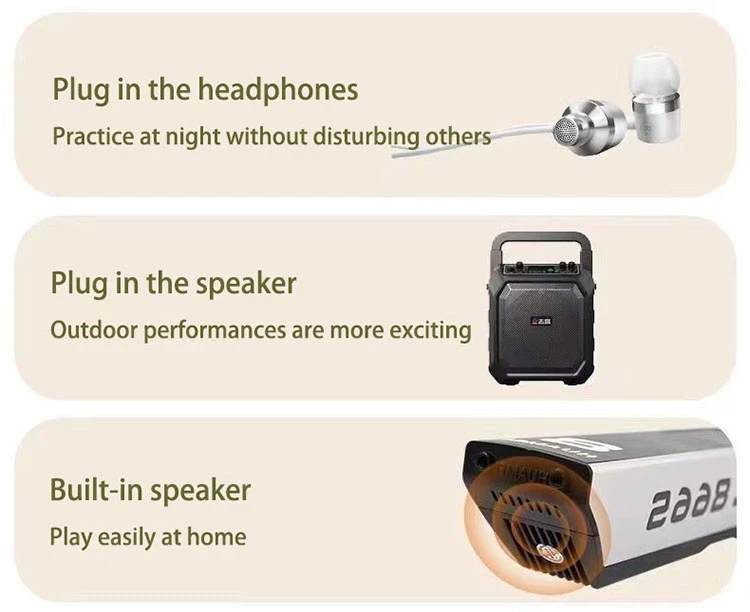
- Built-in Speaker:3W
- Display:LCD display
- Weight: 500g
- Size:35*45*464mm
- Interface: 3.5 headphone audio port, TYPE-C charging hole
Function Key Diagram

Products Description


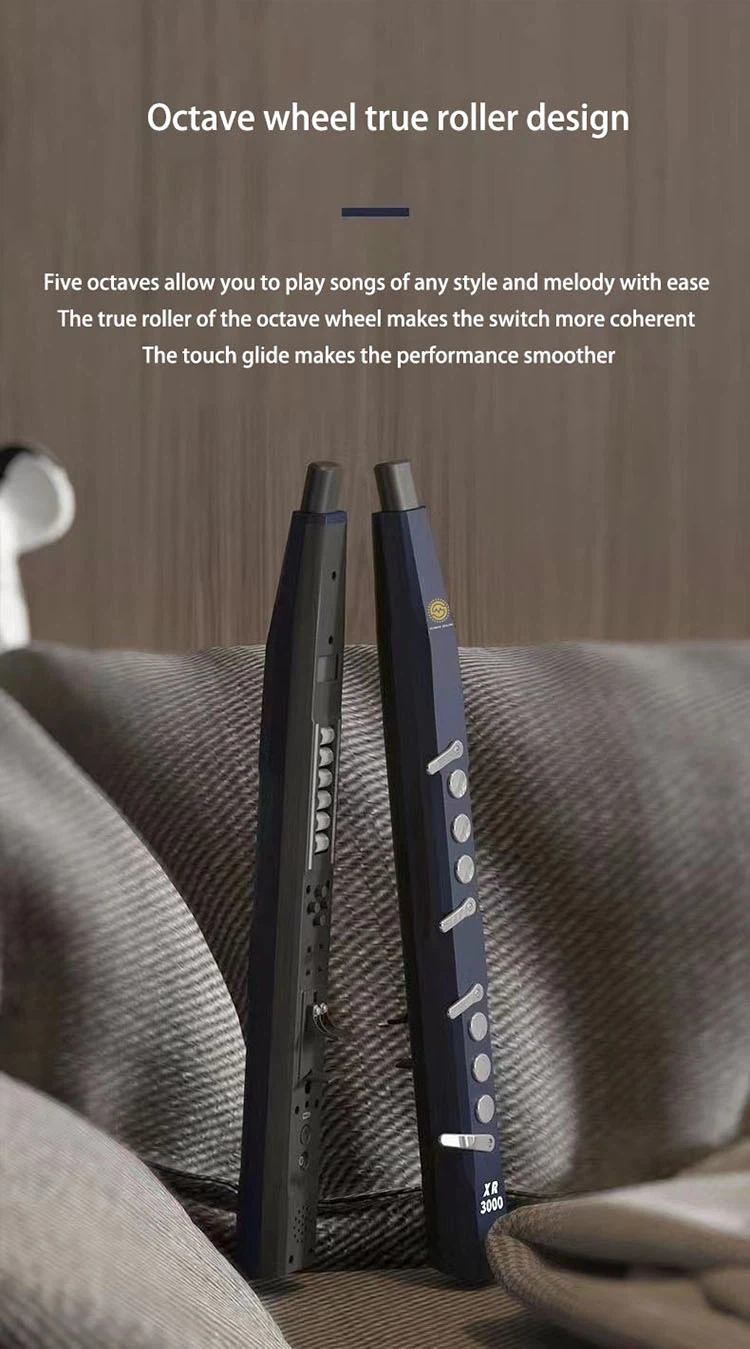
Octave wheel true roller design
Five octaves allow you to play songs of any style and melody with ease
The true roller of the octave wheel makes the switch more coherent
The touch glide makes the performance smoother
Built-in 60 kinds of timbres
Learning to play a musical instrument is like having a band
with real sampled tones, restoring the instrument itself

Large-capacity battery
Long-lasting battery life for smooth performances
Built-in 1600mAh lithium battery
Practiceand perform more worry-free

One key achieve instant tone change
Instant timbre change

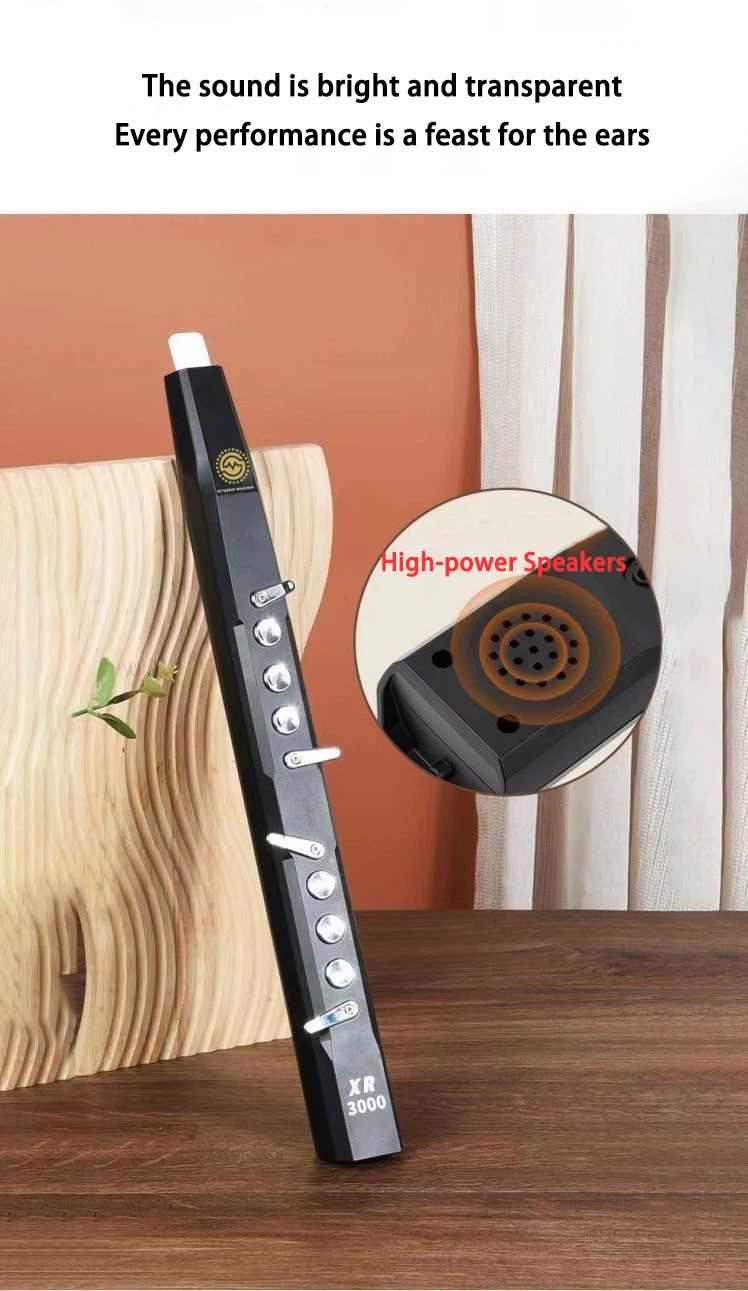
The sound is bright and transparent
Every performance is a feast for the ears
It is universal for both left and right hands and no modification is needed
Directly adjust the left and right hand mode and get started easily



What is midi flute controller?
A MIDI flute controller is a specialized device that offers musicians a unique way to create and control musical sounds.
How it Works: The MIDI flute controller detects the player's finger movements, breath input, and other gestures. These actions are translated into MIDI data, which is then sent to a computer, sound module, or other MIDI-compatible device to generate the desired sounds.
For example, when you cover or uncover the finger holes on the controller and blow with varying intensities, it sends corresponding MIDI messages that trigger different pitches and volumes of the selected sounds.
Advantages:
Versatility: Allows access to a vast library of sounds beyond traditional flute tones, such as synthesizer sounds, orchestral instruments, or custom samples.
Portability: Compared to traditional flutes, it can be more easily carried and used in various settings.
Creative Expression: Enables experimentation and unique musical expressions by combining different sounds and effects.
Challenges:
Learning Curve: It may take some time to adapt to the controls and mappings if you're accustomed to playing a regular flute.
Sensitivity Adjustment: Getting the right balance in breath and finger sensitivity can be tricky for optimal performance.
Popular Models: Some well-known MIDI flute controllers in the market include the Akai EWI series and Yamaha's offerings.
Applications:
Music Production: Used in studios to create complex and diverse musical compositions.
Live Performances: Adds an innovative element to stage shows.
Educational Purposes: Helps students explore new sounds and techniques in a modern musical context.
In summary, a MIDI flute controller opens up exciting possibilities for musicians, allowing them to blend traditional flute playing techniques with the endless sonic possibilities of the digital realm.
Hot Tags: XR3000 Flute Controller EWI, Chinese XR3000 Flute Controller EWI manufacturers, suppliers, factory, digital wind instrument, electronic woodwind instrument, electronic wind instrument saxophone, hulusi instrument, electronic clarinet, saxophone midi controller


