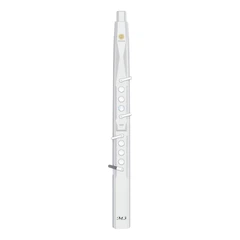

When playing fast - paced legato passages on an electric wind instrument, the following techniques can be used for fingering to ensure note clarity, continuity, and minimal noise:
Proper Finger Placement and Movement
Maintain Curved Fingers: Keep your fingers in a naturally curved position over the keys. This allows for quicker and more precise movements. For example, when transitioning from one note to another, the curved fingers can easily glide from one key to the next without accidentally hitting other keys and causing unwanted noise.
Minimize Finger Lift: In legato playing, try to keep the fingers as close to the keys as possible. Only lift the finger that needs to change notes just enough to clear the key without lifting it too high. This reduces the time it takes to move between notes and helps maintain a smooth flow.
Practice Finger Independence
Isolate Finger Movements: Practice moving individual fingers while keeping the others stationary. This helps build the strength and independence of each finger. For instance, you can practice playing a simple scale by only using one finger at a time to press the keys in succession, ensuring that each note sounds clear without any interference from the other fingers.
Exercises for Coordination: Do exercises that focus on coordinating the movement of different fingers. One common exercise is to play a pattern where one finger plays a steady rhythm while another finger plays a syncopated rhythm. This improves the overall dexterity and control of the fingers during fast passages.
Use of Slurs and Glissando Techniques
Slur Technique: Utilize the slur function on the electric wind instrument (if available). A slur indicates that the notes should be played smoothly without a break. This can be achieved by not re - articulating each note with the tongue but instead relying on the fingering to change the notes while maintaining a continuous flow of air. This helps create a seamless legato effect.
Glissando: Some electric wind instruments allow for glissando, which is a smooth slide between two notes. By using a glissando, you can move quickly between notes without the distinct separation that might occur with individual note articulation. However, this should be used sparingly and appropriately within the context of the music.
Adjusting the Instrument's Settings
Sensitivity Settings: Check the sensitivity settings of the instrument's keys. If the sensitivity is too high, it might register unintended key presses, causing noise. Adjust the settings to a level that suits your playing style and ensures that only deliberate finger movements result in a sound.
Velocity Settings: Some electric wind instruments have velocity settings that determine how hard you need to press the keys to produce a sound. Experiment with different velocity settings to find the optimal balance between achieving a clear sound and avoiding accidental noise during fast fingering changes.
SUNRISE MELODY M3 Electronic Wind Instrument - The best-selling Electronic Wind Instrument
. 66 Timbres
. Built-in Speaker
. Connect Bluetooth
. Ultra-long Polymer Lithium Battery Life