
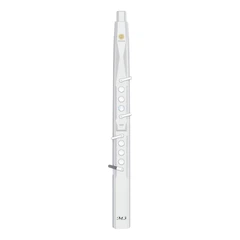


The digital saxophone represents a significant innovation in the field of musical instruments. Its emergence is the result of a combination of technological progress, changing musical demands, and the pursuit of new musical experiences. Here is an in-depth exploration of the creative background of the digital saxophone.
I. Technological Advancements
In today's digital age, rapid technological progress has had a profound impact on various fields, and the music industry is no exception. The development of digital technology has provided the foundation for the creation of digital saxophones.
Digital Signal Processing (DSP) Technology
DSP technology allows for the manipulation and enhancement of audio signals. It enables musicians to customize the sound of their instruments, adjust parameters such as tone, volume, and reverb, and create unique sonic effects. In the case of digital saxophones, DSP technology is used to simulate the sound of a traditional saxophone with remarkable accuracy while also offering a wide range of additional features.
Microprocessor Technology
Microprocessors play a crucial role in digital saxophones. They control various functions of the instrument, such as note generation, pitch bending, and key response. With the continuous improvement of microprocessor performance, digital saxophones can offer more responsive and accurate playing experiences.
Sensor Technology
Advanced sensor technology is used in digital saxophones to detect the player's finger movements and breath input. These sensors can accurately capture the nuances of a player's performance and translate them into digital signals for processing. This allows for a more natural and expressive playing experience, similar to that of a traditional saxophone.
II. Changing Musical Demands
The music industry is constantly evolving, and musicians and audiences are always looking for new sounds and experiences. The digital saxophone meets these changing musical demands in several ways.
Versatility
Digital saxophones offer a wide range of sounds and effects that are not possible with traditional saxophones. Musicians can easily switch between different tones, such as alto, tenor, and soprano saxophones, as well as experiment with unique soundscapes and electronic effects. This versatility makes digital saxophones suitable for a variety of musical genres, from jazz and classical to electronic and experimental music.
Portability
Compared to traditional saxophones, digital saxophones are often more portable. They are lighter in weight and can be easily carried around, making them ideal for musicians who need to perform in different locations or on the go. This portability also allows for more spontaneous musical collaborations and performances.
Accessibility
Digital saxophones are generally easier to learn and play than traditional saxophones. They often come with features such as built-in tutorials and practice modes, which can help beginners get started quickly. Additionally, the ability to adjust the volume and play silently through headphones makes digital saxophones accessible to people who live in apartments or other environments where noise may be a concern.
III. The Pursuit of New Musical Experiences
Musicians are always seeking new ways to express themselves and create unique musical experiences. The digital saxophone offers several opportunities for creative exploration.
Integration with Digital Music Production
Digital saxophones can be easily integrated into digital music production environments. Musicians can connect them to computers or other digital devices and use software tools to record, edit, and mix their performances. This allows for seamless integration with other instruments and sounds, opening up new possibilities for musical composition and production.
Collaborative Possibilities
The digital nature of saxophones enables musicians to collaborate remotely. Through online platforms and software, musicians from different locations can play together in real time, creating unique musical collaborations that would be difficult or impossible with traditional instruments.
Experimental Sound Design
Digital saxophones provide a platform for experimental sound design. Musicians can use various software tools and plugins to manipulate the sound of the instrument, creating unconventional and avant-garde sonic textures. This can lead to the creation of new musical forms and expressions that challenge traditional musical boundaries.
In conclusion, the creative background of the digital saxophone is a complex combination of technological advancements, changing musical demands, and the pursuit of new musical experiences. As technology continues to evolve, we can expect digital saxophones to become even more sophisticated and versatile, offering musicians and audiences even more exciting musical possibilities.
SUNRISE MELODY M1 Electronic Wind Instrument
. Revisit the passion and dreams of youth
. M1 electric clarinet wind instrument -- The good news for beginners
. Rich and diverse timbres
. Powerful functions and easy operation
. Perfect after-sales service


